


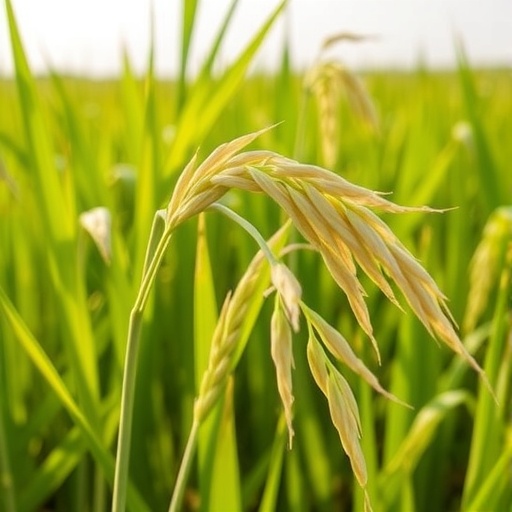
In a groundbreaking study published in Discover Plants, researchers are shedding light on the crucial role of small heat shock proteins (sHSPs) in rice, particularly concerning how these proteins govern plant responses to heat stress. This research holds significant implications for global food security, particularly as climate change continues to exacerbate high-temperature conditions that impact crop yields worldwide. The intricate molecular mechanisms involving sHSPs have been explored, presenting an exciting frontier in agricultural biotechnology.
The average global temperature is on the rise, presenting profound challenges to agricultural productivity. As crops like rice face unprecedented heat levels, understanding the physiological and genetic responses to these stressors becomes paramount. The latest work by Mas-ud et al. delves deep into the genes encoding small heat shock proteins, which are integral to the plant’s adaptive response to thermal stress. Their findings emphasize the potential of sHSPs as vital players not only in stress response but also in enhancing the resilience of crops in changing climates.
Rice (Oryza sativa) serves as a staple food for more than half of the world’s population, making it critical to agricultural systems and food security. The ongoing rise in average temperatures poses a serious risk to rice yields, particularly during the reproductive stage when the plant is most vulnerable to heat. The research team utilized a comprehensive approach, integrating molecular biology, genetic analysis, and agronomic assessments to explore the role of sHSPs in rice plants subjected to high temperatures.
Previous studies have established the importance of heat shock proteins in various organisms, prompting the researchers to focus specifically on the small heat shock protein subgroup in rice. These sHSPs are known to function at both the molecular and cellular levels, facilitating the refolding of denatured proteins and preventing aggregation under stress. Mas-ud and colleagues meticulously mapped the expression profiles of sHSP genes in response to heat stress conditions, revealing distinct patterns of activation at various growth stages and environmental contexts.
The results indicated a marked upregulation of sHSP genes when rice plants were exposed to elevated temperatures. This prompt response is believed to assist in maintaining protein stability and cellular integrity, effectively enhancing the plant’s ability to cope with thermal stress. Furthermore, the study revealed that sHSPs do not act in isolation; they interact with other key proteins and regulatory pathways, forming a complex network that underpins the plant’s comprehensive stress response machinery.
An intriguing aspect of the study addressed the potential for genetic engineering to enhance sHSP expression in rice. The insights gathered regarding the regulatory elements governing sHSP activation open avenues for biotechnological interventions aimed at developing cultivars with improved heat tolerance. This could revolutionize rice cultivation in regions vulnerable to climatic extremes, ensuring more stable harvests and food supplies.
The researchers also highlighted the need for field trials to validate their findings in real-world agricultural settings. While laboratory studies provide crucial insights, the dynamic interaction of environmental factors in the field can lead to different stress responses. Assessing how sHSP-enhanced rice varieties perform under actual heat stress conditions will be key to implementing successful agricultural practices guided by their research.
Additionally, the authors brought attention to the relationship between sHSPs and other stress response mechanisms, including antioxidant pathways and signaling molecules. This comprehensive approach underscores the multifaceted nature of heat stress responses in plants, with sHSPs acting as central coordinators in the orchestration of various protective strategies. The integration of these findings is vital for a broader understanding of plant resilience.
Beyond immediate agricultural applications, the study raises important questions about the evolutionary significance of sHSPs in plants. Understanding how these proteins have adapted to diverse environmental stresses over millennia can provide tantalizing insights into future plant breeding strategies. As researchers continue to unravel the complexities of plant stress response pathways, there is a growing need for collaboration and knowledge sharing across disciplines.
The implications of this research extend beyond rice to other crops subjected to heat stress, suggesting that similar mechanisms may exist in a wide array of plant species. As global temperatures rise, uncovering and harnessing the genetic underpinnings of heat tolerance could be crucial in securing food supplies for future generations. The work of Mas-ud et al. is, therefore, not just limited to rice but serves as a beacon for crop resilience research worldwide.
In conclusion, the investigation into small heat shock proteins in rice marks a significant step forward in understanding how these genes contribute to heat stress resilience. As climate change threatens agricultural systems, knowledge derived from this study presents exciting opportunities for innovation in plant breeding and crop management practices. The intricate relationship between sHSPs and other molecular factors presents a path forward in developing crops capable of thriving in increasingly hostile environmental conditions.
As this research gains traction among scientists and agricultural professionals alike, we can expect to see a growing interest in exploring the potential for sHSP-based technologies in various crops. The insights garnered from this study not only promise to enhance our understanding of plant biology but could ultimately lead to improved agricultural sustainability in a warming world.
With continued research and applications stemming from these findings, the hope is to foster a future where food security is assured, even in the face of rising temperatures and changing climates.
Mas-ud, M.A., Yin, C., Juthee, S.A. et al. Small heat shock proteins: key genes for regulating heat stress responses in rice.
Discov. Plants 2, 267 (2025). https://doi.org/10.1007/s44372-025-00353-7
Cite Scienmag News
Alan Morgan. (September 11, 2025). Small Heat Shock Proteins: Guarding Rice Against Heat Stress. Scienmag. https://scienmag.com/small-heat-shock-proteins-guarding-rice-against-heat-stress/
Alan Morgan. "Small Heat Shock Proteins: Guarding Rice Against Heat Stress." Scienmag, 11 September 2025, https://scienmag.com/small-heat-shock-proteins-guarding-rice-against-heat-stress/. Accessed 4 September 2026.
Alan Morgan. "Small Heat Shock Proteins: Guarding Rice Against Heat Stress." Scienmag. September 11, 2025. https://scienmag.com/small-heat-shock-proteins-guarding-rice-against-heat-stress/


