


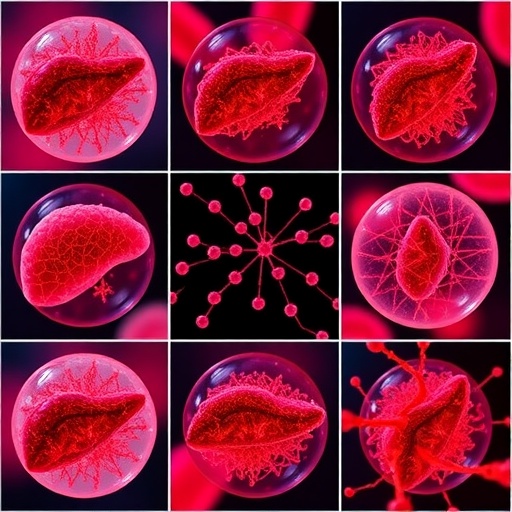
A new study published in Nature Communications reports a six-compound chemical cocktail designed to mature liver spheroids made from human pluripotent stem cells, a development that could help researchers predict drug toxicity with greater biological realism. Led by Tian, Anas, Hasselkus and colleagues, the work addresses a long-standing weakness in laboratory testing: many experimental liver models look like liver tissue under a microscope but do not yet behave like the mature human organ when exposed to medicines, industrial chemicals or environmental pollutants.
The liver is the body’s principal chemical processing centre, responsible for transforming nutrients, hormones and foreign substances. It also produces enzymes that can convert apparently harmless compounds into reactive metabolites capable of damaging cells. Conventional toxicity screens often rely on immortalised liver cancer cell lines or isolated animal cells, models that may not reproduce the enzyme activity, cellular organisation and stress responses of human liver tissue. Human pluripotent stem cells offer a potential alternative because they can generate hepatocyte-like cells, but cells produced in the laboratory frequently remain developmentally immature, resembling fetal rather than adult liver cells.
The study focuses on liver spheroids, three-dimensional clusters in which liver-derived cells interact with one another and organise into a tissue-like structure. Compared with flat, two-dimensional cultures, spheroids can maintain more physiologically relevant cell contacts, gradients of oxygen and nutrients, and longer-term responses to chemical exposure. Their three-dimensional architecture may also help preserve functions that tend to disappear rapidly when hepatocytes are spread across a plastic surface. Yet structure alone is not enough. If the cells inside a spheroid remain immature, the model may still fail to reproduce the metabolic pathways that determine whether a compound is detoxified, tolerated or converted into a harmful product.
The six-compound cocktail is intended to push stem-cell-derived liver cells through that developmental bottleneck. In principle, such a mixture can act on several biological pathways at once, including signalling networks that regulate hepatic identity, metabolic enzyme expression, cell polarity and tissue organisation. The challenge is to find a combination that promotes adult-like function without causing excessive stress, uncontrolled growth or an artificial state that exists only in culture. Rather than treating maturation as the effect of a single “master switch,” the approach recognises that liver development is coordinated by multiple molecular cues operating over time.
A mature liver model must do more than produce characteristic proteins. It should also demonstrate functional activity, such as the ability to process drugs, regulate secreted molecules, handle lipids and respond to toxic insults in a reproducible manner. Researchers developing these systems typically examine markers of hepatocyte identity alongside enzymes involved in phase I and phase II metabolism, transport proteins and cellular responses associated with injury. These measurements help distinguish between cells that merely resemble hepatocytes and cells that perform the specialised biochemical work expected of human liver tissue.
That distinction is crucial for toxicity prediction. A drug can appear safe in an immature culture because the enzymes needed to metabolise it are absent or expressed at unusually low levels. The same compound may produce a very different result in a more mature system, particularly if metabolism generates reactive intermediates. Conversely, an immature model might overestimate toxicity by failing to reproduce protective detoxification pathways. By improving the functional maturity of liver spheroids, the cocktail could make laboratory results more closely aligned with how human tissue handles chemical exposure, although the practical value depends on the consistency and validation of the resulting model.
The researchers’ strategy also speaks to a broader shift in biomedical testing away from simple cell survival measurements. Toxicity is not defined solely by whether cells die immediately. Liver injury can involve oxidative stress, mitochondrial dysfunction, impaired bile transport, inflammation-like signalling, disruption of lipid metabolism and delayed changes in gene expression. Three-dimensional stem-cell-derived models offer an opportunity to track these processes over longer periods and at multiple biological levels. Such information may reveal harmful effects that are missed by short, single-endpoint assays, while also helping researchers determine whether a response is specific to a particular chemical or reflects general culture stress.
The potential applications extend beyond pharmaceutical development. A reliable human liver spheroid platform could be used to compare candidate medicines before clinical trials, investigate why some compounds cause liver injury in only a subset of patients, and assess the effects of pesticides, food additives, cosmetics ingredients and emerging contaminants. It could also support efforts to reduce reliance on animal testing, especially when human-specific metabolism is central to the question. However, stem-cell-derived systems do not automatically reproduce the full complexity of a living liver. They may lack blood flow, immune cells, supporting stromal cells and the communication between the liver and other organs that can influence toxicity.
For that reason, the significance of the six-compound cocktail will ultimately rest on rigorous benchmarking. The model must show that its molecular signatures, metabolic behaviour and toxicological responses are stable across different stem-cell lines, laboratories and batches of spheroids. It must also be tested against chemicals with well-established human safety profiles and known liver toxicity, allowing researchers to measure both false alarms and missed hazards. If the system performs consistently under those conditions, it could become a valuable bridge between early laboratory screening and clinical risk assessment. The work offers a technically focused route toward more human-relevant toxicity testing: not simply growing liver-like cells, but guiding them toward a state in which their chemistry, organisation and response to injury more faithfully reflect the adult organ.
Cite Scienmag News
Drew Townsend. (August 21, 2026). Six-compound cocktail matures stem cell-derived liver spheroids for improved toxicity prediction. Scienmag. https://scienmag.com/six-compound-cocktail-matures-stem-cell-derived-liver-spheroids-for-improved-toxicity-prediction/
Drew Townsend. "Six-compound cocktail matures stem cell-derived liver spheroids for improved toxicity prediction." Scienmag, 21 August 2026, https://scienmag.com/six-compound-cocktail-matures-stem-cell-derived-liver-spheroids-for-improved-toxicity-prediction/. Accessed 3 September 2026.
Drew Townsend. "Six-compound cocktail matures stem cell-derived liver spheroids for improved toxicity prediction." Scienmag. August 21, 2026. https://scienmag.com/six-compound-cocktail-matures-stem-cell-derived-liver-spheroids-for-improved-toxicity-prediction/


