


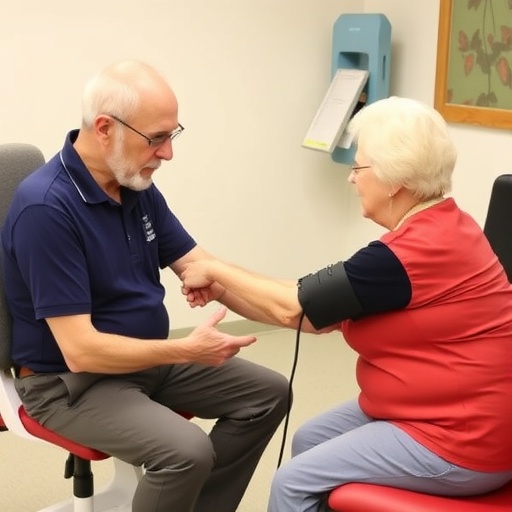
In recent years, the health and well-being of older adults have taken center stage in geriatric research, especially with an aging population worldwide. The study conducted by Oyake and Yokokawa places significant importance on understanding the nuances of blood pressure regulation in older adults, a phenomenon that has far-reaching implications for their overall health and quality of life. As we delve deeper into this area of study, the significance of innovative testing methods—like the sit-up test—becomes apparent.
The sit-up test has emerged as a promising tool for assessing blood pressure regulation capabilities. Traditionally, health practitioners relied on standard medical assessments to capture the nuances of how aging affects cardiovascular health. However, there exists a gap in easy-to-administer tests that can accurately gauge an individual’s blood pressure regulation in real-time. It is here that the sit-up test shines, providing researchers with a practical method to evaluate cardiovascular response in community-dwelling older adults.
Blood pressure regulation is a complex physiological process that involves the delicate interplay of various systems within the body, including cardiovascular, neural, and renal functions. As individuals age, these systems often face challenges that can lead to impaired regulation, resulting in conditions like orthostatic hypotension or chronic hypertension. Understanding these challenges and their implications for older adults is vital; they are less able to compensate for changes in posture, which can lead to dizziness and falls—significant concerns for this population.
The methodological approach employed by Oyake and Yokokawa in their cross-sectional study reveals the intricacies and technicalities behind assessing blood pressure regulation. Their research emphasizes a systematic evaluation of how older adults react to the sudden movements involved in a sit-up. This process can quite literally map the body’s response mechanisms and how efficiently it can adapt to physical stressors.
Moreover, the broader implications of such studies cannot be overstated. A thorough understanding of blood pressure regulation has the potential to inform clinical practices and public health strategies aimed at safeguarding older adults’ health. A deeper comprehension of these regulations can lead to the development of better preventative measures, which has a cascading effect on reducing healthcare costs and improving life quality.
In addition to investigating the physiological responses from the sit-up test, the study also sheds light on the everyday scenarios faced by older adults. It is crucial for health practitioners to appreciate that many older individuals live independently in their communities and interact with their environments in unique ways. Blood pressure regulation becomes a critical aspect of their daily lives, influencing not just their physical health but their ability to perform routine tasks safely and effectively.
The study utilizes advanced statistical methodologies to present its findings, which underscores the significance of interdisciplinary approaches in geriatric research. Collaboration across fields—whether it be medicine, psychology, or social sciences—offers richer insights into the multifaceted nature of aging. Understanding how various parameters influence blood pressure regulation can lead to multifaceted interventions that offer holistic support to older adults.
Furthermore, the choice to publish these findings in BMC Geriatrics is commendable as it provides broader access to this vital research. The open-access model ensures that findings are available to healthcare professionals, policymakers, and researchers alike, effectively democratizing knowledge in the field of geriatric medicine. Such accessibility is crucial not only for future research endeavors but also for immediate clinical applications that can enhance caregivers’ practices.
The ongoing discourse around blood pressure regulation extends beyond academic circles. Wider societal dialogues surrounding aging populations must be informed by such pivotal research. Public awareness initiatives can be developed to educate older adults about their health, emphasizing the importance of monitoring their blood pressure and understanding its fluctuations in different settings, including during physical activity.
As the healthcare landscape evolves, the importance of pragmatic, effective assessments like the sit-up test cannot be overlooked. These assessments pave the way for individualized care plans that cater to the unique needs of each older adult. Such tailored strategies have the potential to optimize health outcomes, ensuring that older populations enjoy an enhanced quality of life.
In conclusion, the contributions made by Oyake and Yokokawa ultimately point toward a future where older adults can lead healthier lives through informed medical practices. The ongoing study of blood pressure regulation remains critical as we seek to understand better the aging process and its myriad effects on health. The sit-up test stands as a testament to the innovative approaches required to meet the needs of this demographic, paving the way for further research and ultimately improved healthcare outcomes for senior populations.
As we reflect on the significance of this study, it is clear that continued attention and research into blood pressure regulation will influence the future of geriatric care. Building on the foundation laid by these researchers, there is ample opportunity for further exploration, innovation, and refinement in assessment methods that can empower older adults to maintain their health and independence.
They say that knowledge is power, and when it comes to geriatric health, this statement rings particularly true. Equipping ourselves with the latest research findings and advancing our understanding of such critical health assessments will ultimately enable us to foster healthier and more vibrant communities for our aging populace.
Oyake, K., Yokokawa, Y. Sit-up test for assessing impaired blood pressure regulation in community-dwelling older adults: a cross-sectional study.
BMC Geriatr 25, 764 (2025). https://doi.org/10.1186/s12877-025-06456-w
Cite Scienmag News
Beatrice Stafford. (October 8, 2025). Sit-Up Test Evaluates Blood Pressure in Seniors. Scienmag. https://scienmag.com/sit-up-test-evaluates-blood-pressure-in-seniors/
Beatrice Stafford. "Sit-Up Test Evaluates Blood Pressure in Seniors." Scienmag, 8 October 2025, https://scienmag.com/sit-up-test-evaluates-blood-pressure-in-seniors/. Accessed 4 September 2026.
Beatrice Stafford. "Sit-Up Test Evaluates Blood Pressure in Seniors." Scienmag. October 8, 2025. https://scienmag.com/sit-up-test-evaluates-blood-pressure-in-seniors/


