


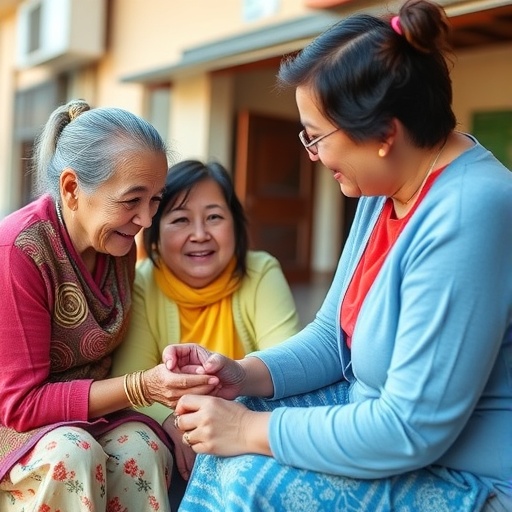
In an era where the demographic landscape is rapidly shifting towards increased longevity, understanding how to support aging populations in rural settings has become a critical global challenge. Recent research conducted in rural Maharashtra, India, sheds pioneering light on community-based intergenerational programs designed to enhance the quality of life for elderly residents. Employing a mixed methods implementation evaluation, this study dissects the intricacies and outcomes of initiatives that bridge generational divides, yielding insights that could reshape elderly care paradigms worldwide.
The study’s focal point centers on the inherent potential of intergenerational programs—structured interactions between elders and younger cohorts—to foster social cohesion, mental wellbeing, and physical health among senior participants. Unlike traditional geriatric interventions that often isolate the elderly, these programs leverage community dynamics and cultural structures prevalent in rural India to create organic, participatory environments. By facilitating mutual exchange, elders impart wisdom and tradition, while youth provide companionship and contemporary perspectives, thus generating a symbiotic relationship with measurable psychosocial benefits.
A core methodological strength of the research lies in its mixed methods approach, integrating quantitative metrics with rich qualitative narratives to form a comprehensive understanding of program efficacy. Quantitative data encompassing health indices, social engagement levels, and psychological scales were paired with in-depth interviews and focus group discussions involving both elderly participants and younger community members. This dual methodology enabled the researchers to not only quantify changes but also capture the nuanced cultural and emotional contexts that numbers alone cannot reveal.
In dissecting the rural Maharashtra setting, the study underscores the unique socioeconomic and cultural challenges faced by the elderly, including limited access to healthcare infrastructure, social isolation, and the erosion of traditional family support systems. The researchers highlight how these factors compound to degrade life quality, making community-based interventions not only beneficial but essential. Importantly, the program’s design and implementation were culturally tailored, emphasizing respect for local customs, languages, and social hierarchies, thereby ensuring greater acceptance and sustainability.
One of the most compelling revelations from the study is the intricate mechanism through which intergenerational engagement ameliorates psychological distress commonly reported among the elderly. The exchange stimulates cognitive engagement, reduces feelings of loneliness, and enhances self-esteem derived from feeling valued within the community. These psychological improvements were corroborated by both statistical analysis and participant testimonials, exposing a powerful antidote to the often-neglected mental health crises in rural regions.
The initiative’s impact on physical health also emerges as significant, albeit more indirect. Regular interaction with younger individuals encouraged increased mobility and participation in community activities among the elderly, which in turn improved cardiovascular health markers and reduced sedentary behavior. The program’s emphasis on shared activities such as gardening, storytelling sessions, and local crafts created active, engaging environments promoting physical wellbeing alongside social interaction.
Crucially, the study highlights the role of program facilitators—community health workers and local leaders—in mediating these intergenerational exchanges, acting as cultural brokers and motivators. Their involvement ensured adaptiveness to evolving community dynamics and helped mitigate potential generational clashes or misunderstandings. This dynamic underlines the importance of localized leadership in implementing and maintaining complex social interventions in rural contexts, where trust and social capital are vital.
The authors further explore scalability and replicability of such programs beyond rural Maharashtra, recognizing the nuanced barriers certain regions might encounter, such as infrastructural deficits and varying cultural attitudes toward aging and youth. However, the research posits that the fundamental principle of leveraging intergenerational solidarity possesses universal applicability, especially when interventions are customized to address community-specific challenges and resource availability.
This study also addresses the policy implications of their findings. By illustrating measurable improvements in elderly quality of life, it offers a compelling case for integrating intergenerational programming into public health strategies and rural development plans. The research advocates for policy frameworks that support community participation, cross-generational engagement, and sustained funding, transforming these programs from temporary projects into permanent societal fixtures.
Technologically, the researchers incorporated innovative data collection tools such as mobile surveys and digital storytelling platforms, which facilitated real-time feedback and broadened accessibility. These tools marked a significant advancement in rural field research methodology, enabling more dynamic, iterative program evaluation. They also introduced avenues for enhancing participant autonomy and voice, particularly among elderly individuals who might otherwise be marginalized in standard data-gathering processes.
The broader implications of this research intersect with global aging trends and highlight the urgent need for adaptive, culturally coherent aging policies that move beyond medicalized models of elder care. By shining a spotlight on the power of community and connectivity, this study challenges prevailing notions of aging as a purely individual burden and reframes it as a communal opportunity for growth and enrichment.
Furthermore, the project illuminated important gender dimensions within rural Indian elderly populations. It revealed differential impacts and participation barriers between elderly women and men, prompting calls for gender-sensitive tailoring of intergenerational activities. Acknowledging these intersectional realities fosters more inclusive programming that accounts for varying needs and societal roles across gender lines.
Finally, the promising outcomes reported in this study underscore the value of intergenerational approaches as multifaceted interventions capable of addressing intertwined health, social, and economic dilemmas associated with rural aging. By nurturing reciprocal relationships and leveraging existing community strengths, such initiatives pave the way toward resilient, aging-friendly rural societies where older adults can thrive as active, integrated community members.
As the global community grapples with unprecedented demographic shifts, the lessons from rural Maharashtra offer a beacon of hope, guiding future efforts to reinvent elder care through innovative, culturally grounded community engagement. This research not only enhances scientific understanding of aging interventions but also positions intergenerational solidarity as a potent social vaccine against the isolation, frailty, and disengagement that frequently accompany advancing years.
Jakasania, A., Bhuyar, M., Bhanarkar, M. et al. Mixed methods implementation evaluation of community-based intergenerational program to improve the quality of life of the elderly in rural Maharashtra.
BMC Geriatr (2026). https://doi.org/10.1186/s12877-026-07550-3
Cite Scienmag News
Beatrice Stafford. (May 20, 2026). Evaluating Intergenerational Program Boosting Rural Elderly’s Life. Scienmag. https://scienmag.com/evaluating-intergenerational-program-boosting-rural-elderlys-life/
Beatrice Stafford. "Evaluating Intergenerational Program Boosting Rural Elderly’s Life." Scienmag, 20 May 2026, https://scienmag.com/evaluating-intergenerational-program-boosting-rural-elderlys-life/. Accessed 3 September 2026.
Beatrice Stafford. "Evaluating Intergenerational Program Boosting Rural Elderly’s Life." Scienmag. May 20, 2026. https://scienmag.com/evaluating-intergenerational-program-boosting-rural-elderlys-life/


