

Wednesday, October 28, 2026
Science
No Result
View All Result
  • Login
  • HOME
  • SCIENCE NEWS
  • CONTACT US
  • HOME
  • SCIENCE NEWS
  • CONTACT US
No Result
View All Result
Scienmag
No Result
View All Result
Home Science News Medicine

Single phosphorylation event controls where NMDA receptors sit in the brain

October 28, 2026
in Medicine
Cassandra Pierce
By Cassandra Pierce Scienmag Editorial Profile - Systems Neuroscience
Reading Time: 2 mins read
0
Single phosphorylation event controls where NMDA receptors sit in the brain

Single phosphorylation event controls where NMDA receptors sit in the brain

65
SHARES
587
VIEWS
Share on FacebookShare on Twitter
ADVERTISEMENT

Synapses vary enormously in how many NMDA-type glutamate receptors they carry, and those differences shape how neurons compute. A new study published in Nature Neuroscience on 21 October 2026 reports that a single chemical modification, added by the kinase SIK3 to one site on the obligatory NMDA receptor subunit GluN1, acts as a key signal for recruiting these receptors to synapses. The work, from Rui Lu, Wade Morishita, Xiao Han, Paul Temkin, Robert C. Malenka and Thomas C. Südhof, identifies what the authors describe as a central mechanism controlling synaptic NMDA receptor localization.

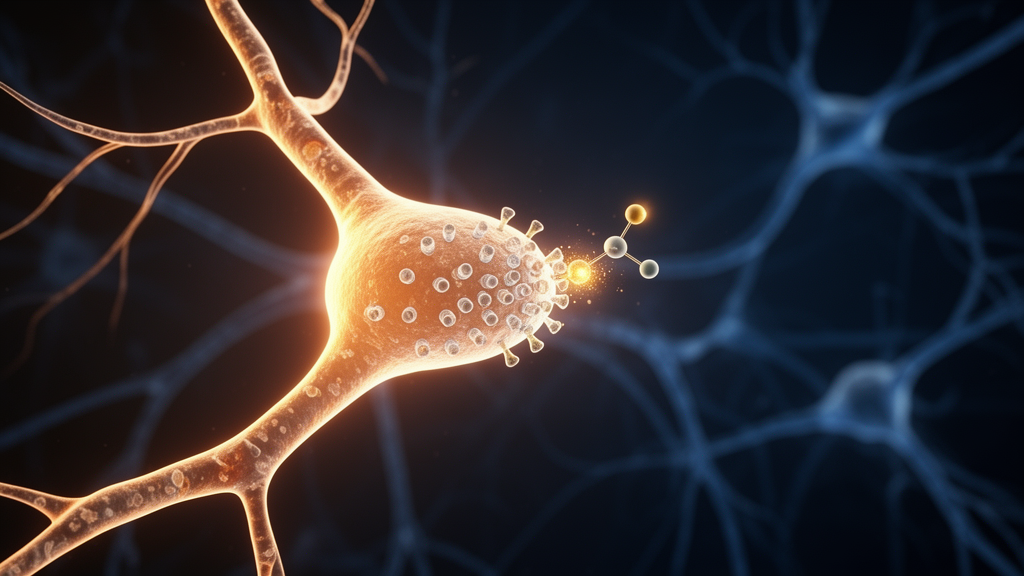
NMDA receptors are central components of neural computation, yet how synapses set their levels has remained unclear. Using conditional GluN1 knock-in mice that allow monitoring of endogenous NMDA receptors, the researchers identified synaptic complexes containing SIK3 and GluN1. SIK3, a serine–threonine protein kinase, localizes to synapses, where it phosphorylates GluN1 at a single site. That one phosphorylation event, the study finds, controls the recruitment of NMDA receptors to synapses.

The evidence for selectivity is striking. Genetic deletion of SIK3 severely and selectively decreased synaptic GluN1 levels by roughly 60 percent, without altering levels of AMPA-type glutamate receptors and without inducing major transcriptional changes. In other words, the effect was not a general collapse of synaptic machinery or a downstream consequence of altered gene expression, but a specific loss of NMDA receptors from synapses.

Timing experiments reinforced the conclusion. Pharmacological inhibition of SIK3 impaired synaptic NMDA receptor responses within 45 minutes, indicating that the kinase continuously maintains receptor localization rather than only building it during development. Consistently, mutating the SIK3 phosphorylation site on GluN1 inhibited the synaptic recruitment of the receptor, while phosphomimetic and phosphorylation-blocking GluN1 mutations constitutively enhanced or suppressed NMDA receptor levels, respectively, as summarized in the study’s figure descriptions.

The study also connects the mechanism to sleep biology. ‘Sleepy’, a known gain-of-function mutation in SIK3 that increases sleep, selectively enhanced synaptic NMDA receptor levels by increasing GluN1 phosphorylation. In cultured neurons, the Sleepy mutation selectively increased GluN1 phosphorylation, and in vivo it enhanced synaptic NMDA receptor responses, according to the reported figures. The authors conclude that SIK3 phosphorylation of GluN1 provides a key signal for recruiting NMDA receptors to synapses.

Because the findings are reported in an abstract and figure summaries of a subscription article, they should be read as the authors’ own characterization of their experiments in mice and cultured neurons rather than as independently replicated results. Even so, the work offers a concrete molecular handle on a long-standing question: how individual synapses decide how many NMDA receptors to hold, a decision with broad implications for excitatory signaling in the brain.

Subject of Research: Molecular control of synaptic NMDA receptor localization by SIK3-mediated phosphorylation of GluN1

Article Title: SIK3 controls synaptic localization of NMDA receptors by phosphorylating GluN1

Article References: Lu, R., Morishita, W., Han, X., Temkin, P., Malenka, R. C., & Südhof, T. C. (2026). SIK3 controls synaptic localization of NMDA receptors by phosphorylating GluN1. Nature Neuroscience. https://doi.org/10.1038/s41593-026-02469-9

Image Credits: AI Generated

DOI: 10.1038/s41593-026-02469-9

Keywords: SIK3, GluN1, NMDA receptors, synapse, phosphorylation, glutamate receptors, neuroscience, Sleepy mutation, AMPAR, synaptic localization, controls, synaptic

Cite Scienmag News

Cassandra Pierce. (October 28, 2026). Single phosphorylation event controls where NMDA receptors sit in the brain. Scienmag. https://scienmag.com/single-phosphorylation-event-controls-where-nmda-receptors-sit-in-the-brain/


Cassandra Pierce. "Single phosphorylation event controls where NMDA receptors sit in the brain." Scienmag, 28 October 2026, https://scienmag.com/single-phosphorylation-event-controls-where-nmda-receptors-sit-in-the-brain/. Accessed 28 October 2026.

Cassandra Pierce. "Single phosphorylation event controls where NMDA receptors sit in the brain." Scienmag. October 28, 2026. https://scienmag.com/single-phosphorylation-event-controls-where-nmda-receptors-sit-in-the-brain/

Tags: AMPARcontrolsGluN1GluN1 phosphorylationglutamate receptorskinase-mediated synaptic signalingmolecular mechanisms of synaptic strengthneural computation and receptor distributionneuronal signaling pathwaysNeuroscienceNMDA receptor localizationNMDA receptor subunit modificationNMDA receptor trafficking mechanismsNMDA receptorsphosphorylationrole of SIK3 kinase in synapsesSIK3Sleepy mutationsynapsesynapticsynaptic composition and functionsynaptic localizationsynaptic NMDA receptor regulationsynaptic plasticity and receptor recruitment
Share26Tweet16
Previous Post

Altermagnetic Corner States Could Encode Information in the Shape of a Nanodisk

Next Post

Therapists see lifestyle psychiatry as relevant to therapy but say guidance is lacking

Related Posts

Systematic review maps end-of-life psychosocial and spiritual needs in physical disability
Medicine

Systematic review maps end-of-life psychosocial and spiritual needs in physical disability

October 28, 2026
Text Message Campaign Reached Only a Third of Patients Overdue for Colorectal Cancer Screening
Medicine

Text Message Campaign Reached Only a Third of Patients Overdue for Colorectal Cancer Screening

October 28, 2026
FOXO1 Emerges as Candidate Regulator and Biomarker in Hip Dysplasia
Medicine

FOXO1 Emerges as Candidate Regulator and Biomarker in Hip Dysplasia

October 28, 2026
Regulators, developers and clinicians in Shenzhen voice concerns over medical AI governance
Medicine

Regulators, developers and clinicians in Shenzhen voice concerns over medical AI governance

October 28, 2026
Modified One-Layer Vasovasostomy Matches Gold Standard in Vasectomy Reversal
Medicine

Modified One-Layer Vasovasostomy Matches Gold Standard in Vasectomy Reversal

October 28, 2026
Small Bone Window Surgery Completely Obliterates Rare C1 Dural Fistulas
Medicine

Small Bone Window Surgery Completely Obliterates Rare C1 Dural Fistulas

October 28, 2026
Next Post
Therapists see lifestyle psychiatry as relevant to therapy but say guidance is lacking

Therapists see lifestyle psychiatry as relevant to therapy but say guidance is lacking

  • Mothers who receive childcare support from maternal grandparents show more optimized

    Mothers who receive childcare support from maternal grandparents show more parental warmth, finds NTU Singapore study

    27656 shares
    Share 11059 Tweet 6912
  • University of Seville Breaks 120-Year-Old Mystery, Revises a Key Einstein Concept

    1061 shares
    Share 424 Tweet 265
  • Bee body mass, pathogens and local climate influence heat tolerance

    682 shares
    Share 273 Tweet 171
  • Researchers record first-ever images and data of a shark experiencing a boat strike

    546 shares
    Share 218 Tweet 137
  • Groundbreaking Clinical Trial Reveals Lubiprostone Enhances Kidney Function

    531 shares
    Share 212 Tweet 133
Science

Embark on a thrilling journey of discovery with Scienmag.com—your ultimate source for cutting-edge breakthroughs. Immerse yourself in a world where curiosity knows no limits and tomorrow’s possibilities become today’s reality!

RECENT NEWS

  • Systematic review maps end-of-life psychosocial and spiritual needs in physical disability
  • Text Message Campaign Reached Only a Third of Patients Overdue for Colorectal Cancer Screening
  • FOXO1 Emerges as Candidate Regulator and Biomarker in Hip Dysplasia
  • Regulators, developers and clinicians in Shenzhen voice concerns over medical AI governance

Categories

  • Agriculture
  • Anthropology
  • Archaeology
  • Athmospheric
  • Biology
  • Biotechnology
  • Blog
  • Bussines
  • Cancer
  • Chemistry
  • Climate
  • Earth Science
  • Editorial Policy
  • Marine
  • Mathematics
  • Medicine
  • Pediatry
  • Policy
  • Psychology & Psychiatry
  • Science Education
  • Science News
  • Social Science
  • Space
  • Technology and Engineering

Subscribe to Blog via Email

Enter your email address to subscribe to this blog and receive notifications of new posts by email.

Join 5,151 other subscribers

© 2025 Scienmag - Science Magazine

Welcome Back!

Login to your account below

Forgotten Password?

Retrieve your password

Please enter your username or email address to reset your password.

Log In
No Result
View All Result
  • HOME
  • SCIENCE NEWS
  • CONTACT US

© 2025 Scienmag - Science Magazine

Discover more from Science

Subscribe now to keep reading and get access to the full archive.

Continue reading



