


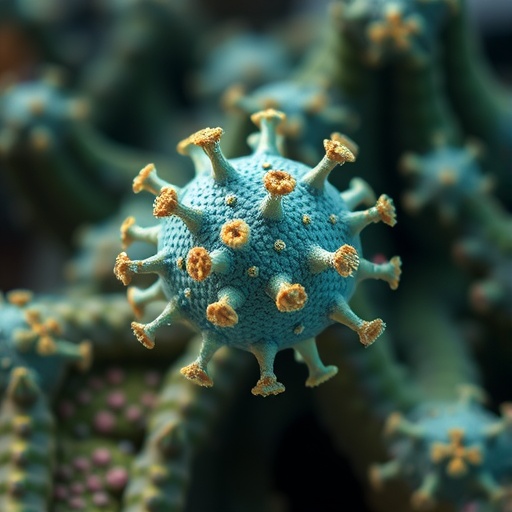
In a groundbreaking advancement for marine virology, researchers have unveiled a novel approach leveraging single-particle genomics to illuminate an astonishing diversity of previously undetected marine viruses. The study, recently published in Nature Microbiology, reveals an abundance of non-canonical viral forms hidden within minuscule nanolitre volumes of ocean water, challenging long-held assumptions about marine viral biodiversity and ecological roles.
Viruses in the ocean play a pivotal role in regulating microbial populations and nutrient cycles, yet much remains enigmatic about their full spectrum, particularly those that diverge from classical viral structures and genetic frameworks. Traditional bulk sequencing techniques, though powerful, often obscure rare or unconventional viral lineages due to their reliance on bulk sample analysis and the dominance of the most abundant genetic material. Addressing this limitation, the researchers turned to single-particle genomics, a technique capable of isolating and sequencing individual viral particles, even when present in infinitesimal environmental volumes.
This pioneering method hinges on the capture and genomic amplification of single viral particles suspended in nanolitre volumes, allowing for unprecedented resolution in virome characterization. By meticulously sorting minute quantities of marine samples, the team circumvented the collective noise generated in more voluminous sample sequencing, thereby unveiling a spectrum of viral entities that had previously escaped detection. The capacity to work with such tiny volume fractions not only conserves precious environmental samples but also refines the precision of viral discovery.
Intriguingly, the genomic data amassed from individual particles exposed a wealth of viral genomes with atypical features, including novel gene arrangements and enzymatic functions. These non-canonical viruses defy textbook definitions, suggesting evolutionary paths distinct from well-characterized viral families. Their detection broadens the scope of marine virology and underscores the ocean’s role as a reservoir of genetic novelty with potential biotechnological implications.
The study’s implications extend into marine ecosystem dynamics, as these newly discovered viruses likely influence microbial community structure in ways previously unaccounted for. Viral infection and lysis are fundamental to the turnover of microbial biomass and nutrient liberation; thus, understanding the full suite of viral actors is critical to modeling carbon cycling and energy flow in marine environments, particularly in the context of climate change and ocean health.
Technically, the researchers combined microfluidic sorting with whole-genome amplification, enabling them to isolate single viral particles for downstream sequencing. This integration of microfluidics and genomics represents a significant leap forward, allowing high-throughput analysis without the dilution and contamination risks associated with bulk sample processing. By focusing on single particles, the technique bypasses the assembly challenges posed by mixed viral populations, delivering complete and accurate viral genomes.
The robustness of this approach was validated by its ability to recover genomes from diverse viral families, including those that were scarcely represented or entirely novel. This comprehensive coverage speaks to the method’s sensitivity and specificity, potentially setting a new standard for viral ecology studies. Such fidelity is instrumental not only in environmental research but also in the surveillance of pathogenic viruses that may emerge from marine reservoirs.
Moreover, the research emphasizes the potential for discovering novel enzymes and genetic circuits encoded within these non-canonical viruses. The unique molecular machinery found may possess functionalities useful in industrial biotechnology or pharmaceutical development. As such, oceanic viruses become a treasure trove for bioengineering applications, extending their relevance beyond ecology into human innovation.
Environmental monitoring stands to benefit significantly from this methodological breakthrough, enabling real-time detection of viral shifts in marine ecosystems with minimal sample volumes. Such monitoring is paramount in detecting viral outbreaks that can influence fisheries, marine biodiversity, and consequently, global food security. The high-resolution insights into virus-host interactions afforded by single-particle genomics promise to refine predictive models of marine ecosystem responses under environmental stressors.
The findings spearheaded by the multidisciplinary team involved a synthesis of virology, genomics, and marine biology expertise, marking a milestone in collaborative scientific innovation. Their work demonstrates the power of integrating emerging technologies to resolve long-standing biological questions, particularly those concerning the invisible yet influential viral inhabitants of the oceans.
Looking forward, the study paves the way for expanding single-particle genomic investigations to other aquatic environments, including freshwater systems and extreme habitats. Such expansion could reveal whether similar non-canonical viruses pervade diverse ecological niches, thus extending our understanding of viral evolution and distribution on a planetary scale.
Furthermore, the approach could inspire developments in viral taxonomy, prompting a reassessment of classification criteria rooted in comprehensive single-particle genome data. This recalibration may resolve ambiguities in viral phylogeny and their ecological niches, clarifying the evolutionary connections among myriad viral forms.
Importantly, the researchers note that while the technique excels in detecting individual viral particles, coupling it with functional studies is essential to decode the ecological roles of these enigmatic viruses. Future work integrating metatranscriptomics and proteomics can illuminate the active viral processes and their impacts on host organisms and marine biogeochemistry.
This breakthrough also invites considerations for biosecurity and environmental management, as expanding viral knowledge may reveal emergent pathogens or viral-mediated processes capable of influencing ecosystem health. Proactive research leveraging single-particle genomics could thus enhance readiness against marine viral threats and contribute to sustainable ocean stewardship.
In sum, single-particle genomics emerges from this study as a transformative lens through which the marine viral world can be viewed with unparalleled clarity. By uncovering an extensive repertoire of non-canonical viruses from volumes as small as nanolitres, this technique redefines the frontiers of marine microbiology, opening vistas for ecological insight, biotechnological innovation, and environmental resilience.
Cite Scienmag News
Morgan Morrow. (November 5, 2025). Single-Particle Genomics Reveals Abundant Unusual Marine Viruses. Scienmag. https://scienmag.com/single-particle-genomics-reveals-abundant-unusual-marine-viruses/
Morgan Morrow. "Single-Particle Genomics Reveals Abundant Unusual Marine Viruses." Scienmag, 5 November 2025, https://scienmag.com/single-particle-genomics-reveals-abundant-unusual-marine-viruses/. Accessed 5 September 2026.
Morgan Morrow. "Single-Particle Genomics Reveals Abundant Unusual Marine Viruses." Scienmag. November 5, 2025. https://scienmag.com/single-particle-genomics-reveals-abundant-unusual-marine-viruses/


