


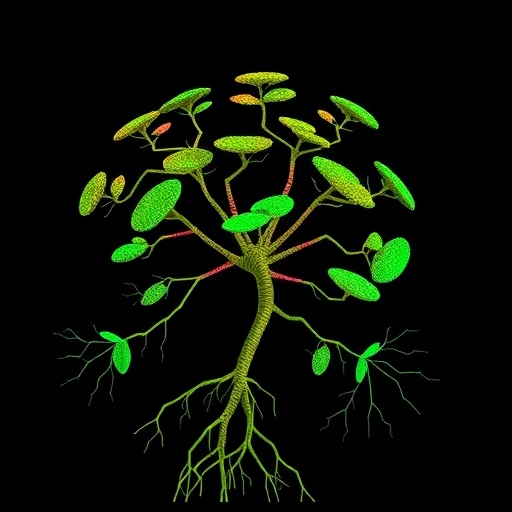
In a comprehensive review published in Plant Molecular Biology, researchers Parinita Majumdar and Maitrayee DasGupta of the University of Calcutta have assembled a sweeping molecular map of how legume roots build the nitrogen-fixing organs known as nodules, and how evolution appears to have repurposed ancient developmental machinery to create this agricultural marvel. The work, published on 27 August 2026, synthesizes decades of genetic and genomic evidence into a unified model of nodule organogenesis, one that places transcription factors at the center of a story spanning hundreds of millions of years of plant evolution.
Root nodules are among the most remarkable structures in the plant kingdom. In legumes such as soybean, Medicago, and Lotus, these specialized root organs host rhizobial bacteria, which convert atmospheric nitrogen into a form the plant can use. This symbiosis allows legumes to grow in nitrogen-poor soils without synthetic fertilizers, and understanding how nodules form has long been a goal for scientists hoping to engineer nitrogen fixation into cereal crops such as rice, wheat, and maize. The new review consolidates what is known about the genetic architecture underlying this process and highlights where the nodule-specific innovations lie.
At the heart of the story is NODULE INCEPTION, or NIN, a transcription factor that the authors identify as the master regulator of root nodule symbiosis. NIN belongs to a family of NIN-LIKE PROTEINS, or NLPs, that respond to nitrate and regulate nitrogen metabolism across the plant kingdom. The review argues that in the common ancestor of the nitrogen-fixing clade, NIN underwent genetic adaptations that rewired its nitrate-responsive function toward a new role: integrating signals from rhizobial infection and diverting pre-existing root developmental programs toward nodule formation. This evolutionary rewiring, the authors suggest, was crucial to the origin of nodulation itself.
Nodule formation is a post-embryonic process, meaning it begins only after the root has developed and only when rhizobia are detected. The plant recognizes the bacteria through a signaling cascade that ultimately activates NIN, which then coordinates a suite of downstream transcription factors across multiple stages of development. These stages include the initiation of the nodule primordium, the establishment of a de novo meristem within the root cortex, and the differentiation of tissues that will house and nourish the nitrogen-fixing bacteria. Each stage is governed by distinct genetic modules, and the review maps out how they connect.
One of the most compelling themes in the review is the concept of co-option, in which evolution recruits existing developmental pathways for new purposes. The authors present evidence that nodule formation borrowed heavily from lateral root development, a much more ancient process. Transcription factors such as LBD16, which is required for lateral root initiation in Arabidopsis, are also recruited during nodule primordium formation. NIN directly targets LBD16 and related factors, effectively hijacking the lateral root program to build a nodule instead. This suggests that nodules did not evolve from scratch but were assembled from parts the plant already possessed.
The review also highlights the role of other conserved developmental regulators. NF-Y transcription factors, which bind CCAAT-box promoter elements, are essential for early nodule development and for controlling rhizobial infection. The SHORT-ROOT and SCARECROW module, which normally patterns radial tissue layers in the root, has been shown in legumes to specify cortical cell fate in a way that enables nodulation. WOX5, a stem cell regulator in the root apical meristem, is expressed in developing nodules and participates in meristem establishment. PLETHORA factors, known as dose-dependent master regulators of root patterning, and class I and class II KNOX genes, which maintain meristem identity, all contribute to nodule architecture. The co-option of these factors, the authors argue, represents deep homology in action: old genetic tools deployed in a new developmental context.
But co-option alone does not explain why nodules are distinct from lateral roots. The review emphasizes that nodule-specific innovations, subtle genetic changes that give the nodule its unique identity, are equally important. These innovations arise through several mechanisms. One is adaptation of cis-regulatory regions, the stretches of DNA that control where and when a gene is expressed. In Medicago truncatula, for example, NIN expression in the pericycle depends on a remote cis-regulatory element that is not present in other contexts, allowing NIN to initiate nodule primordia in a specific cell layer. Another mechanism is paralog retention, in which duplicated genes diverge in function. The ERF family transcription factors EFD and EFD2 in Medicago illustrate this, having undergone neofunctionalization to control nodule number and differentiation in distinct ways. Changes in spatio-temporal gene expression patterns and alterations to protein function further contribute to the novelty of the nodule developmental program.
The review details how these transcription factors operate in sequence. After NIN is activated, it directly induces NF-Y subunit genes, which then regulate essential steps in nodule morphogenesis and bacterial release. NIN also activates cytokinin biosynthesis and signaling, which in turn feeds back to sustain NIN expression, creating a positive feedback loop that drives meristem formation. Periodic cytokinin responses have been shown to coordinate infection and organ development, ensuring that bacterial colonization and nodule growth proceed in tandem. As the nodule matures, transcription factors such as EFD, AHL factors, and NIN-like proteins control nodule number, bacteroid differentiation, and leghemoglobin expression, the oxygen-binding protein that protects nitrogenase inside the nodule.
The authors also address nodule identity itself. Recent work has shown that light-sensitive SHORT HYPOCOTYL genes confer symbiotic nodule identity in Medicago, and that homeotic mutations can transform legume nodule ontogeny into actinorhizal-type ontogeny, the kind seen in actinorhizal plants that form nodules with Frankia bacteria. These findings suggest that the developmental program for nodules shares deep similarities across different symbiotic systems, reinforcing the idea that a common ancestral pathway was recruited multiple times or retained across lineages.
The evolutionary context is equally important. Phylogenomic studies have revealed that nitrogen-fixing root nodule symbiosis arose only once in a common ancestor of the nitrogen-fixing clade but was subsequently lost in multiple lineages, leaving nodulation in a scattered distribution across the flowering plants. The review positions NIN’s rewiring as the pivotal event in this history, with other transcription factor families providing the modular building blocks that could be deployed, modified, or lost depending on ecological pressures.
The practical implications of this work are significant. If researchers can understand the precise genetic modules that govern nodule organogenesis, they could, in principle, engineer nitrogen-fixing nodules into non-nodulating crop plants. This would reduce reliance on synthetic nitrogen fertilizers, which are energy-intensive to produce and contribute to greenhouse gas emissions and water pollution. The review argues that identifying nodule-specific innovations, particularly those involving cis-regulatory adaptations and transcription factor rewiring, will be key to engineering these traits in cereals.
The authors conclude that nodule organogenesis is best understood as a mosaic of conserved developmental pathways, each with nodule-specific genetic tweaks that together produce a novel organ. This framework, they suggest, offers a roadmap for future research aimed at translating the biology of legume symbiosis into sustainable agricultural systems. As the global demand for food continues to rise, understanding how plants build nitrogen-fixing organs at the molecular level could prove to be one of the most impactful tools in the effort to create a more sustainable and productive agriculture.
Cite Scienmag News
Drew Townsend. (September 5, 2026). Mapping transcription factors that drive root nodule development. Scienmag. https://scienmag.com/mapping-transcription-factors-that-drive-root-nodule-development/
Drew Townsend. "Mapping transcription factors that drive root nodule development." Scienmag, 5 September 2026, https://scienmag.com/mapping-transcription-factors-that-drive-root-nodule-development/. Accessed 5 September 2026.
Drew Townsend. "Mapping transcription factors that drive root nodule development." Scienmag. September 5, 2026. https://scienmag.com/mapping-transcription-factors-that-drive-root-nodule-development/


