


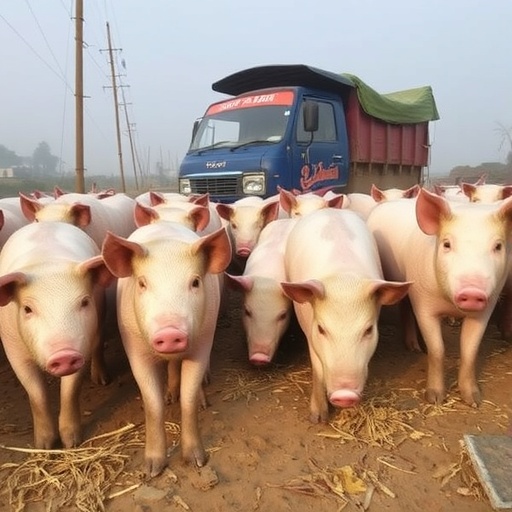
Since its initial detection in March 2022, African swine fever (ASF) has wreaked havoc across Nepal, dismantling not only the country’s pig farming livelihoods but threatening food security and animal health systems with unparalleled severity. A recent study published in Science in One Health presents the most exhaustive epidemiological investigation to date, revealing a grim portrait of 48 confirmed outbreaks and over 17,000 officially recorded pig fatalities. Yet, epidemiologists caution that the actual mortalities could balloon to nearly 70,000—an alarming figure obscured by pervasive underreporting fueled by farmers’ fear of stigmatization and inadequate compensation frameworks.
ASF, caused by a highly resilient and complex DNA virus, is notorious for its lethal impact on domestic pigs. Nepal’s case fatality rate stands at a staggering 92.91%, signifying near-total mortality once the virus invades a herd. This resilience owes much to the virus’s capacity to persist in various environmental reservoirs, including pork products and fomites, without losing infectivity for extended periods. Unlike many viral diseases of livestock, ASF currently lacks any licensed vaccine or antiviral treatment, rendering control measures heavily dependent on epidemiological surveillance and biosecurity interventions.
The decimation of Nepal’s pig population—an estimated 14.5% decline over fiscal years 2021/22 to 2022/23—has exacerbated disruptions within the agricultural sector. Pork production shrank by nearly 10%, starkly reversing years of consistent growth in an industry previously expanding at around 10% annually. For Nepal, where pig farming sustains not only economies but intricate cultural fabrics among indigenous communities such as the Rai, Limbu, Tharu, and Magar, the toll is profound. Beyond economics, ASF is eroding centuries of ritual traditions centered on pigs, severing vital links to heritage and communal identity.
The livelihood ramifications extend to market dynamics as disrupted supply chains have instigated pork price inflations. This threatens nutritional security among vulnerable rural populations reliant on pork as an affordable source of animal protein. Compounding these challenges, international trade repercussions loom large as regulatory bodies like the United States have implemented bans on Nepali pork products due to active ASF outbreaks, spotlighting the transboundary nature of the crisis and underscoring the global stakes inherent in local disease management failures.
Delving into the drivers of this unprecedented viral spread, the study identifies critical epidemiological factors that synergistically fuel ASF persistence and transmission. A prominent issue is the widespread practice of swill feeding—the disposal of untreated food scraps and hotel waste to pigs—which frequently includes ASF-contaminated pork remnants, providing a direct viral entry point into pig populations. This practice, combined with informal cross-border livestock movements with India and China—both known ASF endemic regions—facilitates repeated viral incursions.
The virus’s transmission is further exacerbated by systemic biosecurity failings on farms. Insufficient fencing, unrestricted animal movements, and substandard slaughter protocols create avenues for rapid intra- and inter-farm contagion. Seasonal timing plays a pivotal role too; outbreaks peak during the monsoon season when increased humidity and flooding enhance viral survival in the environment, while cultural festivals drive heightened pig movement and aggregation, accelerating spread.
One of the study’s alarming revelations is the confirmation of ASF infection in wild boar populations within Nepal. This finding is epidemiologically significant as wild boars serve as reservoirs, maintaining the virus in sylvatic cycles independent of domestic herds. These reservoirs complicate eradication efforts due to difficulties controlling wildlife-livestock interfaces, raising concerns about endemic establishment and long-term persistence.
These outbreaks have painfully exposed entrenched vulnerabilities in Nepal’s animal health infrastructure. The veterinary system, understaffed and underfunded, is concurrently battling multiple infectious diseases including Lumpy Skin Disease and Classical Swine Fever. Diagnostic labs are concentrated in urban centers, delaying rural outbreak confirmations and containment actions. Although legal frameworks mandating biosecurity and hygiene exist, their enforcement is sporadic and ineffective. At the grassroots, numerous smallholders lack knowledge, resources, or incentives to implement even basic preventive measures.
The resultant reactive disease control approach—dominated by outbreak response rather than proactive prevention—has proven inadequate against ASF’s exceptional lethality. Learning from this, the study proposes a comprehensive, multi-faceted control strategy rooted in eight strategic priorities. These include bolstering surveillance systems for early detection, expanding decentralized veterinary diagnostic capabilities, enforcing stringent farm-level biosecurity standards, regulating cross-border animal movements rigorously, empowering communities through widespread awareness campaigns, instituting ASF-specific legal provisions, closely monitoring interactions between wild boars and domestic pigs, and fostering inclusive stakeholder engagement.
Crucially, the authors advocate adopting a One Health framework that transcends traditional animal health paradigms. Recognizing ASF’s intersectionality with human livelihoods, ecosystem dynamics, and food security, this integrative approach calls for coordinated action across multiple sectors, government ministries, regional partners, and international agencies such as FAO and WOAH. Without such collaboration, efforts risk fragmentation, undermining the comprehensive management necessary for sustainable control.
Nepal’s tragic experience sends a powerful cautionary message to neighboring countries and beyond. Many nations in South and Southeast Asia share analogous challenges—resource constraints, porous borders, smallholder farming dominance, and low biosecurity awareness—that together potentiate vulnerabilities to transboundary animal diseases like ASF. They stand to gain by heeding Nepal’s documented missteps and strategic recommendations, thereby building resilient veterinary systems capable of early containment and mitigation before the next incursion.
In sum, ASF in Nepal is emblematic of the complex challenges posed by emergent livestock diseases in a globalized, interconnected world. Its profound socioeconomic and cultural impacts underscore the necessity for sustained investment in veterinary science, community education, and cross-sectoral governance. The looming threat of viral persistence in wildlife reservoirs and international trade embargoes casts a long shadow, demanding urgent, coordinated, and scientifically informed responses. Only through such commitment can Nepal and similarly vulnerable regions hope to safeguard their food systems, rural economies, and cultural legacies in the face of relentless viral threats.
News Publication Date: 4-Mar-2026
Web References: http://dx.doi.org/10.1016/j.soh.2026.100150
Cite Scienmag News
William Thompson. (April 15, 2026). Silent Spread: African Swine Fever Advances Unnoticed Through Nepal’s Pig Industry. Scienmag. https://scienmag.com/silent-spread-african-swine-fever-advances-unnoticed-through-nepals-pig-industry/
William Thompson. "Silent Spread: African Swine Fever Advances Unnoticed Through Nepal’s Pig Industry." Scienmag, 15 April 2026, https://scienmag.com/silent-spread-african-swine-fever-advances-unnoticed-through-nepals-pig-industry/. Accessed 3 September 2026.
William Thompson. "Silent Spread: African Swine Fever Advances Unnoticed Through Nepal’s Pig Industry." Scienmag. April 15, 2026. https://scienmag.com/silent-spread-african-swine-fever-advances-unnoticed-through-nepals-pig-industry/


