


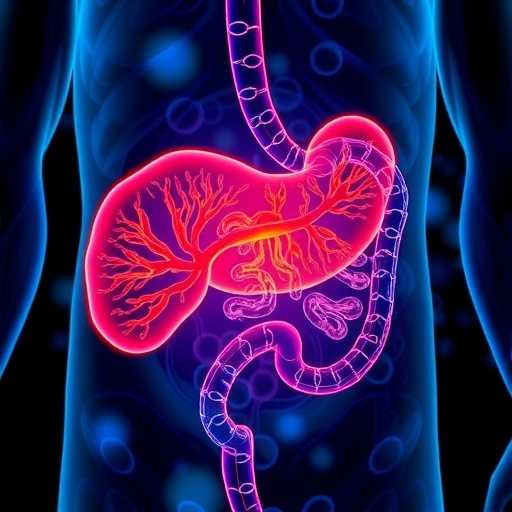
In a groundbreaking study published in the prestigious journal Gut Microbes, researchers at the University of California, Irvine’s Joe C. Wen School of Population & Public Health have unveiled a critical biological mechanism linking metabolic dysfunction-associated steatotic liver disease (MASLD)—commonly known as fatty liver disease—to exacerbated outcomes in foodborne infections. This research represents a significant advance in our understanding of how chronic liver disease impacts infectious disease susceptibility and severity, a topic of growing global concern given rising incidences of MASLD and the increasing prevalence of foodborne pathogens.
MASLD, now recognized as the most common chronic liver condition worldwide, encompasses a spectrum of liver abnormalities ranging from benign fat accumulation within liver cells to severe manifestations such as cirrhosis and hepatocellular carcinoma. The disease is tightly associated with metabolic syndrome, including obesity, type 2 diabetes, and hypertension, which complicate the clinical picture and exacerbate disease progression. Although clinicians have long observed that patients with MASLD are more vulnerable to infections, especially foodborne diseases, the underlying biological pathways have remained enigmatic until this pivotal study.
Using a rigorously designed preclinical model, scientists infected MASLD-induced mice with Vibrio vulnificus, a highly virulent foodborne bacterium frequently linked to the consumption of contaminated seafood. The outcomes were stark: MASLD mice exhibited dramatically amplified liver injury, heightened inflammatory responses, and accelerated fibrotic changes compared to healthy controls exposed to the same pathogen. This strongly suggests that MASLD alters the host’s defensive landscape, rendering it substantially less capable of combating invasive pathogens.
Central to this study’s novelty is the elucidation of the gut–liver axis as the critical conduit linking intestinal dysbiosis to detrimental hepatic consequences. MASLD precipitates profound disturbances in gut health, such as increased intestinal permeability—a phenomenon colloquially termed “leaky gut.” This, combined with immune dysregulation and microbial imbalances, facilitates translocation of pathogenic bacteria and pro-inflammatory molecules from the intestine to the liver. The resultant cascade triggers a hyper-inflammatory state within hepatic tissues that exacerbates tissue damage and promotes rapid disease progression.
Delving deeper into immunological dynamics, the researchers identified a surge in pro-inflammatory immune cell activation within MASLD livers following Vibrio vulnificus exposure. Elevated levels of iron-binding proteins were also noted, providing the pathogen with an essential nutrient that fuels its rapid proliferation. Such findings underscore the multifaceted interplay between pathogen virulence factors and host metabolic derangements, revealing a complex microenvironment that favors bacterial persistence and pathogenicity.
Perhaps the most promising aspect of the findings comes from interventions targeting the gut microbiome. By restoring a healthy microbiome balance post-infection, MASLD-affected mice demonstrated significant reduction in liver damage, inflammation, and fibrotic indicators. This pioneering insight positions the gut microbiome not as a passive passenger but as a modifiable element whose correction could mitigate severe infection outcomes. Microbiome restoration therapies, including fecal microbiota transplantation or targeted probiotics, may thus emerge as innovative strategies to shield vulnerable populations.
The broader epidemiological context heightens the urgency of these discoveries. Non-cholera vibriosis, including infections caused by Vibrio vulnificus and Vibrio parahaemolyticus, afflicts approximately 500,000 individuals globally each year, with rates climbing in tandem with environmental changes such as ocean warming due to climate change. Patients with chronic liver diseases like MASLD experience disproportionately severe infections, with some data indicating up to a fivefold increase in risk for critical illness or death.
This study’s identification of gut microbial dysfunction as a pivotal factor underlying MASLD’s disproportionate impact on infection severity fills a vital knowledge gap in hepatology and infectious disease research. It lays a foundational blueprint for future clinical trials exploring the efficacy of microbiome-based interventions and prophylactic measures specifically tailored toward at-risk populations with fatty liver disease.
Furthermore, by demonstrating that the gut–liver axis disruption contributes not only to chronic liver pathology but also to acute infectious outcomes, this research invites a reexamination of patient management practices. Clinicians may soon incorporate gut microbiome assessments and therapeutic modulation into routine care for MASLD patients, particularly those with potential exposure to foodborne pathogens.
Taken together, these results emphasize an urgent need to address metabolic and microbial health as intertwined determinants of vulnerability to infectious diseases. As fatty liver disease prevalence surges alongside global metabolic disorders, the intersection of microbiome science, immunology, and hepatology promises innovative pathways to reduce global infectious disease burdens fueled by metabolic dysfunction.
This study was a multidisciplinary collaboration involving doctoral students and faculty across environmental and occupational health, gastroenterology, hepatology, and environmental science. It was supported by a grant from the National Institute of Environmental Health Sciences and is a testament to the power of integrative research in tackling complex biomedical challenges.
With rising cases of vibriosis exacerbated by climate-induced environmental shifts, scientific advances like this not only improve our understanding but also illuminate actionable strategies to safeguard millions worldwide suffering from metabolic liver disease and its devastating complications.
News Publication Date: April 15, 2026
Web References: https://www.tandfonline.com/doi/full/10.1080/19490976.2026.2652474#abstract
References: Study supported by NIH/NIEHS Grant 1P01ES028942-01
Cite Scienmag News
Morgan Morrow. (April 15, 2026). Gut Microbiome: A Crucial Determinant of Bacterial Infection Outcomes in Fatty Liver Disease. Scienmag. https://scienmag.com/gut-microbiome-a-crucial-determinant-of-bacterial-infection-outcomes-in-fatty-liver-disease/
Morgan Morrow. "Gut Microbiome: A Crucial Determinant of Bacterial Infection Outcomes in Fatty Liver Disease." Scienmag, 15 April 2026, https://scienmag.com/gut-microbiome-a-crucial-determinant-of-bacterial-infection-outcomes-in-fatty-liver-disease/. Accessed 4 September 2026.
Morgan Morrow. "Gut Microbiome: A Crucial Determinant of Bacterial Infection Outcomes in Fatty Liver Disease." Scienmag. April 15, 2026. https://scienmag.com/gut-microbiome-a-crucial-determinant-of-bacterial-infection-outcomes-in-fatty-liver-disease/


