


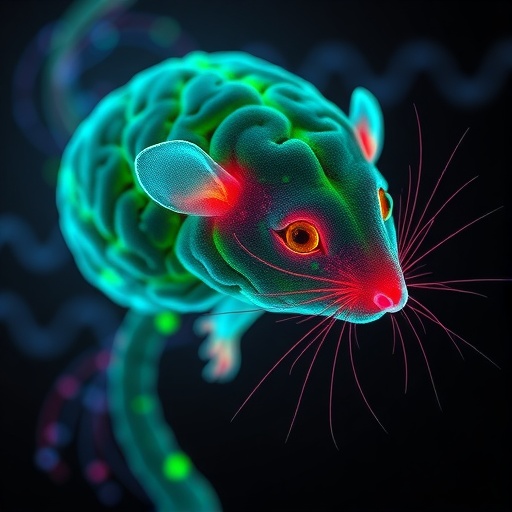
Alzheimer’s disease is often described through the lens of memory loss, but the condition can also erode motivation, initiative and emotional engagement. These behavioral changes, sometimes grouped under the term apathy, can be among the most disabling consequences of neurodegeneration for patients and their families. A study by H.M. Jester, X. Wang, T. Li and colleagues, published in Translational Psychiatry, reports that suppressing a protein called eukaryotic elongation factor 2 kinase, or eEF2K, alleviated cognitive deficits and apathy-like behavior in APP/PS1 mice, a widely used experimental model of Alzheimer’s disease. The findings place neuronal protein synthesis and the molecular control of synaptic function at the center of a possible new strategy for treating symptoms that extend beyond memory.
The work focuses on eEF2K, an enzyme that regulates how efficiently neurons produce proteins. Neurons depend on precisely timed protein synthesis to maintain synapses, adapt to incoming signals and form the cellular changes that support learning. eEF2K controls this process indirectly by modifying eukaryotic elongation factor 2, commonly known as eEF2. When eEF2 is phosphorylated, the movement of ribosomes along messenger RNA is slowed, reducing the rate at which new proteins are assembled. This mechanism is not inherently harmful: temporary control of translation helps cells conserve energy and prioritize particular messages during stress. However, if the pathway becomes persistently overactive, it could interfere with the protein production required for healthy synaptic communication and behavioral flexibility.
The researchers examined this pathway in APP/PS1 mice, which carry genetic alterations associated with the production and accumulation of amyloid-beta, a protein strongly linked to Alzheimer’s pathology. These mice are used to investigate how amyloid-related changes affect brain circuits and behavior, although no animal model reproduces the full complexity of human Alzheimer’s disease. Within this experimental framework, neuronal suppression of eEF2K was associated with improvements in cognitive performance and a reduction in apathy-like behavior. The result is important because it suggests that altering a basic cellular process may influence both the cognitive and motivational dimensions of disease-related dysfunction.
Apathy is not simply ordinary tiredness or sadness. In neurological disorders, it can involve diminished goal-directed behavior, reduced curiosity and a loss of initiative, even when a person retains the physical ability to act. Its biological origins are thought to involve interconnected networks linking the prefrontal cortex, hippocampus, striatum and other regions responsible for decision-making, reward processing and memory. By reporting an effect on apathy-like behavior alongside cognition, the study points toward a broader role for neuronal eEF2K than memory formation alone. The findings suggest that abnormal control of translation may disrupt the coordination between learning, motivation and action, although the precise circuits responsible remain a subject for further research.
At the cellular level, the proposed mechanism is closely related to synaptic plasticity. When neurons receive signals, they must rapidly adjust the abundance and activity of proteins located at synapses. These proteins shape the strength of communication between neurons, influence receptor trafficking and help stabilize changes produced by experience. Excessive inhibition of translation could prevent synapses from adapting appropriately, while dysregulated protein production could also create an imbalance in neuronal networks. Suppressing eEF2K may release part of this translational brake, allowing eEF2-dependent protein synthesis to proceed more effectively. The study therefore connects behavioral improvement with a molecular pathway that sits downstream of cellular stress and upstream of the structural and functional maintenance of synapses.
The implications are especially striking because Alzheimer’s research has increasingly expanded beyond the removal of amyloid plaques. Amyloid-beta remains a central target, but clinical symptoms arise from a much wider network of processes, including synaptic failure, inflammation, altered metabolism and the loss of communication among vulnerable brain regions. A treatment that modifies neuronal resilience or restores the capacity of synapses to adapt could, in principle, complement approaches directed at amyloid or tau. The new findings do not establish that eEF2K suppression would work in people, nor do they show that it would reverse established neurodegeneration. They do, however, identify neuronal translational control as a potential therapeutic entry point in a disease where effective options remain limited.
The study also highlights why behavioral symptoms deserve to be treated as biological outcomes rather than secondary complications. Apathy can reduce participation in rehabilitation, social interaction and everyday activities, potentially accelerating functional decline. In laboratory animals, measuring an apathy-like state is necessarily indirect, because researchers must infer motivation from patterns of exploration, effort, reward seeking or engagement with tasks. Such tests can be influenced by movement, anxiety, sensory function and general health, making interpretation complex. The reported association between eEF2K suppression and improved behavior is therefore best understood as evidence that the pathway affects motivationally relevant processes in the APP/PS1 model, not as a direct reproduction of the human clinical syndrome.
Several questions will determine whether this molecular insight can move toward medical application. Researchers will need to establish how long the benefits persist, whether eEF2K suppression remains effective at different stages of disease and which neuronal populations are most important. They must also determine whether the intervention changes amyloid accumulation, synaptic function, inflammation or other pathological features, and whether its behavioral effects arise independently of those changes. Because protein synthesis is fundamental to every cell, treatment would need to be carefully targeted to the nervous system and calibrated to avoid disrupting essential forms of translational control. Approaches such as selective small-molecule inhibitors, gene-silencing systems or cell-specific delivery could eventually be considered, but each would present substantial safety and technical challenges.
The findings arrive at a moment when Alzheimer’s science is increasingly focused on the biology of vulnerable neural circuits and the molecular processes that determine whether neurons adapt or fail. By linking eEF2K activity with cognitive deficits and apathy-like behavior, Jester, Wang, Li and their colleagues provide a framework for exploring how the machinery that builds neuronal proteins contributes to the lived dimensions of dementia. The study is preclinical, and its conclusions will require replication in other models and validation in human tissue and clinical research. Even so, it offers a provocative shift in perspective: restoring the ability of neurons to regulate protein production may not merely protect synapses, but could also help preserve the motivation and engagement that make cognition useful in everyday life.
Cite Scienmag News
Diana Fleming. (August 19, 2026). Silencing neuronal eEF2K eases cognitive deficits and apathy in Alzheimer’s mice. Scienmag. https://scienmag.com/silencing-neuronal-eef2k-eases-cognitive-deficits-and-apathy-in-alzheimers-mice/
Diana Fleming. "Silencing neuronal eEF2K eases cognitive deficits and apathy in Alzheimer’s mice." Scienmag, 19 August 2026, https://scienmag.com/silencing-neuronal-eef2k-eases-cognitive-deficits-and-apathy-in-alzheimers-mice/. Accessed 4 September 2026.
Diana Fleming. "Silencing neuronal eEF2K eases cognitive deficits and apathy in Alzheimer’s mice." Scienmag. August 19, 2026. https://scienmag.com/silencing-neuronal-eef2k-eases-cognitive-deficits-and-apathy-in-alzheimers-mice/


