


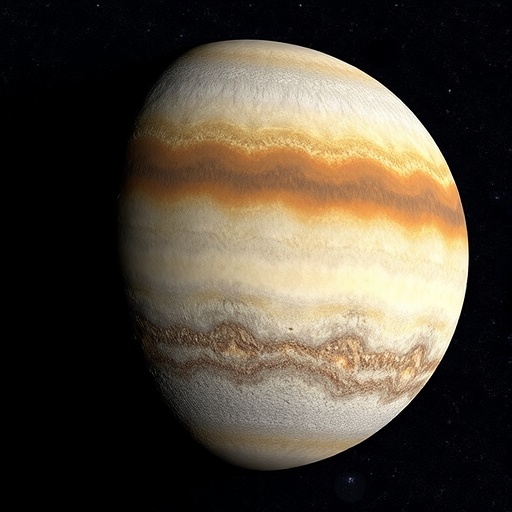
Mercury’s most enigmatic volcanic province—the northern smooth plains, a vast expanse of flood volcanism covering more than six percent of the planet’s surface—has long puzzled planetary scientists because it displays a degree of crustal deformation that standard models of lunar-style volcanic plains simply cannot reproduce. New research published in Nature Communications argues that the answer lies in the deep interior of the smallest terrestrial planet: a mantle upwelling that once surged upward beneath the northern hemisphere and then waned, leaving behind a crust that was stretched, compressed, and folded into some of the most heavily deformed terrain in the inner solar system.
The northern smooth plains were first mapped in detail by NASA’s MESSENGER spacecraft, which orbited Mercury between 2011 and 2015. The plains are among the youngest large-scale geological units on the planet, with crater-counting ages suggesting emplacement roughly 3.7 to 3.9 billion years ago, near the tail end of the period of intense bombardment that sculpted the early solar system. Their smooth appearance in image data is deceptive. Close inspection of the terrain reveals a dense population of tectonic structures—wrinkle ridges, graben, and lobate scarps—that record multiple, superposed episodes of deformation. On the Moon, comparable mare basalt provinces are far less tectonically active; their deformation is dominated by simple contraction from cooling and global shrinkage. Mercury’s northern plains, by contrast, tell a much more complicated story.
The team behind the new study, led by Jianghui Xie with co-authors including Yan Zhan and Shun Dai’s collaborator Gong, approached the problem by combining geologic mapping of the plains’ deformation patterns with numerical models of Mercury’s thermochemical evolution. Their central hypothesis is that a mantle upwelling—a broad, buoyant plume of hot silicate material rising through Mercury’s convecting mantle—developed beneath the northern hemisphere early in the planet’s history. Such an upwelling would have done two things simultaneously. First, it would have driven partial melting of the mantle, generating the enormous volumes of basaltic melt that erupted to form the plains in the first place. Second, it would have dynamically supported topography and imparted extensional stresses on the overlying lithosphere, stretching the crust and allowing the plains’ distinctive patterns of graben and normal faults to form.
The critical insight of the new work is what happened afterward. Because Mercury is a small planet—only about 4,880 kilometers across—it has a comparatively small volume relative to its surface area, meaning it sheds heat efficiently. Interior models indicate that Mercury’s mantle cooled rapidly during the first billion or two years of solar system history, and its convective vigor declined dramatically. The upwelling that once fed the northern plains was therefore not a permanent feature but a transient one. As the planet’s interior cooled, the upwelling waned: it weakened, spread laterally, and eventually lost its capacity to dynamically support the crust above it. The consequence was a reversal of the stress field at the surface. Where extension had once stretched the crust, now gravitational loading of the thick volcanic plains and the withdrawal of dynamic support subjected it to compression.
That stress reversal is the signature written into the plains themselves. The researchers’ analysis shows that deformation structures in the northern smooth plains record both early extensional features—graben and troughs that opened as the crust was pulled apart atop the rising plume—and later compressional features, including wrinkle ridges and thrust-faulted scarps that formed as the crust was squeezed. The magnitude of the later compression is striking: shortening strains inferred from the ridged terrain substantially exceed what global contraction alone could deliver. Mercury’s interior has cooled and contracted since the plains formed, producing the planet’s famous network of lobate scarps, but the local deformation in the northern plains is too intense and too spatially concentrated to be explained by global shrinkage alone. A waning upwelling, the authors conclude, provides the missing piece.
The numerical modeling underpinning the study solves the coupled equations of mantle convection with temperature- and pressure-dependent viscosity, tracking how Mercury’s mantle evolves as radiogenic heat production declines and the planet loses its primordial heat. The models demonstrate that a hemispheric-scale upwelling is a natural outcome of Mercury’s early mantle dynamics, particularly given the planet’s unusually iron-poor bulk composition and its thin silicate shell over a large iron core, which together shape the convection pattern. As the models run forward in time, the upwelling systematically weakens; dynamic topography subsides; and the stress state at the base of the volcanic pile flips from dominantly extensional to dominantly compressional. The predicted deformation history matches the observed superposition relationships in the plains, where extensional structures are cut or buried by younger compressional ones.
This work has implications well beyond Mercury. The northern smooth plains are one of the best-preserved examples in the solar system of a large flood-basalt province on a terrestrial planet, comparable in some respects to Earth’s Deccan or Siberian traps, though far older and better exposed. On Earth, plate tectonics continuously overprints and destroys the record of mantle plume activity; on the Moon, basaltic plains formed in a context where mantle convection had already largely ceased. Mercury sits in between: a one-plate planet with vigorous-enough early convection to generate plume-driven volcanism, but with a rapid enough cooling history to preserve the full arc of a plume’s life cycle—from uplift and eruption through subsidence and compression—in a single geologic archive.
The findings also speak to a broader question in planetary science: how do interior dynamics of small planets manifest at the surface? Mercury has proven to be anything but the dead, inert world once imagined. MESSENGER revealed pyroclastic deposits suggesting volatile-rich explosive volcanism, hollows formed by volatile loss from the surface, and a magnetic field generated in a partially molten outer core. The new study adds another dimension, showing that deep mantle circulation directly sculpted the planet’s largest volcanic province, and that the decline of that circulation is recorded as clearly as the circulation itself. Mercury’s crust, in effect, is a seismogram of its own dying mantle plume.
There are also consequences for interpreting upcoming data. ESA and JAXA’s BepiColombo mission, currently en route to Mercury with arrival planned for 2026, will carry instruments capable of measuring the planet’s gravity field, topography, and composition at higher resolution than MESSENGER. A waned upwelling should leave detectable fingerprints in all three: residual mass anomalies in the mantle, subtle long-wavelength topographic relief across the northern hemisphere, and compositional heterogeneity inherited from the plume-fed volcanism. The new modeling provides a concrete set of predictions that BepiColombo’s measurements can test, potentially allowing scientists to constrain Mercury’s present-day mantle viscosity and thermal state directly from surface observations.
For the general reader, the study offers a vivid reminder that planetary surfaces are not frozen snapshots but records of deep, slow-motion processes. The ridges and troughs crisscrossing Mercury’s northern plains formed over hundreds of millions of years, as a column of hot rock rose, fueled cataclysmic eruptions, and then faded as a small planet bled its heat into space. What remains is a landscape compressed between two eras—stretched by a plume that no longer exists, and squeezed by a planet that is still shrinking. Deciphering that record required the combined power of high-resolution spacecraft imagery, precise topographic measurements, and state-of-the-art geodynamic simulation, and it demonstrates how much of a planet’s history can be recovered from its deformed crust alone.
As Mercury continues to lose its primordial heat, its lobate scarps are still growing, and its plains are still shortening by infinitesimal amounts each year. The new research shows that the magnitude and pattern of that deformation cannot be understood as a simple consequence of cooling alone; it is the compound product of global contraction superimposed on the collapse of dynamic support from a waning mantle upwelling. In reconstructing that sequence, the authors have transformed the northern smooth plains from a puzzling anomaly into one of the most informative natural laboratories for studying the coupling between mantle convection and surface tectonics on any one-plate world—and they have set the stage for the next generation of exploration at the solar system’s innermost planet.
Cite Scienmag News
Violet Maxwell. (September 6, 2026). Shrinking mantle upwelling shaped Mercury’s heavily deformed northern smooth plains. Scienmag. https://scienmag.com/shrinking-mantle-upwelling-shaped-mercurys-heavily-deformed-northern-smooth-plains/
Violet Maxwell. "Shrinking mantle upwelling shaped Mercury’s heavily deformed northern smooth plains." Scienmag, 6 September 2026, https://scienmag.com/shrinking-mantle-upwelling-shaped-mercurys-heavily-deformed-northern-smooth-plains/. Accessed 6 September 2026.
Violet Maxwell. "Shrinking mantle upwelling shaped Mercury’s heavily deformed northern smooth plains." Scienmag. September 6, 2026. https://scienmag.com/shrinking-mantle-upwelling-shaped-mercurys-heavily-deformed-northern-smooth-plains/


