


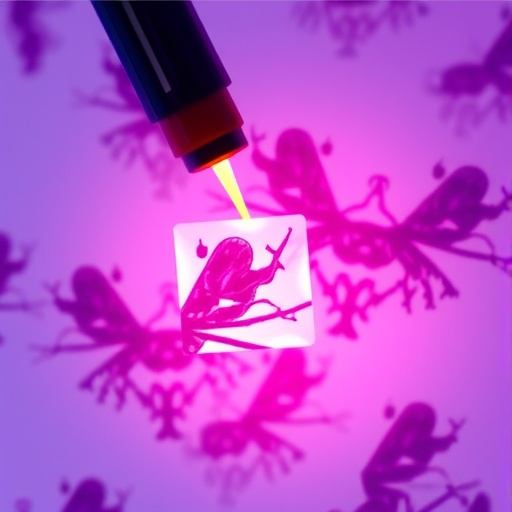
In a groundbreaking advance poised to revolutionize diagnostic pathology and biomarker analysis, researchers have unveiled a pioneering approach that synergizes shock-scattering micro-histotripsy with fine needle aspiration (FNA). This novel method enhances the precision and depth of cellular retrieval, dramatically improving biomarker profiling and cytopathological assessment. As conventional biopsy techniques face limitations in sample quality and representativeness, this technology introduces a new paradigm in minimally invasive diagnostics, promising not only earlier and more accurate disease detection but also significant improvements in personalized medicine.
Fine needle aspiration, a mainstay in diagnostic cytology, has long served as a minimally invasive technique to obtain cellular material from tumors or suspicious lesions. However, traditional FNA often struggles with inadequate cellular yield and sample heterogeneity, factors that can compromise the accuracy of downstream molecular and cytopathological analyses. The integration of shock-scattering micro-histotripsy addresses these challenges by utilizing precision-focused ultrasound pulses to induce controlled cavitational activity and mechanical fractionation of tissue in close proximity to the needle tip. This process effectively disrupts cellular architecture, facilitating the release of a greater quantity and diversity of cells, including rare tumor and stromal populations.
The principle of micro-histotripsy hinges on the generation of high-intensity acoustic pulses that produce localized shock waves within soft tissue. Unlike conventional histotripsy, which leverages higher energy levels to induce bulk tissue liquefaction, shock-scattering micro-histotripsy uses finely tuned acoustic parameters to create micro-scale bubble clouds that selectively disaggregate tissue matrices without widespread damage. These bubble clouds not only fragment cells adjacent to the aspiration needle but also induce microstreaming flows that assist in mobilizing cells toward the needle aperture, thereby optimizing sample collection efficacy.
The biological implications of this refined cellular disruption are profound. Enhanced cellular liberation improves the yield of diagnostically relevant biomarkers, ranging from nucleic acids and proteins to extracellular vesicles, which are pivotal for molecular profiling techniques including next-generation sequencing and mass spectrometry. This elevated biomarker abundance facilitates comprehensive tumor characterization, enabling clinicians to better stratify patients for targeted therapies and monitor disease progression with unparalleled sensitivity.
From a cytopathological perspective, the shock-scattering micro-histotripsy-augmented FNA method generates samples with superior cellular preservation and architectural integrity. The controlled mechanical fractionation minimizes cellular trauma often inherent in conventional aspiration, improving morphological detail and diagnostic quality under microscopic examination. This aspect is especially critical in assessing fine features such as nuclear atypia, mitotic figures, and stromal interactions that underpin accurate cancer subtyping and grading.
Technically, the integration of micro-histotripsy with FNA necessitates precise control over acoustic parameters including pulse amplitude, frequency, and duty cycle. The research highlights the optimization of these variables to achieve maximal tissue disruption adjacent to the needle without propagating unwanted bioeffects in surrounding healthy tissue. Real-time ultrasound imaging facilitates accurate needle placement and monitoring of microbubble activity, ensuring procedural safety and reproducibility. These innovations collectively constitute a sophisticated platform capable of being adapted for a variety of anatomical sites and pathological contexts.
The translational potential for clinical oncology is immense. Early-stage solid tumors and deeply situated lesions that are challenging to biopsy using conventional means become accessible targets, broadening the diagnostic landscape for multiple cancer types. Furthermore, the enhanced sample quality can accelerate the advent of liquid biopsy adjuncts by enabling more sensitive detection of circulating tumor cells and minimal residual disease markers from fine needle aspirates.
Beyond oncology, the method holds promise for a spectrum of biomedical applications where high-fidelity cellular samples are key. Infectious disease diagnostics, autoimmune disorder profiling, and regenerative medicine could all benefit from this technology’s ability to isolate intact, viable cells with minimal invasiveness. Moreover, by reducing the need for surgical biopsy, patient morbidity and healthcare costs may be substantially decreased, enhancing patient compliance and outcomes.
The study meticulously documents the efficacy of shock-scattering micro-histotripsy in a series of preclinical models and initial clinical pilot trials. Results demonstrate significant improvements in biomarker yield, cellular diversity, and diagnostic concordance when compared to standard FNA procedures. Importantly, safety profiles indicate a negligible incidence of adverse effects, highlighting the method’s tolerability for routine clinical implementation.
Researchers envision that further refinements will include automation of acoustic parameter adjustments and integration with robotic biopsy systems to enable fully guided, precision sampling in real-time. Coupled with advances in artificial intelligence algorithms for immediate cytopathological interpretation, this approach could herald a new era of rapid, point-of-care diagnostics with unprecedented accuracy and scope.
Crucially, the intersection of physics, engineering, and molecular biology in this technology exemplifies the power of interdisciplinary innovation in addressing longstanding clinical challenges. Shock-scattering micro-histotripsy-aided FNA not only enhances sample acquisition but also provides a richer window into the biological intricacies of disease, bridging the gap between minimally invasive procedures and comprehensive molecular diagnostics.
As this technology moves toward broader clinical validation and regulatory approval, it is poised to become a cornerstone tool in personalized medicine. The potential to improve early cancer detection, tailor therapies, and monitor therapeutic responses in real time represents a transformative leap in patient-centric care. The capacity for dynamic sampling and biomarker enhancement will likely catalyze novel insights into tumor biology and resistance mechanisms.
In sum, the work by Wang, Kedarisetti, McAlister, and colleagues marks a seminal contribution to medical diagnostics, advancing fine needle aspiration beyond its traditional limits through the innovative application of shock-scattering micro-histotripsy. This method’s unique ability to amplify biomarker profiling and cytopathology represents a critical stride towards more effective, less invasive diagnostics and therapeutic interventions in the coming decade.
As the medical community eagerly anticipates follow-up studies and expansive clinical trials, the promise embodied in this technology reaffirms the vital role of acoustic bioengineering in shaping the future of medicine. By marrying the precision of ultrasound physics with the complexity of cellular pathology, this approach paves the way for a new class of diagnostic tools that empower clinicians and improve patient outcomes worldwide.
Cite Scienmag News
Ophelia Keating. (May 3, 2026). Shock-Scattering Micro-Histotripsy Boosts Fine Needle Biopsies. Scienmag. https://scienmag.com/shock-scattering-micro-histotripsy-boosts-fine-needle-biopsies/
Ophelia Keating. "Shock-Scattering Micro-Histotripsy Boosts Fine Needle Biopsies." Scienmag, 3 May 2026, https://scienmag.com/shock-scattering-micro-histotripsy-boosts-fine-needle-biopsies/. Accessed 4 September 2026.
Ophelia Keating. "Shock-Scattering Micro-Histotripsy Boosts Fine Needle Biopsies." Scienmag. May 3, 2026. https://scienmag.com/shock-scattering-micro-histotripsy-boosts-fine-needle-biopsies/


