


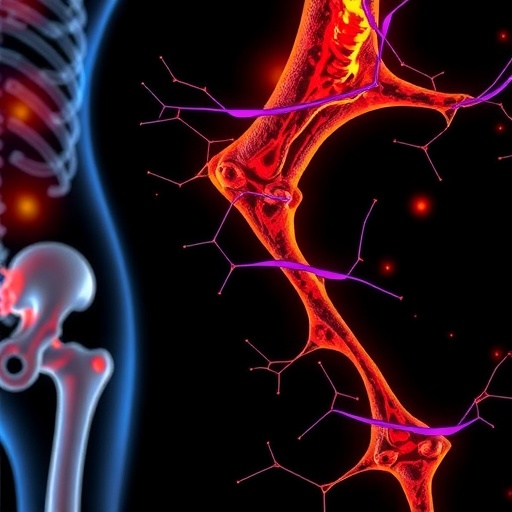
In a groundbreaking study published in Experimental & Molecular Medicine, researchers have unearthed a novel molecular pathway linking iron overload to enhanced lipid metabolism in fibroblast-like synoviocytes (FLS), thereby exacerbating bone destruction in rheumatoid arthritis (RA). This discovery sheds light on the intricate biochemical network underpinning RA progression and opens promising avenues for targeted therapeutic interventions aimed at mitigating joint damage.
Rheumatoid arthritis is a chronic autoimmune disorder characterized predominantly by synovial inflammation and progressive joint destruction. While immune dysregulation has long been recognized as a driver of RA pathology, emerging evidence now points to metabolic rewiring within joint-resident cells as a critical contributor to disease severity. In this context, the study by Liu, Fang, Wang, and colleagues investigates how iron homeostasis alterations modulate lipid metabolic pathways in FLS — critical players in synovial pathology.
Iron overload has historically been implicated in various inflammatory and degenerative diseases, but its mechanistic impact on RA synoviocytes remained elusive. The team focused on iron regulatory protein 1 (IRP1), a key sensor of cellular iron levels, and its downstream effects mediated through the SREBP cleavage-activating protein (SCAP) axis. IRP1 functions by post-transcriptionally regulating genes linked to iron metabolism and intriguingly appears to influence lipid biosynthesis by modulating SCAP activity.
Through rigorous molecular assays and in vitro modeling, the researchers demonstrated that elevated intracellular iron levels in FLS induce IRP1 activation which, in turn, promotes SCAP-mediated lipid metabolic reprogramming. This metabolic shift fuels enhanced fatty acid synthesis and lipid accumulation within synoviocytes. Crucially, these metabolic changes were correlated with increased production of pro-inflammatory mediators and extracellular matrix-degrading enzymes responsible for cartilage and bone erosion.
The study underscores that iron-driven metabolic reprogramming in FLS intensifies their aggressive phenotype, aggravating joint tissue destruction beyond immune-mediated inflammation alone. By linking iron overload to lipid metabolic pathways, this research redefines the pathogenic landscape of RA, highlighting the interplay between metal homeostasis and cellular metabolism in chronic inflammatory diseases.
From a therapeutic perspective, these findings pave the way for innovative strategies targeting the IRP1-SCAP axis, potentially enabling dual modulation of iron dysregulation and lipid metabolism. Pharmacological agents that can restore iron balance or inhibit key nodes in this pathway might reduce synovial inflammation and impede structural joint damage, offering hope for patients with refractory or severe RA.
Importantly, this work also suggests that systemic iron overload states, such as those in hemochromatosis or following repeated blood transfusions, could exacerbate RA through metabolic reprogramming mechanisms in synovial tissues. Therefore, careful monitoring and management of iron levels in RA patients may emerge as a crucial adjunct to conventional immunosuppressive therapies.
The experimental framework employed by Liu et al. combined transcriptomic profiling, lipidomic analyses, and functional assays in both patient-derived FLS and animal models of arthritis, providing robust validation of the pathway and its pathogenic relevance. By dissecting the molecular crosstalk between iron sensing and cholesterol and fatty acid synthesis enzymes, the study also contributes to broader understanding of metabolic controls in inflammatory cell types.
Furthermore, the elucidation of the IRP1-SCAP axis’s role challenges conventional wisdom that separates metal ion homeostasis from lipid metabolism and chronic inflammation, suggesting a deeply integrated cellular response mechanism. This paradigm shift could inspire exploration of similar pathways in other inflammatory conditions and degenerative joint diseases.
Given the central role of FLS in RA pathophysiology — orchestrating immune cell recruitment, cytokine production, and matrix degradation — modulating their metabolic state represents a tantalizing therapeutic avenue. Targeting the root metabolic disturbances induced by iron overload might restrain pathogenic FLS activation more effectively than broad-spectrum anti-inflammatory drugs.
The study also acknowledges several unresolved aspects, including the upstream triggers of iron overload in RA synovia and the precise molecular intermediates linking IRP1 activation to SCAP function. Future investigations are warranted to map these pathways fully and assess potential side effects of manipulating iron and lipid metabolism in vivo.
In sum, this innovative research elucidates how iron overload reprograms lipid metabolism through the IRP1-SCAP axis in fibroblast-like synoviocytes, thereby amplifying bone destruction in rheumatoid arthritis. By integrating concepts from immunology, metabolism, and metal biology, the study offers a fresh vantage point for understanding RA pathogenesis and developing novel therapeutic strategies. The implications extend beyond RA, potentially impacting the broader field of inflammatory and metabolic diseases.
This landmark discovery serves as a clarion call for interdisciplinary research targeting metabolic dysregulation in chronic inflammatory disorders. As clinicians and scientists grapple with increasingly complex disease paradigms, insights like these illuminate new paths towards precision medicine that tackles disease at its molecular roots.
In the ever-evolving landscape of rheumatoid arthritis research, the identification of the IRP1–SCAP axis as a linchpin in iron overload-mediated lipid metabolic reprogramming heralds a new era of targeted intervention. This finding not only refines our understanding of disease mechanisms but also exemplifies the critical importance of metabolic context in immune-mediated pathology.
Investigations into small-molecule modulators of IRP1 activity or SCAP processing may soon enter preclinical development, offering hope for more effective and safer RA treatments. Additionally, the recognition of iron metabolism abnormalities as a modifiable risk factor may stimulate clinical efforts to optimize iron management in inflammatory arthritis patients.
Overall, the study published by Liu and colleagues represents a milestone in rheumatoid arthritis research, elegantly bridging disparate biological fields to reveal a previously unappreciated mechanism of joint destruction. Continued exploration of iron and lipid metabolic pathways promises to revolutionize therapeutic paradigms for RA and possibly other chronic inflammatory diseases.
Cite Scienmag News
Nathaniel Bowman. (May 3, 2026). Iron Overload Drives Bone Damage via IRP1-SCAP Axis. Scienmag. https://scienmag.com/iron-overload-drives-bone-damage-via-irp1-scap-axis/
Nathaniel Bowman. "Iron Overload Drives Bone Damage via IRP1-SCAP Axis." Scienmag, 3 May 2026, https://scienmag.com/iron-overload-drives-bone-damage-via-irp1-scap-axis/. Accessed 4 September 2026.
Nathaniel Bowman. "Iron Overload Drives Bone Damage via IRP1-SCAP Axis." Scienmag. May 3, 2026. https://scienmag.com/iron-overload-drives-bone-damage-via-irp1-scap-axis/


