


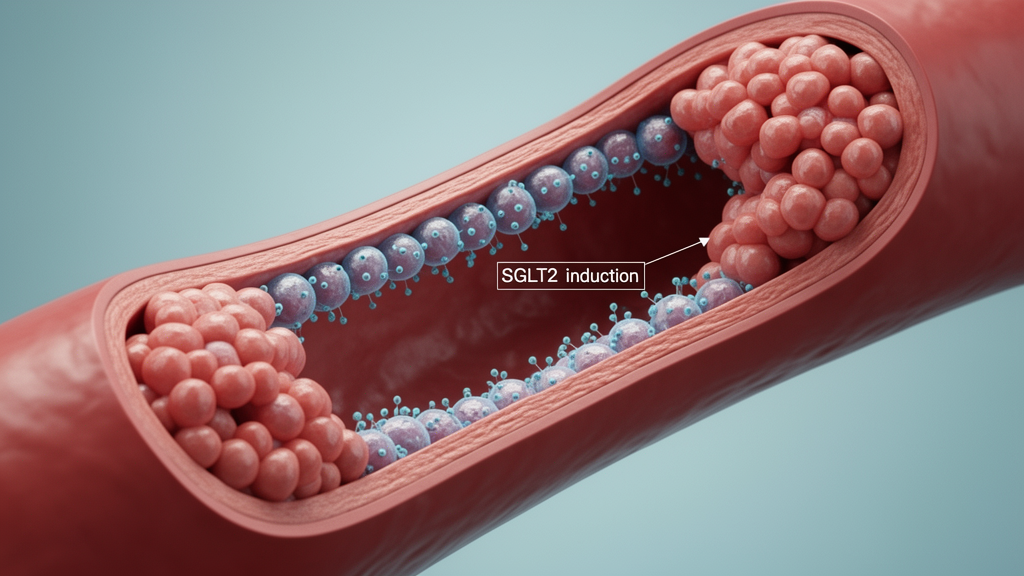
A review published in Cardiovascular Diabetology on October 10, 2026, proposes that sodium-glucose cotransporter 2 (SGLT2) is not merely a renal protein but an inducible player in endothelial dysfunction and cardiovascular disease. The article, authored by Antonin Trimaille, Sophie Kerth, and colleagues, synthesizes recent data indicating that SGLT2 expression in extra-renal tissues, including endothelial cells, is dynamic rather than constitutive. This perspective challenges the long-standing view that SGLT2 is predominantly expressed in renal proximal tubules and offers a mechanistic framework for understanding the broad cardiovascular benefits of SGLT2 inhibitors beyond their glucose-lowering effects.
SGLT2 inhibitors were initially developed as glucose-lowering agents for type 2 diabetes but have rapidly emerged as foundational therapies in cardiovascular medicine. Large, randomized trials have demonstrated strong reductions in heart failure hospitalization and cardiovascular death across the full spectrum of left ventricular ejection fraction, irrespective of diabetes status. These agents have also shown additional benefits in patients with chronic kidney disease and after acute heart failure decompensation. Beyond heart failure, accumulating evidence suggests potential therapeutic effects in myocardial infarction, atrial fibrillation, cerebrovascular disease, heart valve diseases, and pulmonary hypertension, although the level of evidence remains heterogeneous across these conditions.
The mechanisms underlying these broad benefits remain incompletely understood. The review highlights that recent data indicate low, heterogeneous, and inducible expression of SGLT2 in extra-renal tissues. These tissues include endothelial cells, monocytes, hepatocytes, epicardial adipose-derived preadipocytes, vascular tissue, and cardiomyocytes. In the cardiovascular system, SGLT2 expression appears to be driven by numerous pathological stimuli rather than being present at a constant baseline level.
According to the authors, induction of SGLT2 is driven by oxidative stress, metabolic stress, angiotensin II, thrombin and factor Xa, sympathetic nervous system stress, inflammatory cytokines, low-grade inflammation disease-associated plasma, and pro-remodeling signals. Once induced, SGLT2 may contribute to endothelial dysfunction through increased intracellular glucose uptake. More critically, the review posits that SGLT2 acts as a local amplifier within a feed-forward circuit involving NADPH oxidases and the renin-angiotensin system. This interaction disrupts the balance between endothelial nitric oxide synthase (eNOS) and reactive oxygen species (ROS), specifically the eNOS-NO/ROS balance.
The disruption of this balance drives NF-κB-mediated inflammation, cellular senescence, pro-thrombotic activation, vascular remodeling, fibrosis, and calcification. These processes may contribute to a stress-induced cycle that amplifies oxidative and inflammatory injury. The review integrates these mechanistic insights with the well-established renal and systemic actions of SGLT2 inhibitors. By understanding the inducible cardiovascular biology of SGLT2, researchers may better explain the pleiotropic benefits of these drugs.
The study type is a review, summarizing current evidence on the distribution, regulation, and cardiovascular consequences of SGLT2 expression. The scope includes both mechanistic insights and clinical data, aiming to bridge the gap between molecular biology and therapeutic outcomes. The authors note that extra-renal SGLT2 expression remains debated and poorly characterized, which is why this integrative review is significant. The key research question addressed is whether SGLT2 is an inducible mediator of endothelial dysfunction in cardiovascular disease. The review concludes that cardiovascular SGLT2 appears low at baseline but is inducible by pathological stress, and that induced SGLT2 may amplify oxidative stress, inflammation, and senescence.
This pathway may also promote thrombosis, fibrosis, and vascular calcification, contributing to the overall burden of cardiovascular disease. The framework presented in the review may guide future biomarker studies and broader cardiovascular use of SGLT2 inhibitors. The review emphasizes that the cardiovascular benefits of SGLT2 inhibitors are not fully explained by renal actions alone, supporting the need to investigate extra-renal mechanisms.
The publication is open access and citable, carrying a permanent DOI, though it is noted as an early version subject to further edits. The review underscores the importance of understanding the dynamic expression of SGLT2 in diseased cardiovascular tissues.
Subject of Research: Inducible SGLT2 expression in extra-renal tissues and its role in endothelial dysfunction and cardiovascular disease mechanisms.
Article Title: SGLT2 beyond the kidney: an inducible player in endothelial dysfunction and cardiovascular diseases
Article References: Trimaille, A., Kerth, S., Mroueh, A., Fakih, W., Hmadeh, S., Muzammel, H., Jesel, L., Görlach, A., Morel, O., & Schini-Kerth, V. (2026). SGLT2 beyond the kidney: an inducible player in endothelial dysfunction and cardiovascular diseases. Cardiovascular Diabetology. https://doi.org/10.1186/s12933-026-03394-8
Image Credits: AI Generated
DOI: 10.1186/s12933-026-03394-8
Keywords: SGLT2, endothelial dysfunction, cardiovascular disease, oxidative stress, inflammation, vascular biology, heart failure, drug mechanisms, review article, beyond, kidney, inducible
Cite Scienmag News
Ophelia Keating. (November 8, 2026). SGLT2 Induction in Vascular Cells May Drive Cardiovascular Dysfunction. Scienmag. https://scienmag.com/sglt2-induction-in-vascular-cells-may-drive-cardiovascular-dysfunction/
Ophelia Keating. "SGLT2 Induction in Vascular Cells May Drive Cardiovascular Dysfunction." Scienmag, 8 November 2026, https://scienmag.com/sglt2-induction-in-vascular-cells-may-drive-cardiovascular-dysfunction/. Accessed 20 November 2026.
Ophelia Keating. "SGLT2 Induction in Vascular Cells May Drive Cardiovascular Dysfunction." Scienmag. November 8, 2026. https://scienmag.com/sglt2-induction-in-vascular-cells-may-drive-cardiovascular-dysfunction/




