


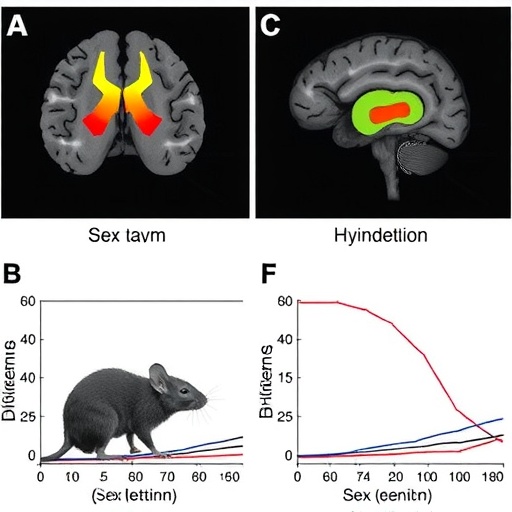
In a groundbreaking advance in neuroscience, researchers have unveiled a comprehensive single-nucleus transcriptomic atlas that illuminates the sexually dimorphic molecular responses to sub-chronic variable stress within the mouse hippocampus. This pioneering study, led by Liang et al., harnesses the power of cutting-edge single-nucleus RNA sequencing technologies to dissect the intricate cellular and molecular landscapes underlying stress responses, offering unprecedented insight into the neurobiological basis of sex differences in stress adaptability and vulnerability.
The hippocampus, a brain region critical for memory formation, emotional regulation, and cognitive processing, has long been implicated in the pathophysiology of stress-related psychiatric disorders. However, the molecular substrate accounting for sex-specific disparities in stress sensitivity and resilience has remained elusive. The current research fills this gap by providing a high-resolution snapshot of gene expression changes at the single-nucleus level, enabling dissection of cell-type specific transcriptional signatures modulated by sub-chronic variable stress paradigms in male and female mice.
The investigation employed a sub-chronic variable stress model designed to mimic real-world fluctuating stress exposures that are neither acute nor chronic, thereby reflecting a more physiologically relevant stress induction. This paradigm is instrumental in evoking complex behavioral and molecular responses that differ substantially between the sexes. By isolating nuclei from hippocampal tissue and applying state-of-the-art transcriptomic profiling, the researchers cataloged thousands of genes whose expression fluctuated in a sexually dimorphic manner.
At the core of these findings is the revelation that hippocampal cell populations, including excitatory neurons, inhibitory interneurons, astrocytes, and microglia, exhibit distinctive sex-dependent molecular trajectories when subjected to sub-chronic variable stress. Particularly striking were variations in stress-responsive gene modules tied to synaptic plasticity, neuroinflammatory pathways, and metabolic processes. These alterations underscore the molecular heterogeneity underpinning sex-based divergence in stress processing circuits.
The authors report that male hippocampal neurons predominantly engaged transcriptional programs involved in synaptic remodeling and excitability alterations, potentially reflecting an adaptive mechanism to maintain cognitive performance under stress. Contrastingly, female neurons showed a marked upregulation of immune signaling pathways and genes involved in neuroprotection, suggestive of a distinct protective strategy.
Astrocytes and microglia, glial cell types classically associated with support and immune surveillance, also displayed sexually dimorphic patterns. Female glial populations exhibited heightened activation of inflammatory mediators, coalescing with behavioral phenotypes indicative of anxiety and depressive-like states observed in females exposed to stress. These findings align with emerging knowledge of glia as pivotal modulators of neuropsychiatric disease pathogenesis potentially shaped by sex-specific factors.
Crucially, this granular atlas extends beyond cataloguing differential gene expression by integrating network analyses that map transcription factor activity and gene regulatory circuitry. This approach elucidates the upstream modulators orchestrating the sexually dimorphic stress responses, revealing candidate molecular targets such as estrogen receptor signaling components and stress-related transcription factors that could be harnessed therapeutically.
The study’s methodology represents a formidable technical achievement. By leveraging single-nucleus RNA sequencing instead of single-cell RNA sequencing, the researchers circumvented concerns related to dissociation-induced gene expression artifacts and preserved fragile neuronal subtypes, ensuring greater fidelity in the data. The depth and breadth of sequencing data permitted rigorous statistical comparisons and the identification of subtle yet biologically meaningful transcriptional differences.
Beyond its technical sophistication, this work engages with a pressing clinical imperative—understanding why psychiatric disorders with stress etiologies, such as depression and anxiety, often exhibit a striking sex bias in prevalence and manifestation. The molecular insights gleaned provide a scaffold upon which sex-specific therapeutic interventions might be designed, moving towards precision psychiatry that acknowledges biological sex as a fundamental axis of disease heterogeneity.
Moreover, the open-access single-nucleus transcriptomic atlas generated by this team constitutes a valuable resource for the neuroscience community. It is poised to catalyze further research into sex differences across other brain regions and in response to diverse environmental challenges, ultimately enriching our comprehension of brain plasticity and resilience at a molecular level.
The implications of these findings also extend to the realm of pharmacology, where sex-specific gene expression patterns may inform drug development and dosing regimens. Given the differential engagement of neuroimmune pathways in females, immunomodulatory agents could emerge as promising candidates for mitigating stress-induced neuropathology in women.
In sum, this tour de force study offers a transformative perspective on the molecular architecture of sex-dependent responses to stress, advancing our grasp of the biological underpinnings that differentiate male and female brain function under adverse conditions. As the field embraces increasingly granular analytical frameworks like single-nucleus transcriptomics, the promise of nuanced, sex-informed neuropsychiatric therapies draws closer to fruition.
The intersection of cutting-edge omics technologies with nuanced behavioral models as exemplified in this research heralds a new era in neurobiology. It underscores the imperative of integrating sex as a fundamental biological variable in neuroscience research—a paradigm shift that will ultimately enhance therapeutic precision and efficacy for a wide spectrum of stress-related mental health disorders.
Looking ahead, longitudinal studies tracking dynamic transcriptional changes over varied stress exposure timelines, coupled with functional validations of key gene candidates, will be essential to translate these foundational findings into clinical advances. Additionally, cross-species comparisons may help bridge the gap between murine models and human neurobiology, reinforcing the translational potential of this seminal work.
In conclusion, Liang and colleagues have charted a compelling course towards elucidating the sexually dimorphic molecular landscapes that shape hippocampal responses to stress. Their innovative single-nucleus transcriptomic atlas not only embodies a technical tour de force but also catalyzes a paradigm shift in understanding how sex shapes brain vulnerability and resilience, holding profound implications for neuroscience and mental health alike.
Cite Scienmag News
Juliet Wilcox. (June 24, 2026). Sex Differences in Mouse Hippocampus Stress Response. Scienmag. https://scienmag.com/sex-differences-in-mouse-hippocampus-stress-response/
Juliet Wilcox. "Sex Differences in Mouse Hippocampus Stress Response." Scienmag, 24 June 2026, https://scienmag.com/sex-differences-in-mouse-hippocampus-stress-response/. Accessed 3 September 2026.
Juliet Wilcox. "Sex Differences in Mouse Hippocampus Stress Response." Scienmag. June 24, 2026. https://scienmag.com/sex-differences-in-mouse-hippocampus-stress-response/


