


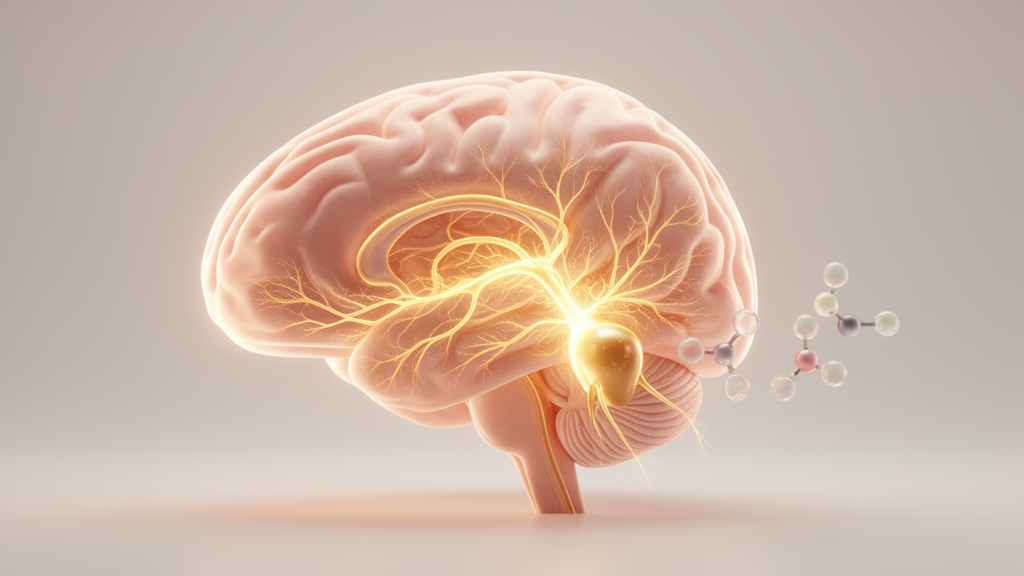
A short response letter published in Archives of Sexual Behavior has reignited a provocative idea: that three of the most intense experiences in human reproductive life — orgasm, childbirth and breastfeeding — may run through essentially the same neuroendocrine circuitry. Writing in reply to a commentary by Costa (2026), Natalie L. Dinsdale and Bernard J. Crespi argue that their “practice for parturition” framework, first laid out in a 2025 article, is best understood through the hormone prolactin, which they place at the hub of a shared circuit linking sexual resolution, birth and lactation. The letter is not a new empirical study. It is a conceptual synthesis, a response to a scholarly commentary, and its claims about shared circuits rest on previously published animal and human work rather than on fresh experiments. But the synthesis is striking in its scope, and it arrives with a set of testable predictions that the authors say could reshape how researchers study female sexuality, childbirth and early parenting.
The intellectual anchor for the argument is a framework proposed more than fifty years ago. In 1973, Newton suggested that sex, birth and lactation are closely interlinked physiological events. Dinsdale and Crespi argue that modern neuroendocrinology now supplies a concrete mechanism for that intuition, centered on the interactions among prolactin, dopamine and oxytocin.
In the circuit the authors describe, prolactin plays central roles in three key human-reproductive events: the resolution of sexual interactions through orgasm, parturition and its immediate sequelae, and breastfeeding — in each case through the same set of interactions with dopamine and oxytocin. Each of the three processes begins with afferent sensory signals — erotic sexual stimulation in the case of sex, cervical and uterine stretching during labor, and nipple stimulation during breastfeeding. These signals trigger mutual facilitation between oxytocin and dopamine, after which prolactin antagonizes dopamine signaling. The result, in each case, is a surge of prolactin that mediates calmness and satisfaction after intense activity.
The three processes may look disparate at first glance, the authors write, but they are “actually profoundly similar.” What distinguishes them is not the core circuit, which they describe as isomorphic across the three domains, but the inputs that activate it and the ways each process terminates. Sexual resolution usually ends with prolactin release; birth ends with the ejection of the fetus and placenta; breastfeeding ends when sucking ceases. The shared hormonal machinery, running on different sensory inputs, is what makes the framework, in their view, a genuine unification rather than a loose analogy.
The framework also generates questions that the authors frame explicitly as open. Are there measurable relationships between post-orgasm prolactin release, post-birth prolactin release and milk production during breastfeeding, as an extended practice-for-parturition model would predict? Do the three circuits each connect to human bonding between mates and between parents and offspring? The authors note that prolactin levels are positively correlated between mates in humans and in cotton-top tamarins, a finding they cite as suggestive but far from conclusive. Whether a healthy, prolactin-driven sexual resolution phase begets healthy childbirth, successful breastfeeding and stable pair-bonded relationships, they conclude, only future studies will tell.
One complication the letter confronts is a well-known sex difference in post-orgasm physiology. In men, orgasm is typically followed by a prolactin-mediated refractory period, which researchers have interpreted as an adaptation to suppress intercourse until sperm reserves are replenished. Women, by contrast, do not consistently show a refractory effect. Some become increasingly aroused after orgasm and continue sexual activity through multiple orgasms, a pattern described in the literature as an “extended sexual response.” The authors ask whether this phenotype is adaptive, whether it trades off against other traits, and what its hormonal basis might be — questions they present as unresolved.
Their proposed answer draws on the demands of childbirth itself. Because parturition places heavy mechanical demands on genital and pelvic tissues, they suggest that more extensive arousal and engorgement during sexual activity may promote tissue health and the stretching and muscular capacity needed for birth. They note that women generally take longer than men to reach sufficient physical arousal for enjoyable intercourse, partly because of the volume of inner and outer tissue capable of engorging. On this reading, the extended sexual response in some women is not a puzzle to be explained away but a phenotype whose full significance has been obscured by decades of research focused narrowly on the evolutionary origins of the female orgasm in isolation.
The letter also draws a parallel between two culturally resonant moments. Costa’s commentary invoked “la petite mort,” the French idiom for the post-orgasmic period of release and quiet. The counterpart in childbirth, the authors suggest, is the “golden hour” — the first period after birth when mother and baby meet, begin attempting breastfeeding and share what they call the glow of success. The golden hour is known to matter for breastfeeding success, and hospital policies increasingly aim to protect its integrity. Like the oxytocin-dependent aspects of parturition that Newton characterized, the golden hour is delicate and easily disturbed: interruptions to the birth process, bright lights, fear and separation of mother from baby can all disrupt it.
That sensitivity to environment, the authors argue, carries a broader lesson for anyone studying prolactin. Hormones, they write, are best understood as coordinating individual physiology with the external world, so predictors and effects of prolactin release cannot be read off a single person’s blood values. Environmental context — the lighting in a delivery room, the interruption or continuity of a physiological process — belongs in the analysis. In this light, they conclude, the practice-for-parturition framework can be extended not only to breastfeeding but beyond it, to parent–offspring bonding, psychology and other dimensions of sex, birth and relationships that they say are only beginning to be explored.
The authors are careful about what their synthesis does and does not establish. The circuit they describe is assembled from previously published studies, from work on prolactin’s antagonism of dopamine to research on oxytocin’s role in labor and milk ejection, and the isomorphism they propose is a model, not a demonstrated identity of mechanism across the three domains. The correlations between mates’ prolactin levels are associations, not evidence of causal pathways to bonding quality. And the suggestion that sexual activity might “practice” the body for birth remains, at this stage, a hypothesis awaiting direct tests. Still, the letter’s ambition is clear: to move the field from studying isolated phenotypes toward whole psycho-physiological systems. If the shared-circuit model survives empirical scrutiny, the practical implications could be wide, from how clinicians protect the golden hour to how researchers design studies of sexual response, labor and lactation as one continuous neuroendocrine story rather than three separate ones. For now, the framework stands as a research program — a set of hypotheses, as the authors themselves emphasize, that only future studies will confirm, refine or overturn.
Subject of Research: Practice for Parturition and Breastfeeding: Shared Neuroendocrine Circuits? Response to Costa (2026)
Article Title: Practice for Parturition and Breastfeeding: Shared Neuroendocrine Circuits? Response to Costa (2026)
Article References: Dinsdale, N. L., & Crespi, B. J. (2026). Practice for Parturition and Breastfeeding: Shared Neuroendocrine Circuits? Response to Costa (2026). Archives of Sexual Behavior. https://doi.org/10.1007/s10508-026-03711-y
Image Credits: AI Generated
DOI: 10.1007/s10508-026-03711-y
Keywords: Practice, Parturition, Breastfeeding, Shared, Neuroendocrine, Circuits, Response, Costa, scientific research
Cite Scienmag News
Cassandra Pierce. (October 24, 2026). Sex, Birth and Breastfeeding May Share One Prolactin-Driven Brain Circuit. Scienmag. https://scienmag.com/sex-birth-and-breastfeeding-may-share-one-prolactin-driven-brain-circuit/
Cassandra Pierce. "Sex, Birth and Breastfeeding May Share One Prolactin-Driven Brain Circuit." Scienmag, 24 October 2026, https://scienmag.com/sex-birth-and-breastfeeding-may-share-one-prolactin-driven-brain-circuit/. Accessed 24 October 2026.
Cassandra Pierce. "Sex, Birth and Breastfeeding May Share One Prolactin-Driven Brain Circuit." Scienmag. October 24, 2026. https://scienmag.com/sex-birth-and-breastfeeding-may-share-one-prolactin-driven-brain-circuit/


