

Tuesday, October 20, 2026
Science
No Result
View All Result
  • Login
  • HOME
  • SCIENCE NEWS
  • CONTACT US
  • HOME
  • SCIENCE NEWS
  • CONTACT US
No Result
View All Result
Scienmag
No Result
View All Result
Home Science News Medicine

Serum CXCL-10 and CTLA-4 associated with inflammation in small treatment-naive chronic hepatitis B cohort

October 20, 2026
in Medicine
Kristina Jarvis
By Kristina Jarvis Scienmag Editorial Profile - Infectious Disease Medicine
Reading Time: 2 mins read
0
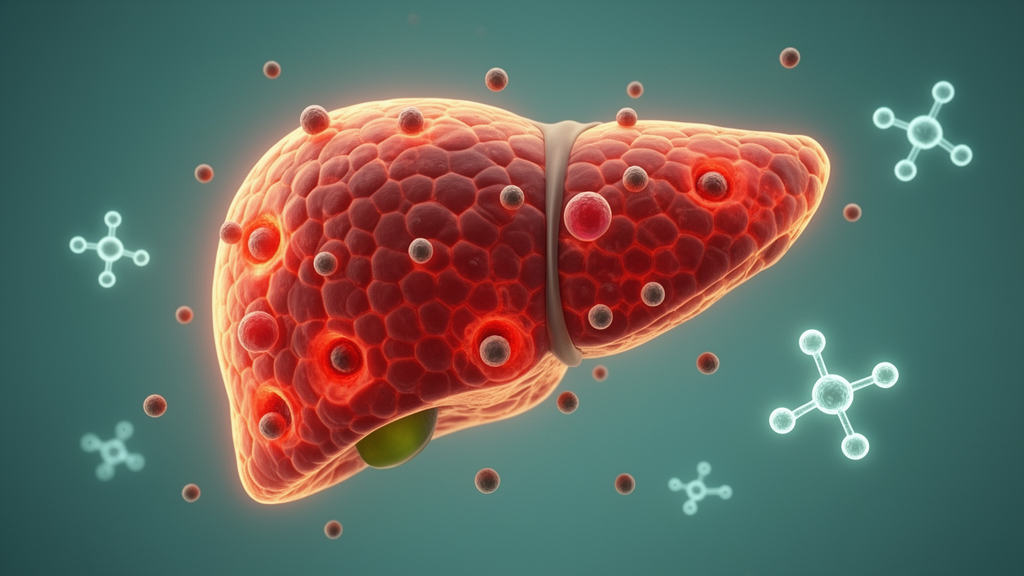
Chemokine and immune checkpoint levels track liver inflammation in untreated hepatitis B

Chemokine and immune checkpoint levels track liver inflammation in untreated hepatitis B

65
SHARES
587
VIEWS
Share on FacebookShare on Twitter
ADVERTISEMENT

A small observational cohort study reported associations between serum CXCL-10 and CTLA-4 levels, HBV viral load, biochemical liver injury and histological inflammatory activity in people with treatment-naive chronic hepatitis B. The abstract indicates that both markers were highest among patients with elevated viral loads and correlated more strongly with the modified Ishak histological activity index than with fibrosis stage, but the findings remain exploratory because of the modest sample and absence of longitudinal data in the reported results.

The study enrolled 86 participants, including 21 healthy controls and 65 patients with treatment-naive chronic hepatitis B. Patients were divided by HBV DNA level into a group with levels at or below 10⁵ IU/mL, comprising 33 patients, and a group with levels above 10⁵ IU/mL, comprising 32 patients. Investigators also classified patients into European Association for the Study of the Liver clinical phenotypes using HBeAg status, HBV DNA and alanine aminotransferase levels. Serum CXCL-10 and CTLA-4 were measured by enzyme-linked immunosorbent assay, and investigators calculated laboratory-based inflammatory and fibrosis-related indices, including FIB-4 for all participants.

Serum concentrations of CXCL-10 and CTLA-4 differed significantly across the study groups and were highest in patients with elevated viral loads, with p-values below 0.001 for both comparisons. HBV DNA correlated with CXCL-10 at r = 0.786 and with CTLA-4 at r = 0.559. The two serum markers were also strongly correlated with one another, at r = 0.690; all three correlation coefficients had p-values below 0.001. These are measured associations in the enrolled cohort and do not establish that either marker causes changes in viral load or liver inflammation.

Histological data were available for 43 of the 65 patients, or 66.2% of the chronic hepatitis B group. Both serum markers correlated more strongly with the modified Ishak histological activity score than with fibrosis stage: r = 0.519 for CXCL-10 and r = 0.509 for CTLA-4, both with p-values below 0.001. CXCL-10 levels were elevated in EASL phase 2, identified in the abstract as HBeAg-positive chronic hepatitis, compared with phases 3 and 4, with p-values of below 0.001 and 0.005, respectively.

Descriptive receiver operating characteristic analyses showed moderate discrimination for CXCL-10 and CTLA-4, with areas under the curve of 0.78 and 0.76, respectively, and sensitivity of 47%. In a further exploratory analysis, CXCL-10 differentiated high histological activity, defined as a modified Ishak score of at least 7, from low activity, with an area under the curve of 0.77. The abstract does not report a validated diagnostic threshold or establish clinical use for either marker. Histological observations were limited to the 43 patients with biopsy data, and the reported analysis did not include longitudinal testing. The authors stated that the findings warrant confirmation in larger, longitudinal cohorts.

Subject of Research: Associations of serum CXCL-10 and CTLA-4 with viral load, liver injury and histological inflammation in treatment-naive chronic hepatitis B

Article Title: Serum CXCL-10 and CTLA-4 levels in treatment-naive chronic hepatitis B: associations with EASL-based clinical phenotypes, histological inflammatory activity, and non-invasive fibrosis indices

Article References: Uğraklı, S., Ezer, B., Kasapoğlu, E., Esen, H. S., Kökbudak, N., & Özdemir, M. (2026). Serum CXCL-10 and CTLA-4 levels in treatment-naive chronic hepatitis B: associations with EASL-based clinical phenotypes, histological inflammatory activity, and non-invasive fibrosis indices. BMC Infectious Diseases. https://doi.org/10.1186/s12879-026-14501-1

Image Credits: AI Generated

DOI: 10.1186/s12879-026-14501-1

Keywords: chronic hepatitis B, CXCL-10, CTLA-4, HBV DNA, liver inflammation, histological activity, fibrosis, immune markers, observational study, Serum, levels, treatment-naive

Cite Scienmag News

Kristina Jarvis. (October 20, 2026). Serum CXCL-10 and CTLA-4 associated with inflammation in small treatment-naive chronic hepatitis B cohort. Scienmag. https://scienmag.com/serum-cxcl-10-and-ctla-4-associated-with-inflammation-in-small-treatment-naive-chronic-hepatitis-b-cohort/


Kristina Jarvis. "Serum CXCL-10 and CTLA-4 associated with inflammation in small treatment-naive chronic hepatitis B cohort." Scienmag, 20 October 2026, https://scienmag.com/serum-cxcl-10-and-ctla-4-associated-with-inflammation-in-small-treatment-naive-chronic-hepatitis-b-cohort/. Accessed 20 October 2026.

Kristina Jarvis. "Serum CXCL-10 and CTLA-4 associated with inflammation in small treatment-naive chronic hepatitis B cohort." Scienmag. October 20, 2026. https://scienmag.com/serum-cxcl-10-and-ctla-4-associated-with-inflammation-in-small-treatment-naive-chronic-hepatitis-b-cohort/

Tags: Biomarkers of liver injury in hepatitis B patientschronic hepatitis BChronic hepatitis B inflammation biomarkersCTLA-4CXCL-10Enzyme-linked immunosorbent assay in hepatitis B researchfibrosisHBV DNAHBV viral load correlation with immune markershistological activityHistological assessment of hepatitis B using Ishak indeximmune markersInflammatory activity in treatment-naive hepatitis BInflammatory and fibrosis indices in hepatitis Blevelsliver inflammationobservational studyRelationship between HBV DNA levels and immune responseRole of immune checkpoints in hepatitis BSerumSerum CXCL-10 and CTLA-4 in hepatitis Btreatment-naive
Share26Tweet16
Previous Post

Longitudinal study links evaluative fears, ego depletion and abnormal eating behavior

Next Post

Diffusion and graph networks improve music-conditioned dance generation and style control

Related Posts

Structured Sexual Healthcare in a Public Gynaecology Clinic Boosts Sexual Activity and Well-Being
Medicine

Uncontrolled retrospective study links structured sexual healthcare with improved sexual activity among women with gynaecological conditions

October 20, 2026
Adaptive AI Mobile Simulation Sharpens Nurses’ Drug Calculation Skills in Randomized Trial
Medicine

AI mobile simulation improves nurses’ drug-calculation scores in small Egyptian randomized trial

October 20, 2026
Robot-Assisted Gait Training Helps Children With Cerebral Palsy Walk Faster and Farther
Medicine

Systematic review links robot-assisted gait training to walking gains in children with cerebral palsy

October 20, 2026
When Ringing Ears Signal Something Far More Sinister
Medicine

Persistent tinnitus preceded diagnosis of multifocal tuberculosis in a 32-year-old patient: case report

October 20, 2026
Village Health Committees Revived in Tribal Maharashtra Deliver Dramatic Rise in Blood Pressure and Diabetes Care
Medicine

Mixed-methods study of 97 village health committees reports improved non-communicable disease screening in tribal Maharashtra

October 20, 2026
Why Media Advocacy Struggles to Take Root in Farm Safety Programs
Medicine

Longitudinal qualitative study reports limited media-advocacy engagement in agricultural safety program

October 20, 2026
Next Post
AI That Dances: Diffusion Model Learns to Choreograph and Restyle Human Motion

Diffusion and graph networks improve music-conditioned dance generation and style control

  • Mothers who receive childcare support from maternal grandparents show more optimized

    Mothers who receive childcare support from maternal grandparents show more parental warmth, finds NTU Singapore study

    27656 shares
    Share 11059 Tweet 6912
  • University of Seville Breaks 120-Year-Old Mystery, Revises a Key Einstein Concept

    1061 shares
    Share 424 Tweet 265
  • Bee body mass, pathogens and local climate influence heat tolerance

    682 shares
    Share 273 Tweet 171
  • Researchers record first-ever images and data of a shark experiencing a boat strike

    546 shares
    Share 218 Tweet 137
  • Groundbreaking Clinical Trial Reveals Lubiprostone Enhances Kidney Function

    531 shares
    Share 212 Tweet 133
Science

Embark on a thrilling journey of discovery with Scienmag.com—your ultimate source for cutting-edge breakthroughs. Immerse yourself in a world where curiosity knows no limits and tomorrow’s possibilities become today’s reality!

RECENT NEWS

  • Cross-sectional study links suicidal ideation with anxiety, recurrent cancer and longer diagnosis duration among Ugandan adolescents and young adults
  • Diffusion and graph networks improve music-conditioned dance generation and style control
  • Serum CXCL-10 and CTLA-4 associated with inflammation in small treatment-naive chronic hepatitis B cohort
  • Longitudinal study links evaluative fears, ego depletion and abnormal eating behavior

Categories

  • Agriculture
  • Anthropology
  • Archaeology
  • Athmospheric
  • Biology
  • Biotechnology
  • Blog
  • Bussines
  • Cancer
  • Chemistry
  • Climate
  • Earth Science
  • Editorial Policy
  • Marine
  • Mathematics
  • Medicine
  • Pediatry
  • Policy
  • Psychology & Psychiatry
  • Science Education
  • Science News
  • Social Science
  • Space
  • Technology and Engineering

Subscribe to Blog via Email

Enter your email address to subscribe to this blog and receive notifications of new posts by email.

Join 5,150 other subscribers

© 2025 Scienmag - Science Magazine

Welcome Back!

Login to your account below

Forgotten Password?

Retrieve your password

Please enter your username or email address to reset your password.

Log In
No Result
View All Result
  • HOME
  • SCIENCE NEWS
  • CONTACT US

© 2025 Scienmag - Science Magazine

Discover more from Science

Subscribe now to keep reading and get access to the full archive.

Continue reading