

Tuesday, October 20, 2026
Science
No Result
View All Result
  • Login
  • HOME
  • SCIENCE NEWS
  • CONTACT US
  • HOME
  • SCIENCE NEWS
  • CONTACT US
No Result
View All Result
Scienmag
No Result
View All Result
Home Science News Biology

SERPINB5 promotes pancreatic adenocarcinoma progression through FBXO32-mediated regulation of epithelial-mesenchymal transition

October 20, 2026
in Biology
Nathaniel Bowman
By Nathaniel Bowman Scienmag Editorial Profile - Precision Oncology
Reading Time: 2 mins read
0
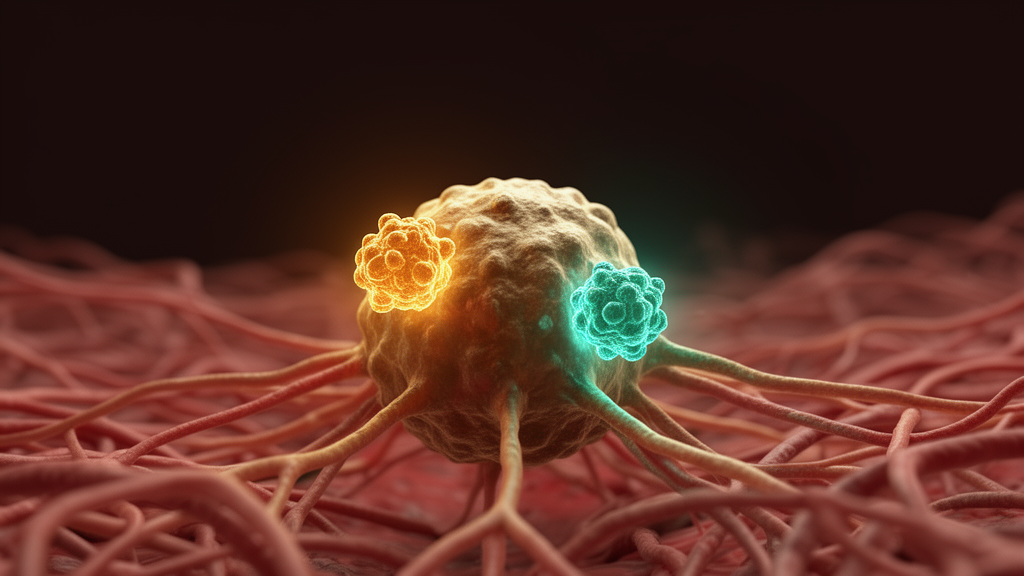
Protein Duo SERPINB5 and FBXO32 Drive Deadly Pancreatic Cancer Spread

Protein Duo SERPINB5 and FBXO32 Drive Deadly Pancreatic Cancer Spread

65
SHARES
587
VIEWS
Share on FacebookShare on Twitter
ADVERTISEMENT

A study reported in Molecular Biology Reports found that silencing SERPINB5 reduced pancreatic adenocarcinoma cell proliferation, colony formation, migration and invasion, while changes in epithelial–mesenchymal transition-related proteins were reversed by restoring FBXO32 expression. The authors concluded that the SERPINB5/FBXO32 axis may contribute to pancreatic adenocarcinoma progression through regulation of epithelial–mesenchymal transition, although their findings come primarily from transcriptomic analyses and laboratory cell models.

The investigators screened differentially expressed genes in the TCGA-PAAD, GSE32676 and GSE101448 datasets. They used LASSO Cox regression and receiver operating characteristic curve analysis to identify prognostic candidates, selecting SERPINB5 for further investigation. Expression was examined in pancreatic adenocarcinoma cell lines, and the effects of SERPINB5 silencing were assessed with CCK-8 and colony-formation assays, Transwell migration and invasion assays, immunofluorescence, and Western blotting. Co-immunoprecipitation and rescue experiments were used to examine the relationship between SERPINB5 and FBXO32.

According to the abstract, a seven-gene risk model included SERPINB5 among its candidate prognostic genes. Single-gene ROC analyses distinguished pancreatic adenocarcinoma tumors from normal pancreatic tissues in all three transcriptomic datasets, with reported areas under the curve of 0.851, 0.966 and 0.965. SERPINB5 expression was consistently high in pancreatic adenocarcinoma tissues and cell lines. In the cell experiments, SERPINB5 knockdown inhibited proliferation, colony formation, migration and invasion. It also increased E-cadherin expression while reducing Vimentin and N-cadherin levels. Co-immunoprecipitation indicated a physical interaction between SERPINB5 and FBXO32, and SERPINB5 knockdown reduced FBXO32 expression.

The rescue experiments provide the central mechanistic result reported in the abstract: FBXO32 overexpression reversed the malignant cellular phenotypes and epithelial–mesenchymal transition-related changes produced by SERPINB5 silencing. This supports the authors’ interpretation that FBXO32 acts downstream of, or functionally compensates for, SERPINB5 in the studied cell models. The findings identify SERPINB5 as a candidate diagnostic and prognostic marker, but the evidence presented does not establish clinical performance or patient benefit. The available source is an abstract and article preview rather than the full report, and the experimental results are based on pancreatic adenocarcinoma cell lines rather than a prospective clinical cohort or patient outcomes.

Subject of Research: SERPINB5 and FBXO32 regulation of epithelial–mesenchymal transition in pancreatic adenocarcinoma cell models

Article Title: SERPINB5 promotes pancreatic adenocarcinoma progression through FBXO32-mediated regulation of epithelial-mesenchymal transition

Article References: Jiang, H., Zhang, P.-J., Li, W., & Zhang, H.-F. (2026). SERPINB5 promotes pancreatic adenocarcinoma progression through FBXO32-mediated regulation of epithelial-mesenchymal transition. Molecular Biology Reports, 53(1), Article 1719. https://doi.org/10.1007/s11033-026-12945-x

Image Credits: AI Generated

DOI: 10.1007/s11033-026-12945-x

Keywords: pancreatic adenocarcinoma, SERPINB5, FBXO32, epithelial–mesenchymal transition, cell proliferation, cell migration, cell invasion, transcriptomics, prognostic biomarkers, promotes, pancreatic, adenocarcinoma

Cite Scienmag News

Nathaniel Bowman. (October 20, 2026). SERPINB5 promotes pancreatic adenocarcinoma progression through FBXO32-mediated regulation of epithelial-mesenchymal transition. Scienmag. https://scienmag.com/serpinb5-promotes-pancreatic-adenocarcinoma-progression-through-fbxo32-mediated-regulation-of-epithelial-mesenchymal-transition/


Nathaniel Bowman. "SERPINB5 promotes pancreatic adenocarcinoma progression through FBXO32-mediated regulation of epithelial-mesenchymal transition." Scienmag, 20 October 2026, https://scienmag.com/serpinb5-promotes-pancreatic-adenocarcinoma-progression-through-fbxo32-mediated-regulation-of-epithelial-mesenchymal-transition/. Accessed 20 October 2026.

Nathaniel Bowman. "SERPINB5 promotes pancreatic adenocarcinoma progression through FBXO32-mediated regulation of epithelial-mesenchymal transition." Scienmag. October 20, 2026. https://scienmag.com/serpinb5-promotes-pancreatic-adenocarcinoma-progression-through-fbxo32-mediated-regulation-of-epithelial-mesenchymal-transition/

Tags: adenocarcinomacancer progression mechanismscell invasioncell migrationcell proliferationcell proliferation assaysco-immunoprecipitation in cancer researchepithelial-mesenchymal transitionFBXO32FBXO32 regulationgene expression biomarkersinvasion and migration assayspancreaticpancreatic adenocarcinomaprognostic biomarkersprognostic gene signaturePromotesSERPINB5SERPINB5 genetranscriptomic analysis in cancerTranscriptomicstumor microenvironment in pancreatic cancer
Share26Tweet16
Previous Post

FBMS-YOLO improves localization of degraded bamboo slip characters in benchmark testing

Next Post

What matters in medical training in Wales: a thematic analysis of Wales-specific responses to the NHS England Medical Training Review Call for Evidence

Related Posts

Omp33-36 loop mutations alter porin dynamics in resistant A. baumannii
Biology

Omp33-36 loop mutations alter porin dynamics in resistant A. baumannii

October 20, 2026
The Lipid Receptor LPA₃ Emerges as a Switchboard for Cancer, Metabolism and Neuroinflammation
Biology

LPA₃ signaling and biological functions: from physiological regulation to disease-targeted therapy

October 20, 2026
CRISPR-Cas Tools Take Aim at Drug-Resistant Pseudomonas aeruginosa
Biology

The application of the CRISPR-Cas system in Pseudomonas aeruginosa infections

October 20, 2026
New bristly ark shell species emerges from Kuwait’s mud after decades of taxonomic confusion
Biology

Morphology, anatomy and COI data identify distinct Anadara species in Kuwait

October 20, 2026
Snail Water Channel Reveals Unusual Architecture That Helps It Survive Temperature Stress
Biology

Freshwater snail aquaporin 4 shows water-selective transport and temperature-dependent expression

October 20, 2026
AFAR funds eight junior faculty projects on mechanisms of aging
Biology

AFAR funds eight junior faculty projects on mechanisms of aging

October 20, 2026
Next Post
Voices from the Welsh frontline reveal what is breaking medical training

What matters in medical training in Wales: a thematic analysis of Wales-specific responses to the NHS England Medical Training Review Call for Evidence

  • Mothers who receive childcare support from maternal grandparents show more optimized

    Mothers who receive childcare support from maternal grandparents show more parental warmth, finds NTU Singapore study

    27656 shares
    Share 11059 Tweet 6912
  • University of Seville Breaks 120-Year-Old Mystery, Revises a Key Einstein Concept

    1061 shares
    Share 424 Tweet 265
  • Bee body mass, pathogens and local climate influence heat tolerance

    682 shares
    Share 273 Tweet 171
  • Researchers record first-ever images and data of a shark experiencing a boat strike

    546 shares
    Share 218 Tweet 137
  • Groundbreaking Clinical Trial Reveals Lubiprostone Enhances Kidney Function

    531 shares
    Share 212 Tweet 133
Science

Embark on a thrilling journey of discovery with Scienmag.com—your ultimate source for cutting-edge breakthroughs. Immerse yourself in a world where curiosity knows no limits and tomorrow’s possibilities become today’s reality!

RECENT NEWS

  • What matters in medical training in Wales: a thematic analysis of Wales-specific responses to the NHS England Medical Training Review Call for Evidence
  • SERPINB5 promotes pancreatic adenocarcinoma progression through FBXO32-mediated regulation of epithelial-mesenchymal transition
  • FBMS-YOLO improves localization of degraded bamboo slip characters in benchmark testing
  • Cross-sectional study links loving pedagogy, teaching enjoyment with reflective-practice engagement among Iranian EFL teachers

Categories

  • Agriculture
  • Anthropology
  • Archaeology
  • Athmospheric
  • Biology
  • Biotechnology
  • Blog
  • Bussines
  • Cancer
  • Chemistry
  • Climate
  • Earth Science
  • Editorial Policy
  • Marine
  • Mathematics
  • Medicine
  • Pediatry
  • Policy
  • Psychology & Psychiatry
  • Science Education
  • Science News
  • Social Science
  • Space
  • Technology and Engineering

Subscribe to Blog via Email

Enter your email address to subscribe to this blog and receive notifications of new posts by email.

Join 5,150 other subscribers

© 2025 Scienmag - Science Magazine

Welcome Back!

Login to your account below

Forgotten Password?

Retrieve your password

Please enter your username or email address to reset your password.

Log In
No Result
View All Result
  • HOME
  • SCIENCE NEWS
  • CONTACT US

© 2025 Scienmag - Science Magazine

Discover more from Science

Subscribe now to keep reading and get access to the full archive.

Continue reading