


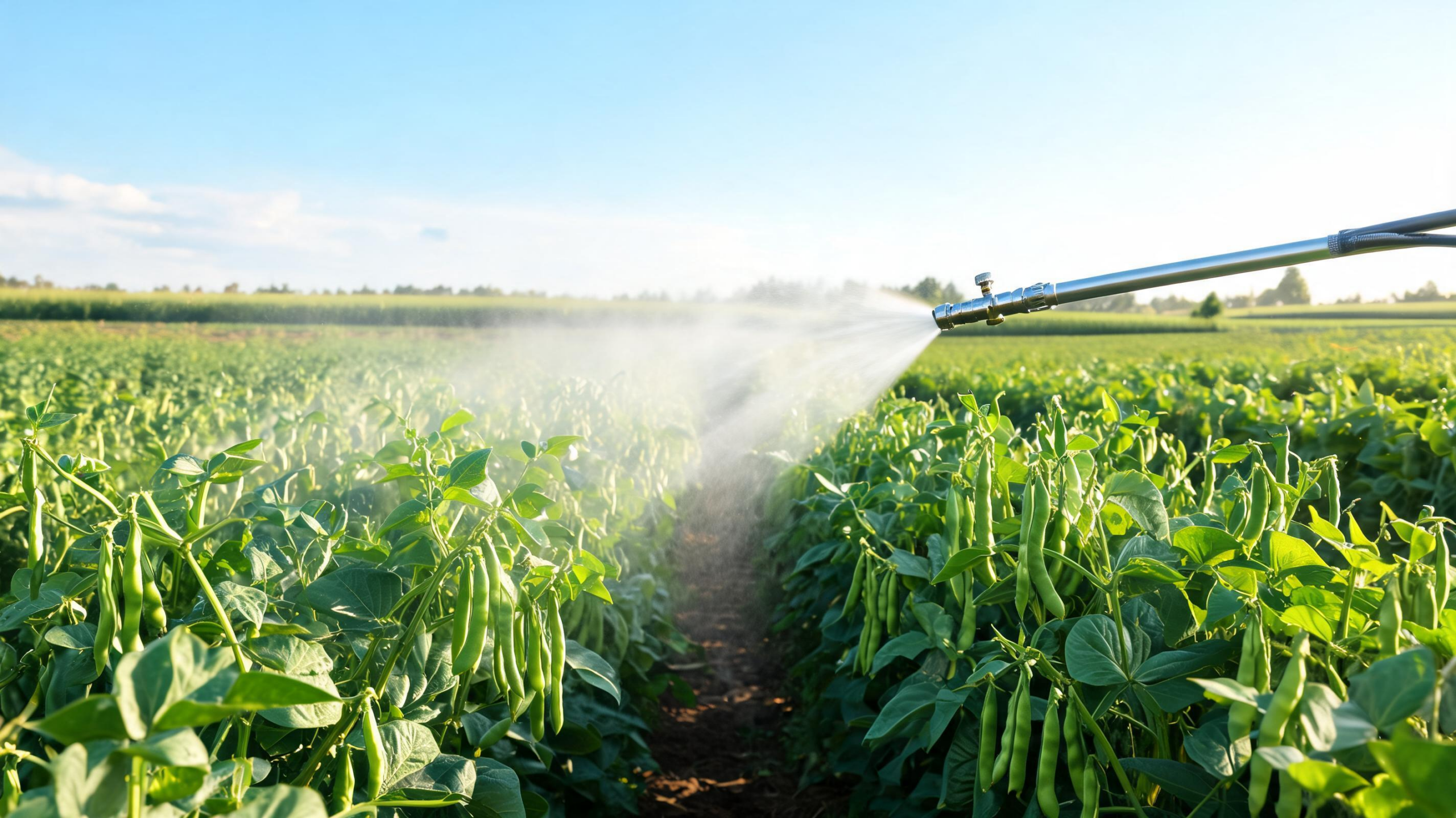
A single spray of fragmented DNA extracted from a plant’s own species may be enough to arm a crop against caterpillars, fungi, and bacteria while substantially raising the amount of seed it produces, according to a new study of common bean (Phaseolus vulgaris). The research, conducted in glasshouse and open-field settings in Guanajuato, Mexico, provides some of the most complete evidence yet that extracellular self-DNA can function as a natural immunostimulant for crop plants, and it does so with an agronomically meaningful endpoint: yield. Treating young bean plants once with self-DNA increased seed production approximately 1.5-fold in the rainy season and 3.2-fold in the dry season, with no pesticides applied at any point during the growing cycle.
The idea that a plant would respond to fragments of its own DNA runs counter to the classical immunological doctrine of self-tolerance. Yet the new findings align with a growing body of work showing that extracellular self-DNA acts as a damage-associated molecular pattern, or DAMP, in plants. When DNA appears outside the cell, in fragments or in the wrong compartment, it signals massive tissue damage. This interpretation follows Polly Matzinger’s danger model, which holds that immune systems respond primarily to entities that cause damage rather than to entities that are foreign. In the bean study, published in Crop Health, researchers Dalia Durán-Flores and Martin Heil of CINVESTAV Irapuato set out to determine whether this damaged-self recognition could be harnessed as a preventive tool for biological pest control.
The experimental design was deliberately comprehensive. The team grew common bean plants of the variety Negro San Luis, a cultivar obtained from Mexico’s national germplasm collection, and treated them with fragmented DNA at a range of concentrations. As sources of nonself-DNA for comparison, they used lima bean (Phaseolus lunatus), a congeneric species, and Acacia farnesiana, a more distantly related member of the same plant family. DNA was extracted from leaves using a standard plant minipreparation protocol and sheared by sonication into fragments shorter than 1,000 base pairs, which was verified by agarose gel electrophoresis. The researchers then tracked two central defense hormones, jasmonic acid (JA) and salicylic acid (SA), using gas chromatography coupled to mass spectrometry across a dense time course stretching from minutes to 48 hours after treatment.
The hormonal data revealed a striking asymmetry. Jasmonic acid began rising within 15 minutes of self-DNA application and peaked at 30 minutes, following an optimum curve in which the strongest induction, exceeding 40 nanograms per gram of fresh leaf weight, occurred at a concentration of 50 micrograms per milliliter. Crucially, this JA response was self/nonself-specific: only DNA from Phaseolus vulgaris itself triggered a statistically significant JA increase, while lima bean DNA produced only a weak, nonsignificant trend and acacia DNA had no detectable effect at all. Salicylic acid behaved differently. Its accumulation began around eight hours after treatment, peaked at 24 hours, followed a saturation curve, and, remarkably, was induced to similar degrees by all three DNA types regardless of their species of origin.
These hormonal patterns translated directly into phenotypic resistance. When fifth-instar larvae of the fall armyworm (Spodoptera frugiperda), a voracious generalist chewing herbivore, were allowed to feed on treated bean leaves for 24 hours, only self-DNA significantly reduced leaf area loss, cutting damage from roughly seven percent in controls to about 0.3 percent. This outcome fits the established biology of JA signaling, which governs the wound response that protects plants against chewing insects and necrotrophic pathogens. The lack of a significant effect of nonself-DNA on herbivore damage mirrors its failure to induce JA, reinforcing the link between the self-specific hormone surge and self-specific protection against a caterpillar.
Against microbial pathogens, the picture was broader and less selective. The team challenged DNA-treated plants with four fungal strains, Colletotrichum lindemuthianum, Fusarium oxysporum, Botrytis cinerea, and Sclerotinia sclerotiorum, and four bacterial strains, Pseudomonas syringae pv. phaseoli, P. syringae pv. syringae, Xanthomonas axonopodis pv. phaseoli, and an Enterobacter strain previously isolated from bean at the same site. Measuring colony-forming units as an approximation of microbial reproductive fitness, the researchers found that the necrotrophic fungi B. cinerea and S. sclerotiorum and all four bacterial strains reached significantly lower population densities on DNA-treated plants, while C. lindemuthianum and F. oxysporum were unaffected, plausibly because their hemibiotrophic lifestyles evade the classic JA/SA resistance framework. Intriguingly, for every microbe that was suppressed, self-DNA and nonself-DNA performed equally well, matching the nonspecific induction of SA. Control experiments on agar plates showed that plant DNA had no direct antimicrobial activity under these conditions, pointing instead to an induced host response.
Perhaps the most consequential result is the one that breaks from expectation: the simultaneous, strong induction of both JA and SA. In most plants these two signaling pathways are locked in a negative trade-off, meaning that boosting resistance to caterpillars typically increases susceptibility to biotrophic pathogens, and vice versa. Yet self-DNA treatment in common bean pushed both hormones to maximum levels without any detectable cost, yielding resistance to a chewing herbivore, two necrotrophic fungi, and four bacterial pathogens all at once. The authors note that their SA findings differ from a recent report of self/nonself-specific SA induction in Arabidopsis, suggesting that DNA-triggered immunity varies across species in ways that will require further mechanistic study, particularly given that no DNA receptor has yet been identified in plants.
The field experiments, carried out at the CINVESTAV Irapuato experimental station at roughly 1,730 meters above sea level, tested whether these glasshouse effects would survive contact with real agriculture. Bean seedlings were treated once with self-DNA or nonself-DNA at 50 micrograms per milliliter and then left to complete their growth cycle without any pesticide. In the rainy season, which represents the main cultivation window for the region, self-DNA raised seed yield approximately 1.5-fold relative to controls, while nonself-DNA had no measurable effect. In the dry season, all three DNA treatments increased yield, but self-DNA outperformed them dramatically, tripling seed production. The greater relative benefit under dry conditions hints at an additional layer of protection against abiotic stress, consistent with earlier transcriptomic work showing that self-DNA upregulates BAG family genes involved in autophagy and a WRKY transcription factor associated with drought tolerance.
The authors are careful to acknowledge remaining uncertainties. Alternative explanations for the yield gains, such as a fertilizing effect from phosphorus supplied by the DNA, growth promotion through biostimulation, or enhanced resilience to drought, cannot be fully excluded by the current design. Plants can indeed take up DNA as a nutrient, and root and pollen growth stimulation by exogenous DNA has been demonstrated, although not in leaves. At the same time, self-DNA is better known for transient growth inhibition, the so-called Mazzoleni effect observed across the plant kingdom, and more recent work indicates it can trigger cell cycle arrest in Arabidopsis. Whether DNA’s inhibitory and stimulatory effects can be reconciled through the concept of hormesis remains an open and actively debated question, one with regulatory relevance because demonstrating growth benefits could ease registration of DNA-based products as biostimulants in the European Union and Mexico.
Even with those caveats, the study marks a turning point for self-DNA as a crop protection technology. Prior laboratory work had established that fragmented self-DNA activates early signaling, callose deposition, defense gene expression, and resistance in species ranging from Arabidopsis and maize to lettuce, tomato, rice, foxtail millet, and even harvested peach and loquat fruits. What was missing was a rigorous demonstration that these molecular responses predict real resistance to real enemies and, above all, that they pay off in yield under open-field conditions. By documenting a self-specific JA response, a nonspecific SA response, broad-spectrum pathogen suppression, reduced caterpillar feeding, and up to a threefold yield increase after a single application, the new research moves extracellular self-DNA from an immunological curiosity toward a practical candidate for preventive biological control. Much work remains, from identifying the still-unknown plant DNA receptors to optimizing formulation, dose, and timing across crops and climates, but the prospect of protecting staple crops with nothing more than their own genetic material, sprayed once and yielding more, is now firmly on the table.
Common bean offers a particularly compelling test case for this approach because of its nutritional weight in subsistence agriculture. Beyond its more than 23 million metric tons of annual global production, the crop supplies up to 15 percent of daily calories and 36 percent of daily protein for over half a billion people, many of them smallholder farmers in Africa and Latin America who cannot afford conventional pesticides. A protection strategy that requires only a single spray of species-specific DNA could therefore be both affordable and locally producible.
The study also carries conceptual weight for immunology. In mammals, immune reactions to self-DNA drive severe inflammatory pathologies and autoimmune disease, yet in bean the response to self-DNA produced measurable benefits without apparent damage. This contrast underscores how differently plant and animal immune systems handle damaged-self signals, and it reinforces the value of the danger model as a comparative framework. Because no plant DNA receptor has been identified, the mechanistic basis of the self/nonself specificity observed in the jasmonic acid response remains unresolved, making the crop species used here a promising system for future receptor-discovery work.
Subject of Research: Extracellular self-DNA as an immunostimulant that induces pest and disease resistance in common bean and increases seed yield.
Article Title: Self-DNA acts as an immunostimulant for common bean (Phaseolus vulgaris) that induces defense against pests and diseases and increases seed yield
Article References: Durán-Flores, D., & Heil, M. (2026). Self-DNA acts as an immunostimulant for common bean (Phaseolus vulgaris) that induces defense against pests and diseases and increases seed yield. Crop Health, 4(1), Article 25. https://doi.org/10.1007/s44297-026-00086-3
Image Credits: AI Generated
DOI: 10.1007/s44297-026-00086-3
Keywords: self-DNA, common bean, Phaseolus vulgaris, plant immunity, damage-associated molecular patterns, jasmonic acid, salicylic acid, biological control, induced resistance, crop yield, extracellular DNA, plant defense hormones
Cite Scienmag News
Alan Morgan. (September 10, 2026). Self-DNA Spray Triggers Bean Immunity and Boosts Seed Yield in the Field. Scienmag. https://scienmag.com/self-dna-spray-triggers-bean-immunity-and-boosts-seed-yield-in-the-field/
Alan Morgan. "Self-DNA Spray Triggers Bean Immunity and Boosts Seed Yield in the Field." Scienmag, 10 September 2026, https://scienmag.com/self-dna-spray-triggers-bean-immunity-and-boosts-seed-yield-in-the-field/. Accessed 4 October 2026.
Alan Morgan. "Self-DNA Spray Triggers Bean Immunity and Boosts Seed Yield in the Field." Scienmag. September 10, 2026. https://scienmag.com/self-dna-spray-triggers-bean-immunity-and-boosts-seed-yield-in-the-field/


