


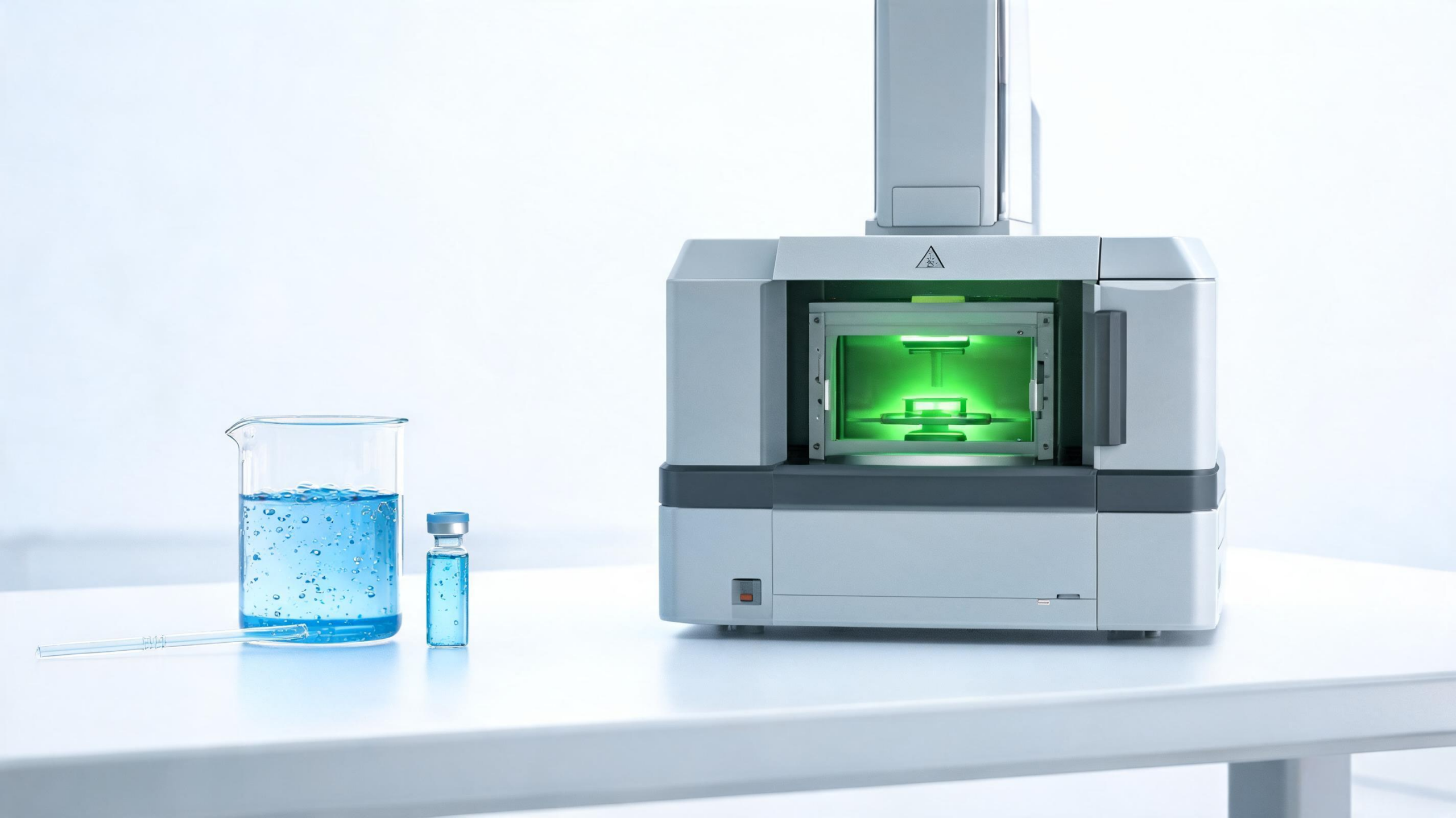
Cadmium is one of the most insidious contaminants in the marine environment. It accumulates silently in the tissues of fish, shellfish, and other aquatic organisms, and even at concentrations measured in micrograms per liter it can pose serious risks to ecosystems and human health. Yet detecting this toxic metal accurately in seawater — and, even more challengingly, in the hypersaline brines discharged by desalination plants — has long frustrated analytical chemists. A new study published in BMC Environmental Science now reports an elegant solution: a modifier-free graphite furnace atomic absorption spectrometry (GFAAS) method that achieves reliable trace cadmium determination in high-salinity waters while dramatically reducing the environmental footprint of the analysis itself.
The research, led by Anoja N of the National Water Supply and Drainage Board in Sri Lanka, together with R. C. L. De Silva of the University of Kelaniya and J. Prabagar of the University of Jaffna, was driven by a pressing regional and global problem. Coastal waters in northern Sri Lanka carry total dissolved solids (TDS) of approximately 39,400 milligrams per liter, while hypersaline brines in the same region exceed 56,000 milligrams per liter — far above the roughly 35,000 milligrams per liter of natural seawater. With desalination facilities expanding worldwide to combat freshwater scarcity, the concentrated brines they discharge, laden with sodium, chloride, magnesium, and trace metals such as cadmium, lead, and zinc, represent a growing environmental concern. Monitoring these waters for toxic metals is essential, but conventional analytical methods buckle under the extreme salinity.
The analytical difficulty is rooted in what chemists call matrix interference. In a graphite furnace atomic absorption spectrometer, a small volume of sample is dried, pyrolyzed, and finally atomized at high temperature inside a small graphite tube, and the absorption of light by free cadmium atoms is measured at a characteristic wavelength of 228.8 nanometers. The problem is that when the sample contains enormous quantities of dissolved salts, those salts produce their own nonspecific absorption and physical effects that scatter or suppress the analyte signal. In conventional measurements without correction, blank artificial seawater produced an apparent cadmium concentration of 41.88 micrograms per liter — a massive phantom signal — while blank artificial brine yielded 54.18 micrograms per liter. Without intervention, such readings would be catastrophically misleading.
The Sri Lankan team attacked the problem on two fronts. First, they exploited the three-field Zeeman background correction system of their Analytik Jena ZEEnit 700P instrument, which uses a magnetic field to separate the true atomic absorption signal from nonspecific background absorption. The effect was striking. With Zeeman correction applied, the apparent cadmium in blank artificial seawater plummeted from 41.88 to 0.92 micrograms per liter, and in blank artificial brine from 54.18 to 0.24 micrograms per liter. For samples spiked with 10 micrograms per liter of cadmium, measured values dropped from 39.45 to 8.48 micrograms per liter in seawater and from 52.78 to 6.78 micrograms per liter in brine. The second front was the optimization of the graphite furnace temperature program itself — the sequence of drying, pyrolysis, and atomization steps that determines how cleanly the salty matrix is driven off before cadmium atoms are measured.
Using a one-variable-at-a-time approach, the researchers systematically explored drying temperatures of 110, 150, and 200 degrees Celsius; pyrolysis temperatures from 700 to 1000 degrees Celsius; and atomization temperatures from 1200 to 1600 degrees Celsius. For artificial seawater, the sweet spot proved to be drying at 150 degrees Celsius, pyrolysis at 800 degrees Celsius, and atomization at 1400 degrees Celsius. The pyrolysis step is the critical one: it must be hot enough to vaporize the salt matrix but not so hot that volatile cadmium is lost. Above 800 degrees Celsius, cadmium signals declined, evidence of analyte volatilization. For the far more concentrated artificial brine, everything remained the same except the atomization temperature, which needed to rise to 1500 degrees Celsius to achieve maximum absorbance and excellent precision, with a relative standard deviation of just one percent. Three distinct furnace programs emerged: a manufacturer default for clean standards and certified reference materials, and matrix-specific programs tuned for seawater and hypersaline brine respectively.
The payoff of this matrix-specific tuning was dramatic in the recovery studies. When the default furnace program was used both to calibrate and to measure cadmium in seawater, salt-induced signal suppression crushed recoveries to a mere 5 to 26 percent — essentially useless. But when aqueous calibration was paired with measurement under the optimized seawater program, recoveries jumped to between 85 and 107 percent in both undiluted and diluted samples. Hypersaline brine, with its stronger suppression, required an additional step: simple dilution. Undiluted brine analyzed with the optimized brine program yielded recoveries of 83.8 to 92.9 percent, and after two-fold dilution the recoveries reached 94.1 to 95.1 percent. Notably, the study found that cadmium recovery correlates strongly and inversely with electrical conductivity, a practical indicator that higher ionic strength intensifies matrix interference.
Calibration strategy mattered as much as furnace chemistry. External calibration with aqueous standards delivered excellent linearity, with coefficients of determination exceeding 0.999, and precision improved as cadmium concentrations rose, with the relative standard deviation falling from 7 percent at 2.5 micrograms per liter to 2 percent at 10 micrograms per liter. Matrix-matched calibration, though superficially linear, systematically overestimated cadmium — a signal enhancement bias that ruled it out for routine work. The standard addition method, in which samples are spiked incrementally, performed best of all, with a coefficient of determination of 0.9995 and a recovery of 92.7 percent for a fortified seawater sample measured at 0.93 micrograms per liter, confirming negligible residual matrix effects even at ultra-trace levels.
The method’s sensitivity and reliability were rigorously quantified. The limit of detection was 0.50 micrograms per liter in ultrapure water, 0.76 micrograms per liter in artificial seawater, and 0.59 micrograms per liter in artificial brine — comfortably below the concentrations of environmental concern. Measurement uncertainty, evaluated under the EURACHEM/CITAC framework by accounting for standard preparation, calibration, repeatability, and recovery bias, produced a combined standard uncertainty of 0.31 micrograms per liter and an expanded uncertainty of plus or minus 0.62 micrograms per liter at a 95 percent confidence level. The dominant contributor was day-to-day analytical repeatability rather than any systematic bias, and the fortified seawater sample measured 10.16 plus or minus 0.62 micrograms per liter — comfortably within the generally accepted plus-or-minus 10 percent performance criteria for trace metal analysis in complex matrices.
What makes the study especially timely is its explicit embrace of Green Analytical Chemistry. Traditional approaches to taming salt matrices — solid-phase extraction, dispersive liquid-liquid microextraction, cloud point extraction — consume hazardous organic solvents, generate chemical waste, and demand laborious sample preparation. Even greener alternatives such as deep eutectic solvents struggle under the extreme salinity of hypersaline brine. The new method sidesteps all of this: it requires no chemical modifier at all, uses just 20 microliters of sample per analysis, relies on ultrapure water and dilute nitric acid, and completes each determination in roughly two to three minutes. A formal assessment using the Green Analytical Procedure Index (GAPI) classified 13 of 15 evaluation criteria as green, reflecting low reagent consumption, minimal waste, and reduced handling risk. Even the graphite tubes proved durable, surviving approximately 543 analytical cycles and minimizing solid waste.
The authors are careful to note that further validation with natural seawater samples from different geographical locations would strengthen the method’s broader applicability, and the instrument’s instantaneous energy demands are higher than those of low-energy extraction techniques — though the short atomization cycle keeps total energy use modest. Still, the study demonstrates something analytically satisfying: that a conventional, widely available instrument can be coaxed into reliable performance in one of the harshest sample matrices in environmental chemistry simply by understanding and exploiting the volatility differences between the salt matrix and the analyte. As desalination expands across water-stressed coastlines worldwide, this modifier-free, Zeeman-corrected approach offers monitoring laboratories a practical, sustainable route to safeguarding marine waters against cadmium contamination — no exotic reagents required.
The findings carry practical weight for environmental regulators. Cadmium is listed by the World Health Organization and national agencies as a priority pollutant, and drinking water guidelines typically sit in the low microgram-per-liter range, so a detection limit of 0.76 micrograms per liter in seawater places the method squarely within the sensitivity window needed for compliance monitoring. Because the procedure relies on equipment already installed in many water quality laboratories, adoption barriers are low compared with techniques requiring dedicated inductively coupled plasma instrumentation.
The study also illustrates a broader trend in analytical chemistry: rather than adding complexity to overcome interferences, careful exploitation of fundamental chemistry — here, the volatility gap between a chloride-rich salt matrix and a relatively volatile metal — can achieve cleaner results with fewer reagents. The one-variable-at-a-time optimization strategy, though simpler than modern multivariate designs, proved sufficient to isolate the critical temperature thresholds, and the confirmation experiments demonstrated that the resulting furnace programs were robust across repeated cycles.
Alignment with the United Nations Sustainable Development Goals on responsible consumption and life below water underscores the motivation. As brine discharges intensify in arid coastal regions, routine, low-waste monitoring of trace metals becomes a necessity rather than an aspiration. Extending the validated approach to other trace metals such as lead and zinc, and to natural field samples across diverse oceanographic settings, represents the logical next step for this line of research.
Subject of Research: A modifier-free, Zeeman-corrected GFAAS method for trace cadmium determination in seawater and hypersaline brine
Article Title: Environmentally sustainable modifier-free, Zeeman-corrected graphite furnace atomic absorption spectrometry for trace cadmium determination in seawater and hypersaline brine
Article References: N, A., De Silva, R. C. L., & Prabagar, J. (2026). Environmentally sustainable modifier-free, Zeeman-corrected graphite furnace atomic absorption spectrometry for trace cadmium determination in seawater and hypersaline brine. BMC Environmental Science, 3(1), Article 20. https://doi.org/10.1186/s44329-026-00062-w
Image Credits: AI Generated
DOI: 10.1186/s44329-026-00062-w
Keywords: cadmium, graphite furnace atomic absorption spectrometry, seawater, hypersaline brine, matrix interference, Zeeman background correction, green analytical chemistry, desalination brine, GAPI, trace metal analysis, measurement uncertainty, environmental monitoring
Cite Scienmag News
Sloane Callahan. (September 10, 2026). Green Graphite Furnace Method Tracks Cadmium in Seawater Without Chemical Modifiers. Scienmag. https://scienmag.com/green-graphite-furnace-method-tracks-cadmium-in-seawater-without-chemical-modifiers/
Sloane Callahan. "Green Graphite Furnace Method Tracks Cadmium in Seawater Without Chemical Modifiers." Scienmag, 10 September 2026, https://scienmag.com/green-graphite-furnace-method-tracks-cadmium-in-seawater-without-chemical-modifiers/. Accessed 4 October 2026.
Sloane Callahan. "Green Graphite Furnace Method Tracks Cadmium in Seawater Without Chemical Modifiers." Scienmag. September 10, 2026. https://scienmag.com/green-graphite-furnace-method-tracks-cadmium-in-seawater-without-chemical-modifiers/


