


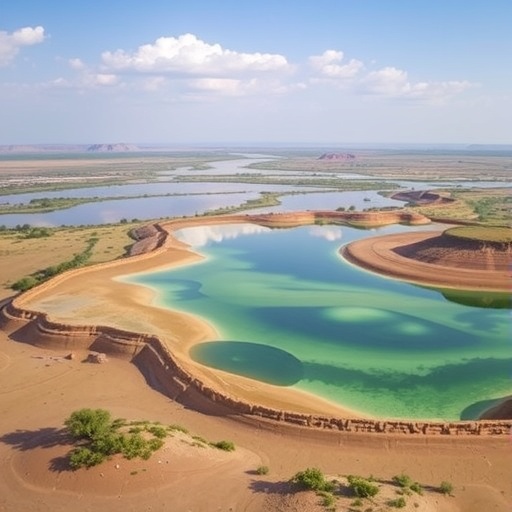
In a groundbreaking publication in Commun Earth Environ, researchers Amadori, Greife, and Carrea, among others, have taken substantial strides toward understanding the intricate patterns of seasonal lake dynamics across sub-Sahelian Africa. This region, characterized by its unique climatic conditions, serves as an essential case study for climatologists and environmental scientists who seek to grasp the connections between seasonal changes and freshwater ecosystems. This pivotal research lays down a climatological baseline that can inform future environmental management and conservation strategies in this ecologically sensitive area.
Sub-Saharan Africa has long been overshadowed by a lack of comprehensive climatic analyses focused on its diverse aquatic environments. The study highlights the urgency for detailed climatological research, particularly concerning river systems, lakes, and wetlands that are vulnerable to climate-induced changes. The researchers utilized a combination of observational data and advanced modeling techniques to delve into the seasonal variations that dictate water levels and ecological health. They argue that such fluctuations significantly influence local biodiversity, agriculture, and community livelihoods, making this research both timely and critical.
The authors meticulously documented patterns of water circulation, evaporation rates, and precipitation trends across various seasonal cycles. They found that the dynamics of these freshwater systems are interlinked with broader atmospheric conditions, such as temperature increases and variable rainfall patterns. This nuanced understanding aids in predicting how climate change may further alter these vital ecosystems. The integration of historical data with contemporary modeling is particularly salient; it allows for a comparative analysis that can project future scenarios and impacts.
One of the key findings of this research is that seasonal lake dynamics are not uniform across the sub-Sahelian region. Variability is driven by a multitude of factors, including topography, soil types, and human interventions. This variability necessitates tailored management strategies for water resources, as a one-size-fits-all approach could exacerbate existing vulnerabilities. By establishing a detailed climatological framework, the study empowers policymakers to focus efforts on the most critical areas, enhancing resilience among local communities dependent on these water bodies.
Another innovative aspect of this research is its use of remote sensing technologies to gather data. Satellite imagery and other remote sensing tools enabled the researchers to capture intricate details about lake surface temperatures and water extent, providing insights that field surveys alone could not deliver. This technology also allows for real-time monitoring, which is invaluable for early warning systems that can alert communities to impending droughts or floods, thus reducing potential disaster impacts.
As the study progresses, the authors emphasize the importance of community engagement in the ongoing research process. They recognize that the people living in close proximity to these freshwater systems possess invaluable knowledge that can refine scientific understanding and foster community-driven conservation efforts. By involving local stakeholders, the research team hopes to bridge the gap between scientific inquiry and practical application, creating pathways for sustainable stewardship of water resources.
In addition to its ecological implications, the research also underscores the sociopolitical dimensions of water management in sub-Sahelian Africa. Conflicts over water resources are increasingly common in a changing climate, where scarcity drives competition between agricultural, industrial, and domestic uses. By documenting the shifts in lake dynamics, the study can serve as a crucial resource for conflict resolution and peaceful negotiations between differing interests.
The potential ramifications of this research extend beyond immediate ecological impacts. Effective water management informed by these studies can lead to enhanced food security in the region, particularly in agricultural practices that rely heavily on predictable water sources. By enabling farmers to adapt to changing conditions with better planning and resource allocation, the findings contribute to resilience building against climate-induced challenges.
Moreover, the research contributes to broader discussions surrounding climate change adaptation strategies at a global scale. With sub-Sahelian Africa often cited as a vulnerable region, the insights drawn from this study provide a microcosmic view of the larger climate challenges that affect freshwater ecosystems worldwide. The findings advocate for international cooperation and funding aimed at mitigating the effects of climate change, emphasizing that localized research can inform global strategies.
The study does not shy away from addressing the existential worries surrounding climate change and biodiversity loss. The researchers catalog the potential threats posed by fluctuating water levels, including habitat degradation and species extinction. They call for immediate action, stressing that swift and informed responses are essential to safeguard these ecosystems, which play a crucial role in biodiversity conservation and carbon sequestration.
Finally, the research points to future avenues for study, such as the impacts of urbanization and industrialization on freshwater resources. As cities expand and industries proliferate, understanding how these factors interplay with seasonal dynamics will become increasingly important. The authors lay the groundwork for longitudinal studies that could yield insights into how human activities exacerbate or mitigate climatic changes in aquatic systems.
The implications of this study are profound, with far-reaching consequences for environmental management, policy formulation, and conservation practices in Africa and beyond. The foundation established through this climatological baseline serves as a clarion call for heightened awareness and action regarding the delicate interplay between climate dynamics and freshwater ecosystems.
The work of Amadori, Greife, and Carrea illustrates that sustained scientific inquiry into seasonal lake dynamics is not merely an academic pursuit; rather, it is a vital tool for understanding and addressing the challenges posed by climate change. By illuminating the complexities of these interdependent systems, the researchers have provided the groundwork for future discussions and research dedicated to securing the ecological and social health of sub-Sahelian Africa’s water resources.
In conclusion, this research represents an essential step forward in the quest to understand climate dynamics within sub-Saharan Africa. By establishing a climatological baseline, the authors have not only advanced scientific knowledge but also paved the way for effective resource management strategies. As environmental challenges mount, the imperative for informed decision-making grows more pressing. This study serves not just as a beacon of hope for sustainable ecological management, but also as a vital reminder of our responsibility to protect and conserve the planet’s freshwater resources.
Amadori, M., Greife, A.J., Carrea, L. et al. A climatological baseline for understanding patterns of seasonal lake dynamics across sub-Sahelian Africa.
Commun Earth Environ 6, 681 (2025). https://doi.org/10.1038/s43247-025-02684-5
Cite Scienmag News
Violet Maxwell. (August 20, 2025). Seasonal Lake Dynamics in Sub-Sahelian Africa Explained. Scienmag. https://scienmag.com/seasonal-lake-dynamics-in-sub-sahelian-africa-explained/
Violet Maxwell. "Seasonal Lake Dynamics in Sub-Sahelian Africa Explained." Scienmag, 20 August 2025, https://scienmag.com/seasonal-lake-dynamics-in-sub-sahelian-africa-explained/. Accessed 3 September 2026.
Violet Maxwell. "Seasonal Lake Dynamics in Sub-Sahelian Africa Explained." Scienmag. August 20, 2025. https://scienmag.com/seasonal-lake-dynamics-in-sub-sahelian-africa-explained/


