


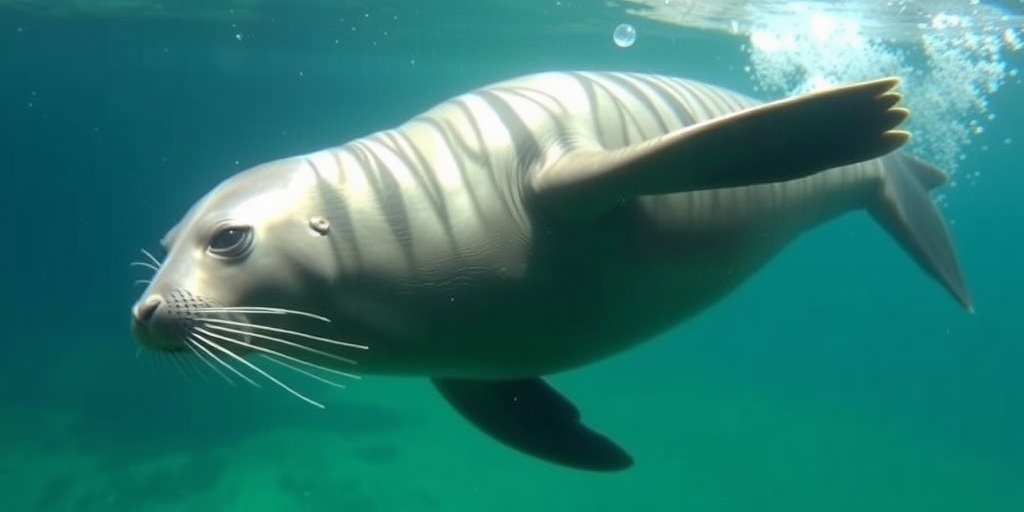
Marine mammals, such as seals and dolphins, have long fascinated researchers due to their remarkable diving abilities. These animals are known for their capacity to hold their breath for long durations while navigating the underwater realm. However, a groundbreaking study has unveiled that these marine creatures may possess a distinctive physiological advantage that could provide insight into their exquisite survival tactics during extended dives. Interestingly, it appears that they may be capable of directly sensing their blood-oxygen levels—a trait that is largely absent in most terrestrial mammals. This ability could enable them to manage their diving durations and return to the surface before experiencing hypoxia, which is a significant physiological challenge for air-breathing animals living in aquatic environments.
Traditionally, it has been understood that most mammals depend on the perception of carbon dioxide (CO₂) levels in the blood as a primary indicator of oxygen deprivation. Elevated CO₂ levels trigger a sensation known as "air hunger," signaling the need to resurface for oxygen. This process is essential in guide mammals as they manage their breath-hold diving. Yet, for creatures like marine mammals that can accumulate CO₂ while submerged, this reliance may not serve as an optimal safeguard against the dangers of prolonged diving. In conditions where carbon dioxide is retained, the constant monitoring of oxygen levels may become more critical, potentially leading to drowning if these animals cannot gauge their oxygen status accurately.
To investigate the cognitive capabilities of gray seals (Halichoerus grypus) regarding oxygen sensitivity, a team of researchers, led by Chris McKnight, conducted controlled experiments to manipulate both the inhaled oxygen and carbon dioxide levels available to the seals. The study aimed to discern any correlations between these gas variations and the seals’ diving behaviors. Their findings revealed an impressive level of adaptability in the seals’ responses to oxygen levels, drawing attention to the significance of cognitive perception in their diving behavior.
The results were striking: the duration of dives was found to correlate significantly with changes in blood oxygen levels while remaining largely unaffected by fluctuations in carbon dioxide or blood pH. Even when the seals were subjected to elevated concentrations of CO₂—up to 200 times greater than what is typically found in ambient air—the length of their dives did not change significantly. This evidence suggests that the diving duration of these animals is dictated primarily by their oxygen levels, mark a departure from established beliefs regarding the mechanisms of breath-hold diving among mammals.
A compelling aspect of this research is its broader implications for understanding evolutionary adaptations in marine mammals. The study posits that the cognitive ability to sense oxygen levels is not unique to gray seals but may extend across various marine mammal species. This shared characteristic points toward a convergent evolution of diving-related capabilities among different marine mammal lineages, underscoring an essential adaptation in overcoming the challenges posed by aquatic living.
The study has substantial implications for our understanding of marine mammal physiology and the evolutionary pressures that have shaped it over millions of years. By enhancing our comprehension of how gray seals and potentially other marine mammals perceive and respond to oxygen deprivation, researchers may gain insights into the ecological adaptability and survival strategies employed by these creatures in their natural habitats.
Additionally, understanding the physiological and cognitive mechanisms in marine mammals could have future applications relating to human health, particularly in conditions affecting blood oxygen levels or respiratory health. The potential to draw parallels between marine mammal adaptations and human physiological responses to oxygen deprivation could open doors for novel therapeutic strategies in managing conditions such as chronic obstructive pulmonary disease (COPD) or sleep apnea.
The findings from this research will be discussed in greater detail in a related perspective piece by Lucy Hawkes and Jessica Kendall-Bar. This ongoing exploration into the cognitive capacities of marine mammals illustrates how much is still to be learned about the intricacies of their biology and behavior. The discoveries challenge conventional beliefs about mammalian sensing mechanisms, prompting a reevaluation of how we understand and study not only marine mammals but also the broader category of mammals that rely on oxygen consumption for survival.
As we turn our attention to the future, the field of marine biology is likely to yield more unexpected revelations about the adaptive strategies of aquatic creatures. Understanding how marine mammals navigate their submerged environments amid the challenges posed by oxygen levels could shed light on the evolutionary lineage of terrestrial mammals as well. This research stands as a testament to the complexity of life under the sea and the unending quest to uncover the secrets that lie beneath the waves.
In summary, the research provides a deeper appreciation for marine mammals and their extraordinary adaptations. With a better grasp of their physiological understanding of oxygen dynamics, conservation efforts may be enhanced, contributing to the preservation of these magnificent species in the face of changing oceanic conditions. The knowledge acquired thus far underscores the importance of continuing exploration in the marine sciences, where each discovery may lead to new questions and further understanding of life as we know it on Earth.
Cite Scienmag News
Violet Maxwell. (March 20, 2025). Seals Detect Their Own Blood Oxygen Levels, Preventing Drowning. Scienmag. https://scienmag.com/seals-detect-their-own-blood-oxygen-levels-preventing-drowning/
Violet Maxwell. "Seals Detect Their Own Blood Oxygen Levels, Preventing Drowning." Scienmag, 20 March 2025, https://scienmag.com/seals-detect-their-own-blood-oxygen-levels-preventing-drowning/. Accessed 3 September 2026.
Violet Maxwell. "Seals Detect Their Own Blood Oxygen Levels, Preventing Drowning." Scienmag. March 20, 2025. https://scienmag.com/seals-detect-their-own-blood-oxygen-levels-preventing-drowning/


