


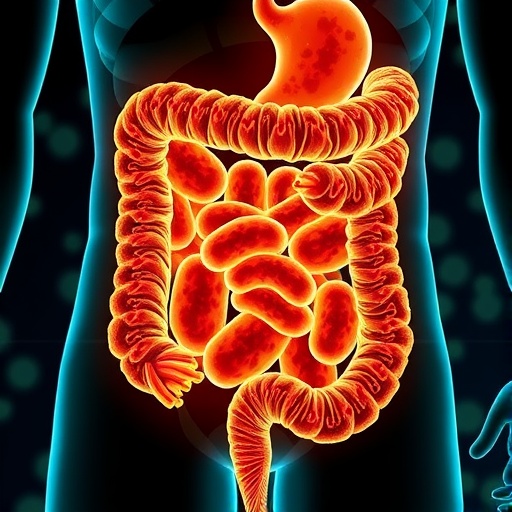
In a groundbreaking study published in Nature, researchers have unveiled a critical molecular interaction that elucidates how the notorious gut bacterium Bacteroides fragilis (B. fragilis) predisposes individuals to colorectal cancer. This revelation addresses a decade-long enigma in microbiology and cancer biology: the precise mechanism by which the B. fragilis toxin (BFT) targets and disrupts colon epithelial cells. BFT, already implicated in promoting colon tumorigenesis through its proteolytic activity, was known to cleave E-cadherin, a pivotal protein maintaining epithelial barrier integrity. However, the initial point of toxin adhesion to host cells remained a mystery until now.
The multi-institutional effort, spearheaded by investigators at the Johns Hopkins Kimmel Cancer Center and the Bloomberg~Kimmel Institute for Cancer Immunotherapy, in collaboration with Harvard Medical School and the Molecular Biology Institute of Barcelona, discovered that claudin-4, a tight junction protein, serves as the essential receptor for BFT. This discovery was made possible by a genome-wide CRISPR knock-out screen conducted in colon epithelial cells, wherein the removal of claudin-4 abrogated BFT binding and subsequent E-cadherin cleavage. This was an unexpected finding, as claudin-4 is traditionally recognized for its role in tight junction assembly rather than as a toxin receptor.
Claudin-4, a major component of tight junctions that regulate paracellular permeability and maintain epithelial barrier function, has now been identified as the molecular “docking station” for BFT. This aligns with the toxin’s sophisticated strategy: rather than directly targeting E-cadherin, BFT physically binds claudin-4, which facilitates its proximity to E-cadherin, allowing the protease activity to subsequently cleave and disrupt the epithelial barrier. Understanding this receptor-ligand dynamic fills a fundamental gap in the pathogenic model of B. fragilis-induced colon carcinogenesis.
To firmly establish the biochemical nature of this interaction, the Johns Hopkins team partnered with structural biologists in Barcelona, who used advanced biophysical methods to demonstrate a direct, high-affinity one-to-one binding complex between BFT and claudin-4 in vitro. This physical association explains the high specificity and potency of BFT’s effects, as it requires receptor engagement before exerting its protease function on E-cadherin. The discovery withstood rigorous validation, including loss-of-function genetic assays and protein interaction analyses.
Moving beyond in vitro systems, the study evaluated the mechanistic implications in vivo by employing sophisticated mouse models of gut colonization and toxin exposure. Through collaboration with another Harvard medical team, investigators engineered a molecular decoy that mimics the extracellular domain of claudin-4. This soluble receptor decoy successfully sequestered BFT, effectively preventing its binding to actual colon epithelial cells. Notably, mice treated with this decoy were shielded from the hallmark epithelial damage, inflammation, and tumorigenesis typically initiated by BFT, underscoring the therapeutic potential of receptor blockade.
The clinical ramifications of these findings are profound. The ability to interfere with the initial molecular event—BFT binding to claudin-4—opens new avenues for designing targeted interventions to inhibit colon inflammation and cancer progression driven by B. fragilis. Moreover, this receptor decoy strategy exemplifies a novel biologic approach, which can be further refined into small molecule inhibitors or antibody-based therapies with enhanced pharmacokinetic profiles. Such treatments could transform how we manage toxin-associated colorectal carcinogenesis and potentially other related pathologies linked to bacterial toxins.
This study also reshapes the conceptual framework of bacterial toxin interactions with host cells. Unlike typical proteases that directly engage their substrates, BFT’s requirement of an intermediary receptor is a rare and intriguing feature. The selective binding to a non-signaling tight junction protein like claudin-4 is unprecedented, highlighting a unique evolutionary adaptation in bacterial pathogenicity. This discovery could spur re-examination of other bacterial toxin mechanisms, fostering new insights into host-pathogen interplay.
The researchers acknowledge that, although the binding was demonstrated and characterized biophysically, the precise atomic-resolution structure of the BFT-claudin-4 complex remains elusive. Attempts using state-of-the-art AI-based protein structure prediction tools such as AlphaFold were unable to fully decipher the intricate conformational details of this interaction. The team plans to pursue high-resolution structural studies, which could illuminate exact binding interfaces and facilitate rational drug design.
Supporting this investigation, the National Institutes of Health and various international research bodies, including Cancer Research UK and the Howard Hughes Medical Institute, provided critical funding. The study underscores the power of cross-disciplinary collaborations integrating genetic screening, structural biology, and in vivo modeling to tackle complex biomedical challenges.
In summary, this seminal research provides a pivotal piece of the puzzle explaining how Bacteroides fragilis exerts its carcinogenic influence by exploiting claudin-4 as a receptor for its toxin, BFT. The findings not only resolve a longstanding mystery but also usher in promising therapeutic strategies aimed at intercepting bacterial toxin engagement before tissue damage ensues. As our understanding of host-microbe interactions deepens, such discoveries pave the way for innovative approaches to prevent and treat colorectal cancer linked to microbiota dysbiosis.
News Publication Date: April 22, 2026
Web References:
- Johns Hopkins Kimmel Cancer Center: https://www.hopkinsmedicine.org/kimmel-cancer-center
- Bloomberg~Kimmel Institute for Cancer Immunotherapy: https://www.hopkinsmedicine.org/kimmel-cancer-center/bloomberg-kimmel-institute-for-cancer-immunotherapy
- Original publication in Nature: https://www.nature.com/articles/s41586-026-10375-0
References:
- Sears CL, et al. “Bacteroides fragilis toxin induces colon tumorigenesis through E-cadherin cleavage via claudin-4 binding.” Nature. 2026.
- White M, Waldor MK et al. Genome-wide CRISPR screen identifying claudin-4 as BFT receptor.
- Gomis-Rüth FX, Eckhard U. Structural basis of BFT-claudin-4 interaction.
Cite Scienmag News
Nathaniel Bowman. (May 7, 2026). Scientists Uncover Mechanism of Gut Bacteria Toxin Invading Colon Cells to Initiate Cancer. Scienmag. https://scienmag.com/scientists-uncover-mechanism-of-gut-bacteria-toxin-invading-colon-cells-to-initiate-cancer/
Nathaniel Bowman. "Scientists Uncover Mechanism of Gut Bacteria Toxin Invading Colon Cells to Initiate Cancer." Scienmag, 7 May 2026, https://scienmag.com/scientists-uncover-mechanism-of-gut-bacteria-toxin-invading-colon-cells-to-initiate-cancer/. Accessed 3 September 2026.
Nathaniel Bowman. "Scientists Uncover Mechanism of Gut Bacteria Toxin Invading Colon Cells to Initiate Cancer." Scienmag. May 7, 2026. https://scienmag.com/scientists-uncover-mechanism-of-gut-bacteria-toxin-invading-colon-cells-to-initiate-cancer/


