


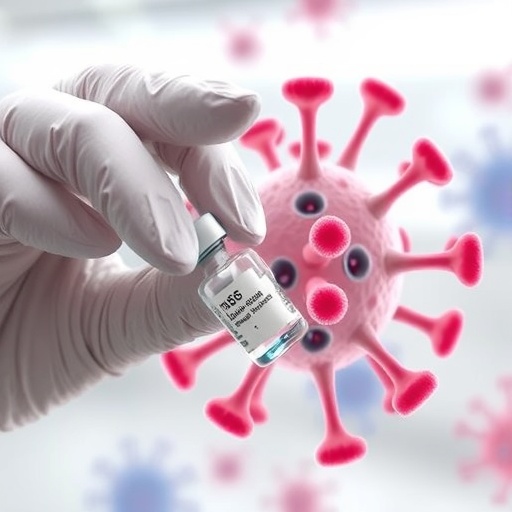
Researchers at the University of Nebraska–Lincoln have unveiled a pioneering vaccination strategy targeting the highly pathogenic avian influenza virus H5N1, marking a major advancement in the fight against zoonotic diseases. This innovative vaccine platform demonstrated robust efficacy in preclinical trials involving both murine and bovine models, underscoring its potential to curb the widespread agricultural and public health impacts of this devastating pathogen.
Avian influenza H5N1 has wreaked havoc across agricultural sectors worldwide, forcing the mass euthanasia of over 166 million commercial poultry in the United States alone since 2022. The virus’s expansion beyond traditional avian hosts has now breached species barriers, infecting dairy cattle in an unprecedented interspecies transmission event in 2024. This unprecedented leap not just inflicted severe illness in cattle but subsequently affected approximately 70 farm workers with close contact exposure, raising alarming concerns about viral adaptation and zoonotic spillover.
The research, spearheaded by virologist Professor Eric Weaver and his team at the Nebraska Center for Virology, addresses the urgent need for a vaccine capable of preventing H5N1 infections in both poultry and mammals. Their forthcoming publication in npj Vaccines details a dual-route vaccination method, meticulously designed to elicit comprehensive immune defenses within the systemic circulation and the mucosal surfaces of the respiratory tract. This approach embodies a significant paradigm shift, aiming to block viral replication and transmission simultaneously.
The vaccine’s mechanism involves administering a prime immunization via intramuscular injection and a subsequent booster through intranasal delivery. This bifurcated strategy stimulates the generation of systemic antibodies that neutralize the virus throughout the body, while the mucosal immunity induced intranasally forms a frontline barrier in the respiratory tract to inhibit viral shedding and horizontal spread. Such an integrated immunological approach is critical given the respiratory tropism of influenza viruses and their propensity for rapid transmission among livestock.
In-depth experimental assessments in mice demonstrated complete protection against lethal doses from multiple H5N1 viral strains, affirming the broad cross-protective capabilities of the vaccine candidates. Following these promising murine data, the research pivoted towards dairy calves, where the challenges of large-animal vaccine efficacy are significantly pronounced due to physiological and immunological complexities. Impressively, neonatal calves vaccinated at one week of age exhibited potent immune responses and were shielded from severe disease following viral challenge.
The urgency of this development stems from the absence of currently licensed vaccines targeting H5N1 in cattle, despite the newfound vulnerability of this species. Professor Weaver notes that although his laboratory had investigated similar vaccine platforms over a decade ago with avian models, the unprecedented outbreak in cattle galvanized renewed focus. “When the outbreak began, my hope was this would cycle through and subside in dairy cattle, but the persistence and worsening situation necessitated immediate action,” Weaver reflects.
In collaboration with expert animal care teams, the vaccine protocol incorporated a booster shot at four weeks post-primary immunization, which significantly enhanced and sustained immunological memory. This dosing regimen is strategically aligned with immunological principles that promote T-cell and B-cell maturation, ultimately leading to long-lasting protective immunity. Importantly, the dual-route administration ensures mucosal tissues receive adequate stimulation, which is often a bottleneck in conventional vaccine platforms.
Beyond the immediate goal of protecting animal health, this vaccine innovation bears considerable economic significance. The H5N1 outbreak has inflicted substantial financial losses on producers due to mortality and culling measures. Containment of the virus at the livestock level could dramatically reduce these impacts while also mitigating public health risks associated with viral evolution and spillover into humans, particularly those working in close proximity to infected animals.
Professor Weaver envisions a future where this vaccination platform could be adapted as a multispecies vaccine, offering dual benefits for both animals and humans. The intricate interplay between animal reservoirs and human susceptibility underlines the necessity of One Health approaches to infectious disease management. “Our aim is to develop a vaccine not only for the farm animals but also for the farmers themselves, providing a comprehensive shield against H5N1,” Weaver emphasizes.
In an era characterized by increasing zoonotic threats, this vaccine development stands as a testament to the critical need for cross-disciplinary research integrating virology, immunology, and veterinary medicine. It also highlights the significance of rapid translational science, wherein pre-existing foundational research can be swiftly pivoted to address emergent infectious threats, thereby protecting both agriculture and public health sectors.
Further research efforts are underway to secure funding and establish partnerships aimed at advancing the vaccine through rigorous clinical and field trials. Success in these endeavors could ultimately lead to regulatory approval and widespread deployment, transforming the landscape of influenza control in livestock and preventing future outbreaks that jeopardize global food security and human health.
The H5N1 avian influenza episode marks a historic departure from traditional host boundaries, emphasizing that influenza A viruses, once not considered a threat to bovine health, now require dedicated interventions. As these viruses continue their evolutionary trajectories, proactive vaccine development strategies such as this are paramount to preclude the establishment of new reservoirs and protect populations at the interface of animal-human transmission.
Cite Scienmag News
Kristina Jarvis. (April 23, 2026). Scientists Create Promising New Vaccine Targeting H5N1 Bird Flu. Scienmag. https://scienmag.com/scientists-create-promising-new-vaccine-targeting-h5n1-bird-flu/
Kristina Jarvis. "Scientists Create Promising New Vaccine Targeting H5N1 Bird Flu." Scienmag, 23 April 2026, https://scienmag.com/scientists-create-promising-new-vaccine-targeting-h5n1-bird-flu/. Accessed 3 September 2026.
Kristina Jarvis. "Scientists Create Promising New Vaccine Targeting H5N1 Bird Flu." Scienmag. April 23, 2026. https://scienmag.com/scientists-create-promising-new-vaccine-targeting-h5n1-bird-flu/


