


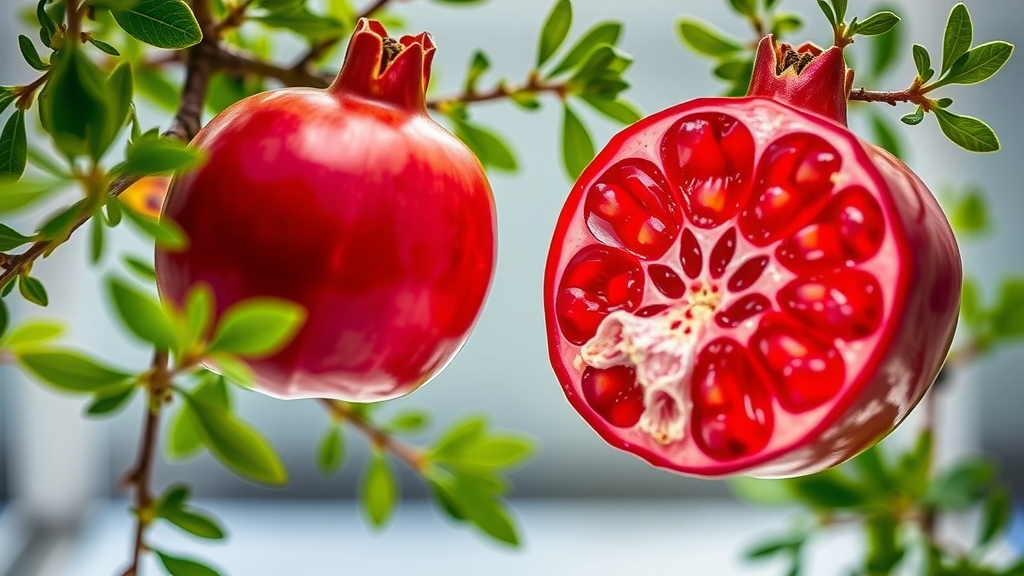
Pomegranate has long been celebrated as a superfruit, packed with antioxidants and compounds linked to a remarkable range of health benefits. Yet behind its glossy ruby seeds lies a stubborn agricultural problem: the tree is notoriously difficult to propagate at scale. Cuttings are labor-intensive, slow to establish, and often fail during transplantation, while seeds produce genetically variable offspring with unpredictable fruit quality. Now, a team of researchers at Haramaya University in Ethiopia has reported a carefully optimized laboratory recipe that coaxes pomegranate leaf tissue into prolific, healthy callus growth, a critical first step toward mass-producing identical, disease-free plants and unlocking genetic engineering possibilities for one of the world’s most prized fruit crops.
The study, published in Discover Biotechnology, tackles three interlocking obstacles that have long frustrated plant biotechnologists working with woody perennials: microbial contamination, phenolic browning, and inefficient callus induction. When a leaf segment is excised and placed on a nutrient gel, it is essentially a wounded, sugar-rich island that fungi and bacteria find irresistible. At the same time, pomegranate tissues flood the culture surface with phenolic compounds that oxidize into toxic quinones, turning explants brown and dead within days. The researchers, led by Yasin Abas and Zekeria Yusuf with Alok Kumar, systematically optimized each stage of the process, from the moment a leaf is cut from a tree in an East Hararghe home garden to the four-week mark when callus quality is scored under a microscope.
Sterilization proved to be a delicate balancing act. The team tested combinations of sodium hypochlorite, the systemic fungicide Bavistin, and the surfactant Tween20 across varying exposure times. Untreated controls were a total loss, with every single explant contaminated. But the winning formula, 10 percent sodium hypochlorite for 15 minutes combined with 0.2 percent Bavistin and 0.1 percent Tween20, achieved 84 percent explant survival while driving contamination down to just 17.71 percent. Intriguingly, more was not better. Extending the hypochlorite soak to 20 minutes backfired spectacularly, raising contamination to 39.71 percent and slashing survival to 49 percent, presumably because the oxidizing chemical damaged the very tissue it was meant to protect. The surfactant appears to help the disinfectant spread evenly across the waxy leaf surface, while Bavistin targets fungal spores that hypochlorite alone may miss.
Even with sterilization solved, the pomegranate’s chemical defenses threatened the cultures. Within the first three days on Murashige and Skoog medium, explants exuded phenolics so abundantly that without intervention, necrosis set in and tissues died within a week. The researchers attacked the problem on two fronts. First, they varied subculturing frequency, transferring explants onto fresh medium anywhere from once to four times per week. The results were striking: weekly transfers left 100 percent of explants browned, while four transfers per week eliminated browning entirely. Each transfer physically dilutes the accumulating phenolic soup before it can oxidize and poison the tissue, and remarkably, the frequent handling imposed no observable stress on the explants.
Second, the team supplemented the medium with antioxidants, testing ascorbic acid, citric acid, and polyvinylpyrrolidone, or PVP, both alone and in combination. PVP works by binding phenolic compounds directly, while citric acid chelates the metal ions that catalyze oxidation. The pairing of PVP and citric acid emerged as the clear champion, cutting browning to just 20 percent, achieving 85 percent callus induction, and earning the highest callus quality score of 4.1 out of 5. Ascorbic acid alone was a disappointment, actually inducing visible tissue stress, a finding consistent with earlier warnings that vitamin C can behave as a pro-oxidant at high concentrations. The superiority of combination treatments over single agents suggests additive or even synergistic protective effects, an insight that could transfer readily to other phenolic-rich species such as date palm and medicinal woody plants.
With survival and browning under control, the researchers turned to the hormonal engine of callus formation. They screened a matrix of concentrations of BAP, a cytokinin that promotes cell division, and NAA, a synthetic auxin, on MS basal medium fortified with vitamins, 3 percent sucrose, and 0.8 percent agar, held at 25 degrees Celsius under a 16-hour photoperiod. The optimal combination, 1.5 milligrams per liter BAP with 0.5 milligrams per liter NAA, drove callus induction to 95 percent and produced calli that were friable, light green, and vigorously proliferative. A slightly lower BAP dose of 1.0 milligrams per liter with the same NAA level performed nearly as well at 90 percent induction.
The morphology of the resulting callus matters enormously for what comes next. Under stereomicroscopic examination and Toluidine Blue O staining, the friable calli revealed loosely arranged, translucent cells with large intercellular spaces, hallmarks of actively dividing, morphogenically competent tissue that can potentially regenerate into shoots. By contrast, treatments dominated by high NAA with little or no BAP yielded compact, opaque, darker calli packed with dense cellular aggregates, the kind of tissue that typically resists regeneration. The researchers are careful to note that actual shoot or root regeneration was not tested in this study, so the link between friable morphology and organogenic potential remains an informed inference rather than a demonstrated outcome.
The implications extend well beyond Ethiopian pomegranate orchards. A reliable callus induction protocol is the gateway to Agrobacterium-mediated genetic transformation, CRISPR gene editing, somatic embryogenesis, and the production of valuable secondary metabolites in cell suspension cultures. Because the study integrated surfactant-enhanced sterilization, quantified subculturing intervals, compared antioxidant combinations, and validated callus morphology microscopically, it offers a more complete and reproducible framework than earlier work that examined these parameters in isolation. The authors suggest the approach could generalize to other phenolic-rich woody perennials, a group that includes many of the world’s most economically important yet tissue-culture-recalcitrant crops.
The researchers are candid about the limitations. The work used leaf explants from a single local genotype, and responses may differ across cultivars; antioxidant doses were tested at fixed concentrations only; and the labor demands of subculturing four times per week could complicate commercial scale-up. Long-term callus stability and regeneration capacity remain untested. Still, the foundation is now in place. The next milestones, shoot regeneration, rooting, and eventual field transfer of complete plantlets, would complete the pipeline from a single leaf to an orchard-ready tree, offering a scalable route to genetically uniform, virus-free pomegranate planting material for breeders and growers worldwide.
Subject of Research: Optimization of tissue culture conditions for callus induction from pomegranate leaf explants
Article Title: Enhancing callus induction of pomegranate (Punica granatum L.) leaf explants
Article References: Abas, Y., Yusuf, Z., & Kumar, A. (2025). Enhancing callus induction of pomegranate (Punica granatum L.) leaf explants. Discover Biotechnology, 2(1), Article 23. https://doi.org/10.1007/s44340-025-00032-z
Image Credits: AI Generated
DOI: 10.1007/s44340-025-00032-z
Keywords: pomegranate, Punica granatum, tissue culture, callus induction, plant growth regulators, phenolic browning, surface sterilization, antioxidants, micropropagation, plant biotechnology, BAP, NAA
Cite Scienmag News
Drew Townsend. (September 26, 2026). Scientists Crack the Code for Growing Pomegranate Tissue in the Lab. Scienmag. https://scienmag.com/scientists-crack-the-code-for-growing-pomegranate-tissue-in-the-lab/
Drew Townsend. "Scientists Crack the Code for Growing Pomegranate Tissue in the Lab." Scienmag, 26 September 2026, https://scienmag.com/scientists-crack-the-code-for-growing-pomegranate-tissue-in-the-lab/. Accessed 4 October 2026.
Drew Townsend. "Scientists Crack the Code for Growing Pomegranate Tissue in the Lab." Scienmag. September 26, 2026. https://scienmag.com/scientists-crack-the-code-for-growing-pomegranate-tissue-in-the-lab/


