


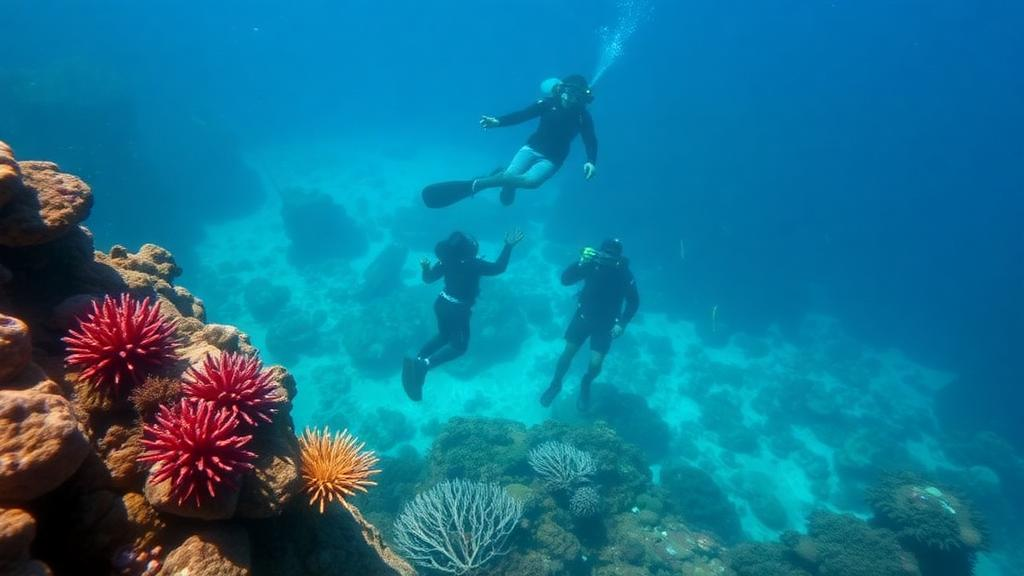
Coral reefs are among the most biodiverse ecosystems on Earth, yet they are also among the most vulnerable to human pressure. In Indonesia, home to the world’s largest extent of coral reef area, the challenge of protecting these underwater rainforests is enormous, and it cannot be met by scientists working alone. A new study from researchers at Hasanuddin University in Makassar offers a compelling case for combining rigorous scientific monitoring with the lived experience of coastal communities, showing how the two forms of knowledge can together shape conservation strategies that are genuinely suited to local conditions. The research, led by Professor Jamaluddin Jompa of the Department of Marine Science, examined coral reef health across three islands in the Spermonde Archipelago and paired ecological measurements with focus group discussions involving local residents. The findings, published in the journal Anthropocene Coasts, reveal striking differences in reef condition between sites and, just as importantly, a clear picture of what communities need in order to become effective stewards of their own reefs.
The Spermonde Archipelago, which stretches off the coast of South Sulawesi near Makassar, contains roughly 120 coral islands and sits within one of the planet’s great centers of marine biodiversity. The reefs of this region are part of the Coral Triangle, an area renowned for its extraordinary species richness. Yet the archipelago’s reefs are under mounting stress from pollution, destructive fishing practices, coastal development, and a range of other human activities. The scale of the decline is sobering: live coral cover in the region has fallen from 45 percent to 28 percent over the past two decades. That downward trajectory underscores why effective, repeatable monitoring is not a luxury but a necessity. Without accurate information about what is happening on the reef, managers cannot target interventions, evaluate their success, or adapt to changing conditions. The new study set out to address a deceptively simple question that had never before been systematically answered for this region: which monitoring approach works best under the dynamic and often challenging conditions of the Spermonde Archipelago?
To answer that question, the researchers evaluated three widely used methods for assessing reef condition. The first, Line Intercept Transects, or LIT, is a classic technique in which divers record the type of substrate found at intervals along a measured line laid across the reef. It yields precise, quantitative data about what covers the seafloor, but it demands trained divers, careful underwater work, and specialized equipment. The second method, Underwater Photo Transects, or UPT, involves photographing the seafloor along transect lines and then estimating substrate coverage from those images, either by manual annotation or software analysis. UPT reduces the time divers spend underwater and creates a permanent visual record, but it still depends on diving expertise and clear water for usable images. The third approach, drone surveys, captures broad aerial views of the reef from above the water surface. Drones can cover large areas quickly and safely, without the need for experienced divers, but their ability to distinguish fine substrate categories is limited, particularly when the water itself is murky.
The study sites were chosen to represent a gradient of water-quality conditions across the archipelago. Lae-Lae Island, located close to the mainland and the city of Makassar, experiences highly turbid water clouded by sediment and influenced by urban runoff. Kodingareng Lompo Island, farther offshore, has moderate water clarity. Lanyukang Island, the most distant of the three, enjoys relatively clear water. By applying the same monitoring toolkit across these contrasting environments, the team could assess not only how the reefs differed but also how the reliability of each method changed with water conditions. The results were instructive. Both LIT and UPT showed better reef conditions in the clearer waters of Kodingareng Lompo and Lanyukang, where live hard coral remained relatively abundant. In contrast, the turbid waters surrounding Lae-Lae revealed a reef dominated by rock, coral rubble, and dead coral covered with algae, a signature of degradation. Drone mapping delivered a valuable broader perspective of reef structure, but in the highly turbid waters of Lae-Lae it could not reliably distinguish between different substrate types, a limitation that matters when the goal is to quantify coral cover.
These findings point to a practical conclusion: the three methods are complementary rather than interchangeable. LIT and UPT provide the detailed, substrate-level information needed to track coral health and mortality, but they require trained divers and specialized gear, which raises costs and limits how often surveys can be repeated. Drone mapping, by contrast, can survey large reef areas efficiently and without diving expertise, making it attractive for routine, wide-scale surveillance, but it sacrifices the fine detail that underwater methods capture. For a country with thousands of islands and limited monitoring resources, the implication is that a tiered strategy, using drones for broad coverage and underwater surveys for detailed assessment at key sites, offers the most realistic path to sustained reef monitoring. Such a strategy aligns directly with United Nations Sustainable Development Goal 14, Life Below Water, which calls for the conservation and sustainable use of marine ecosystems, and it supports SDG 13, Climate Action, by strengthening the capacity to detect and respond to climate-driven pressures on reefs.
What elevates the study beyond a technical comparison of methods is its second pillar: the systematic incorporation of community perspectives. The researchers conducted focus group discussions with 33 residents across the three islands, exploring how local people perceive reef degradation and what conservation measures they believe would work in their own contexts. The results were revealing in both encouraging and sobering ways. On the encouraging side, communities were clearly aware that their reefs are in decline. More than half of the respondents considered reef conditions to be either deteriorating or severely deteriorating, a perception that matched the ecological data. On the sobering side, their understanding of the causes of decline was more limited. Only 26.5 percent of participants were able to correctly identify different stages of coral health when shown images, suggesting a gap between lived awareness of decline and the ecological literacy needed to interpret it precisely.
Despite that gap, the discussions demonstrated that residents recognize the specific environmental problems affecting their islands and can propose solutions tailored to local conditions. On Lae-Lae, where turbid and waste-affected water was the dominant concern, participants emphasized waste management as the priority. On Kodingareng Lompo, residents proposed combining patrols and enforcement with coral transplantation, an approach that pairs protection with active restoration. On Lanyukang, where water clarity remains relatively high and the reef is in better condition, participants placed greater emphasis on controlling destructive fishing, aiming to prevent the degradation that has already occurred elsewhere. This pattern is significant for conservation planners: communities are not blank slates waiting for external prescriptions. They hold contextual knowledge about their environment and can articulate locally appropriate responses, but they need support to translate that knowledge into effective action.
The study also quantified a critical barrier to community-driven conservation: readiness. Only 29.4 percent of respondents reported a high level of readiness to participate in reef conservation and monitoring, and half said they had never taken part in any conservation activity organized by outside groups. These numbers reveal an unmet demand for engagement infrastructure. The researchers argue that the way to close this gap is through simple monitoring tools that non-specialists can use, practical training that builds ecological and technical skills, and financial support that makes participation sustainable for people who depend on the sea for their livelihoods. They further recommend embedding community-based efforts within integrated coastal zone management, marine protection, and climate adaptation programs at the provincial and national levels, so that local action is reinforced rather than isolated. As Professor Jompa explained, the team aimed to provide an evidence-based foundation for conservation policies while enhancing the adaptive capacity of local communities and stakeholders in responding to evolving ecological challenges in the Spermonde Archipelago.
The broader lesson from the Spermonde Archipelago extends well beyond Indonesia. Around the world, coral reef conservation has often been designed top-down, with scientists and governments setting priorities and communities cast as implementers or bystanders. This study demonstrates a different model, one in which scientific monitoring defines the ecological baseline and the most reliable tools for tracking change, while community knowledge identifies local pressures, shapes acceptable solutions, and provides the sustained presence that no external project can match. Empowering communities with the knowledge, tools, and resources to participate in monitoring and management could produce conservation strategies better suited to the diverse conditions of Indonesia’s reef ecosystems, which vary enormously in water quality, exposure, and human use. As Professor Jompa noted, successful mitigation requires partnerships involving communities, government support, NGO training, and academic assistance. With live coral cover already down to 28 percent and climate pressures intensifying, the window for such partnerships is narrowing, but the Spermonde study shows that the ingredients for effective, locally grounded reef stewardship are already present, waiting to be combined.
Subject of Research: Comparative coral reef monitoring methods and community-based conservation in Indonesia's Spermonde Archipelago
Article Title: How combining science and community knowledge could shape coral reef conservation in Indonesia
Article References: How combining science and community knowledge could shape coral reef conservation in Indonesia. (n.d.). Original publication
Image Credits: AI Generated
DOI: Not provided
Keywords: coral reefs, Indonesia, Spermonde Archipelago, marine conservation, community-based monitoring, Line Intercept Transects, Underwater Photo Transects, drone surveys, water turbidity, SDG 14, climate resilience, Hasanuddin University
Cite Scienmag News
Margaret Porter. (October 7, 2026). Science Meets Local Knowledge to Save Indonesia’s Coral Reefs. Scienmag. https://scienmag.com/science-meets-local-knowledge-to-save-indonesias-coral-reefs/
Margaret Porter. "Science Meets Local Knowledge to Save Indonesia’s Coral Reefs." Scienmag, 7 October 2026, https://scienmag.com/science-meets-local-knowledge-to-save-indonesias-coral-reefs/. Accessed 7 October 2026.
Margaret Porter. "Science Meets Local Knowledge to Save Indonesia’s Coral Reefs." Scienmag. October 7, 2026. https://scienmag.com/science-meets-local-knowledge-to-save-indonesias-coral-reefs/


