


In a groundbreaking study that pushes the boundaries of ancient DNA research, scientists have successfully reconstructed the genome of Streptococcus pyogenes from a centuries-old pre-Columbian mummy found in the highlands of Bolivia. This remarkable achievement not only uncovers the evolutionary history of a medically significant pathogen but also opens new avenues for understanding ancient infectious diseases preserved within human remains. The work was conducted by researchers at the Eurac Research Institute for Mummy Studies, utilizing innovative genome assembly techniques specially tailored for fragmented ancient DNA.
The discovery emerged unexpectedly. While conducting holistic genetic analyses aimed at ancient human remains, researchers encountered bacterial DNA embedded within a mummified tooth. Among various microorganisms identified, Streptococcus pyogenes stood out as a familiar but intriguing culprit. This bacterium remains a major cause of infections today—including scarlet fever, which has recently seen a troubling resurgence worldwide. The presence of this pathogen in ancient remains prompted closer investigation into its historical genetic blueprint.
To overcome the challenges inherent in sequencing highly fragmented ancient DNA, the team employed a de-novo assembly approach—a method that reconstructs entire genomes from short DNA fragments without reference to a contemporary genome. This technique resembles assembling a complex jigsaw puzzle without an image guide and enables the discovery of genetic variations lost to time, including extinct bacterial strains. Microbiologist Mohamed Sarhan, co-first author of the study, emphasizes that this method guards against biases induced by modern genomic references, allowing a more authentic reconstruction of ancient microbial genomes.
The Bolivian skull from which the bacterium’s DNA was recovered is attributed to the Late Intermediate Period, dating back to between 1100 and 1450 AD. Its preservation owes much to the unique climatic conditions of the Bolivian Altiplano—dry, cold, and conducive to natural mummification. Radiocarbon dating complemented by genetic analyses revealed the skull belonged to a young indigenous man. It is likely that this skull was originally housed within a chullpa, a traditional burial tower characteristic of Andean cultures, which further underscores the anthropological significance of this study.
The remarkably well-preserved DNA allowed the research team to reconstruct a nearly complete genome of Streptococcus pyogenes, revealing that the ancient strain already harbored many of the pathogenic genes seen in its modern descendants. However, it lacked some genetic components present in today’s strains, suggesting that evolutionary changes in virulence occurred after its era. Comparative analyses highlighted that the ancient pathogen bears closest similarity to modern strains responsible primarily for throat infections, shedding light on the longstanding interaction between humans and this bacterium.
Expanding their search beyond the Bolivian specimen, researchers examined publicly available ancient DNA datasets and identified Streptococcus pyogenes sequences in 35 ancient European samples dating back roughly 4,000 years. They also detected a related Streptococcus species in 200-year-old gorilla remains from Africa. These findings imply that Streptococcus pyogenes and its relatives were widespread and persistent across continents and hosts far earlier than previously recognized. Such insights underscore the potential ubiquity and historical significance of this pathogen.
Phylogenetic reconstruction suggests that most existing evolutionary lineages of Streptococcus pyogenes diverged about 5,000 years ago, a timeframe coinciding with profound shifts in human lifestyle. The transition from nomadic hunter-gatherers to more sedentary agricultural communities may have facilitated closer human contact, fostering the spread and diversification of droplet- and contact-transmitted pathogens like S. pyogenes. This coevolutionary relationship between humans and bacteria illustrates how societal changes can influence microbial evolution and disease emergence.
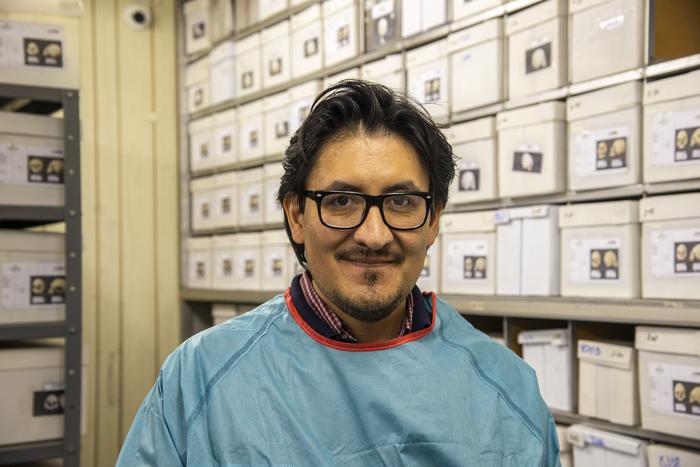
This study is part of a larger interdisciplinary effort aimed at systematically exploring the bioarchaeological wealth of the Bolivian National Museum of Archaeology (MUNARQ). The museum’s collection of mummified remains holds tremendous untapped potential for understanding ancient health, disease, and human-microbe interactions. The research team’s approach demonstrates the power of combining archaeological context, advanced genetic methods, and computational tools to recover histories long thought inaccessible.
Beyond the scientific ramifications, reconstructing ancient pathogen genomes has practical implications for modern medicine and epidemiology. Understanding the historical genetics of Streptococcus pyogenes may reveal how virulence factors evolved, potentially informing future strategies to combat antibiotic-resistant and emergent strains. Moreover, insights from ancient DNA can contribute to epidemiological models predicting how human behaviors shape infectious disease dynamics over millennia.
This work also highlights the crucial role of high-quality sample preservation in ancient DNA studies. The dry and frigid environment of the Bolivian highlands was integral to DNA integrity, demonstrating that specific climatic niches can act as natural archives of microbial history. Such findings encourage targeted sampling in similar preservation environments worldwide, broadening the scope of ancient pathogen genomics research.
Eurac Research’s novel genomic assembly techniques developed for the Institute for Mummy Studies represent a major methodological advance. By refining tools tailored to highly degraded and fragmented DNA, the team sets a new standard for ancient microbial genomics. This protocol holds promise for reconstructing genomes from a broad spectrum of extinct or ancient microorganisms, transforming the landscape of archaeogenetics.
As the field moves forward, integrating genetic data with archaeological, anthropological, and paleopathological evidence will illuminate the complex interplay between ancient humans and their microbial companions. Studies like this pave the way for a new era in which ancient DNA opens windows into disease evolution, guiding public health and deepening our understanding of human history and biology.
The full details of this research are available in the peer-reviewed article published in Nature Communications, advancing the frontiers of experimental paleogenomics and infectious disease history. By unlocking the hidden genetic secrets preserved in a pre-Columbian Bolivian mummy, scientists have established a powerful benchmark for future explorations into ancient pathogen genomics.
Cite Scienmag News
Morgan Morrow. (April 15, 2026). Scarlet Fever Bacterium Originated Independently of European Introduction to the Americas. Scienmag. https://scienmag.com/scarlet-fever-bacterium-originated-independently-of-european-introduction-to-the-americas/
Morgan Morrow. "Scarlet Fever Bacterium Originated Independently of European Introduction to the Americas." Scienmag, 15 April 2026, https://scienmag.com/scarlet-fever-bacterium-originated-independently-of-european-introduction-to-the-americas/. Accessed 4 September 2026.
Morgan Morrow. "Scarlet Fever Bacterium Originated Independently of European Introduction to the Americas." Scienmag. April 15, 2026. https://scienmag.com/scarlet-fever-bacterium-originated-independently-of-european-introduction-to-the-americas/


