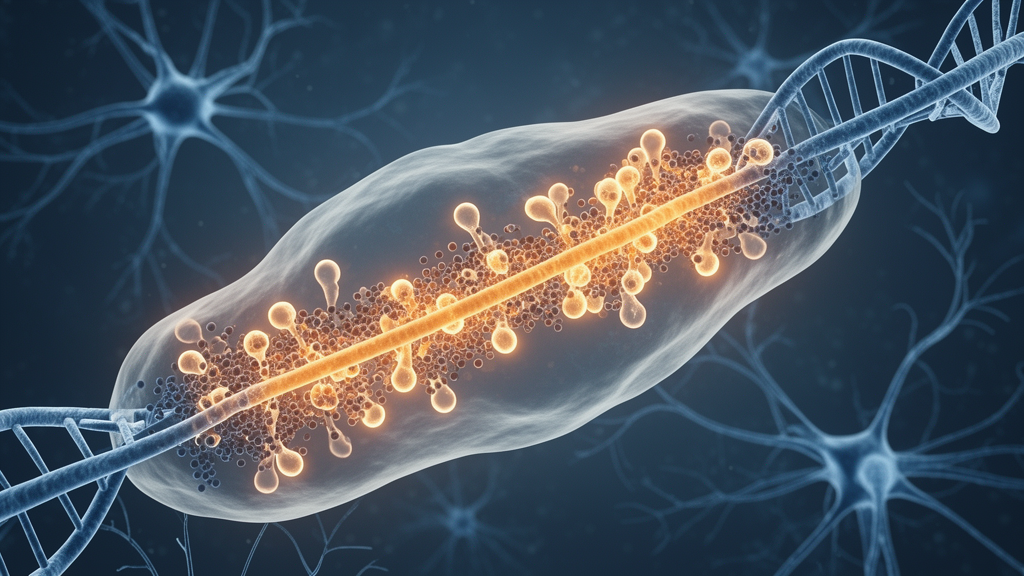
A peer-reviewed study reports that the RNA-binding protein SFPQ uses long RNA molecules as scaffolds to form meshwork-like condensates inside neuronal nuclei. Researchers at Ehime University found that these membraneless structures bring together factors involved in transcription, RNA splicing and chromatin regulation. Experiments in which SFPQ condensates could not form were associated with incomplete reading of exceptionally long genes, impaired RNA splicing and reduced gene expression, indicating that condensate formation supports several coordinated steps required to process these genes.
Mammalian neurons express many exceptionally long genes, ranging from more than 100 kilobases to over 2 megabases, that are important for forming synapses and neural circuits. Genetic information is normally read from DNA into RNA through transcription, and the longer a gene is, the more time is generally required to read it from beginning to end. Gene expression must also be regulated at several stages.
The new findings suggest that neurons use a shared nuclear arrangement to coordinate transcription of exceptionally long genes with the processing and regulation of the resulting RNA. The study focused on SFPQ and used super-resolution microscopy and other experimental approaches to investigate how the protein organizes molecules within the nucleus. The microscopy images showed meshwork-like condensates formed with RNA acting as a scaffold.
A condensate is a membraneless structure in which particular molecules gather together. In this case, the SFPQ structures contained diverse molecules involved in transcription, splicing—the joining of appropriate parts of newly made RNA—and regulation of chromatin, the structure that packages DNA. The observations support a physical explanation for how multiple processes can be gathered within the same nuclear space while a long gene is being read and its RNA is processed.
Functional disruption produced several linked defects. When the researchers prevented SFPQ condensates from forming, extra-long genes were not read properly to their ends, RNA splicing was impaired and gene expression decreased. It therefore supports a bounded conclusion: loss of the RNA-scaffolded condensates was associated with compromised completion, splicing and expression of exceptionally long neuronal genes, rather than proving that a single condensate component independently controls each outcome.
The authors describe the structures as a possible physical basis for a previously proposed transcriptional elongation condensate, a shared workspace for factors needed to read long genes. Their results connect the spatial organization of the nucleus with the measured defects in gene expression, shifting attention from isolated molecular reactions to the way transcription, RNA splicing and chromatin regulation can be coordinated within one structure. The work does not show that the condensates cause human neurological disease, but SFPQ and related proteins have previously been linked to autism spectrum disorder and amyotrophic lateral sclerosis.
The release identifies abnormal expression of extra-long genes as a subject for further study in neurodevelopmental and neurodegenerative disorders; it does not report a clinical application, treatment or preventive strategy.
Subject of Research: RNA-scaffolded SFPQ condensates and the expression of exceptionally long neuronal genes
Article Title: A new mechanism for reading extra-long genes in neurons
Article References: A new mechanism for reading extra-long genes in neurons. Original publication (Bibliographic details unavailable.)
Image Credits: AI Generated
DOI: Not provided
Keywords: SFPQ, neuronal gene expression, RNA condensates, long genes, transcription, RNA splicing, chromatin regulation, super-resolution microscopy, neuronal nuclei, mechanism, reading, extra-long
Cite Scienmag News
Juliet Wilcox. (October 26, 2026). RNA-scaffolded condensates help neurons read exceptionally long genes. Scienmag. https://scienmag.com/rna-scaffolded-condensates-help-neurons-read-exceptionally-long-genes/
Juliet Wilcox. "RNA-scaffolded condensates help neurons read exceptionally long genes." Scienmag, 26 October 2026, https://scienmag.com/rna-scaffolded-condensates-help-neurons-read-exceptionally-long-genes/. Accessed 26 October 2026.
Juliet Wilcox. "RNA-scaffolded condensates help neurons read exceptionally long genes." Scienmag. October 26, 2026. https://scienmag.com/rna-scaffolded-condensates-help-neurons-read-exceptionally-long-genes/