


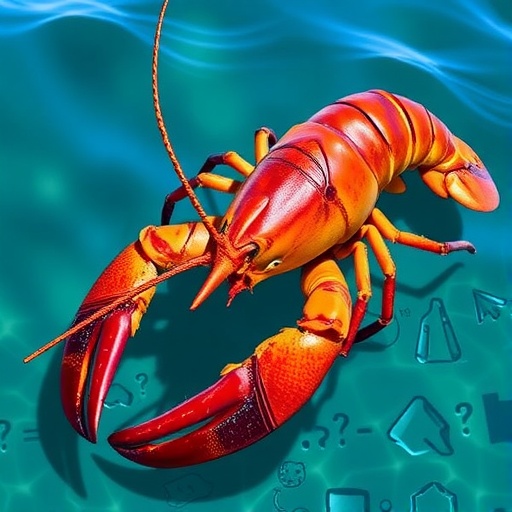
The rapid warming of the Gulf of Maine poses unprecedented challenges to one of the world’s most lucrative and culturally significant fisheries: the American lobster. This region is experiencing ocean temperature increases faster than 99% of global marine environments, a phenomenon that has scientists deeply concerned about the future viability of lobster populations. Researchers at William & Mary’s Batten School of Coastal & Marine Sciences and the Virginia Institute of Marine Science (VIMS) have recently uncovered critical insights into how this warming, alongside ocean acidification, impacts lobster embryonic development and larval viability.
Through an innovative, carefully designed experimental setup, led by Professor Emily Rivest, the team simulated future ocean conditions expected by 2060. By manipulating both temperature and pH within their Seawater Research Laboratory, they exposed egg-bearing lobsters sourced from the Gulf of Maine to varying environmental stressors. Contrary to what many anticipated, the results revealed that lobster embryos display a remarkable tolerance to acidification, a promising indication given the ongoing changes in ocean chemistry. However, the rise in seawater temperature triggered pronounced physiological stress that culminated in the emergence of significantly smaller larvae.
American lobsters (Homarus americanus) are known for their adaptability, navigating a range of habitats from shallow, variable coastal waters to more stable, deeper oceanic zones. This ecological plasticity underpins the species’ evolutionary success and commercial prominence. Nevertheless, the study’s lead author, Brittany Jellison, emphasizes that as global oceans become warmer and more acidic—and as extreme events like marine heatwaves intensify—the resilience of lobster populations faces new and compounding threats. Her findings underscore the urgency of assessing multivariate environmental impacts that can interact synergistically to affect marine species at crucial life history stages.
This investigation represents the third major output from a research initiative funded by a National Sea Grant American Lobster Initiative grant, awarded to Professors Rivest and Jeffrey Shields. Prior studies from this group detailed how maternal brood care was broadly unaffected by temperature and pH alterations, and how acute, rapid depressions in pH levels caused cellular stress within developing embryos—a scenario somewhat different from the chronic conditions simulated in this latest study. Such a comprehensive approach provides a nuanced understanding of lobster responses to environmental challenges across temporal scales.
The experimental design was robust, involving 24 gravid female lobsters harvested from regulated fisheries in Maine and Massachusetts. Over five months, the team maintained these lobsters under four distinct water treatment regimes that replicated current and predicted Gulf of Maine conditions. This longitudinal approach allowed researchers to observe not only immediate responses but also cumulative physiological and developmental outcomes during successive embryonic stages and through larval hatching.
One of the critical findings was that elevated water temperatures increased metabolic rates in lobster embryos, accelerating developmental timelines. However, this apparent developmental advantage was counterbalanced by the production of smaller larvae. Reduced larval size is a significant ecological concern because it can negatively impact survival probabilities, predator avoidance, and overall fitness once larvae enter the water column. These results suggest that warming-induced metabolic acceleration may exact hidden costs on individual lobsters, threatening recruitment success.
The research also sheds light on the complexity of acidification effects. The Gulf of Maine naturally experiences fluctuations in pH due to various biological and physical processes, which may have conferred a degree of physiological plasticity to lobster embryos. This adaptability to variable acidification is a double-edged sword; while embryos tolerate lower pH well under laboratory conditions, the concurrent effect of rising temperature appears to overshadow any potential benefits. Understanding this interaction is essential for forecasting population trajectories under future climate scenarios.
Seasonal observations indicated that the most pronounced stress responses and enzymatic activity changes occurred during the warmest periods, aligning with natural yearly temperature cycles. However, the increasing frequency and duration of marine heatwaves add complexity, as lobsters may now encounter stress conditions more persistently than ever before. This temporal overlap raises significant concerns for long-term population resilience and fishery sustainability in the Gulf of Maine.
The implications for fisheries management are profound. Although lobster landings have increased in northern Gulf of Maine waters in recent years, declines observed in Southern New England hint at shifting distribution patterns driven by temperature gradients. The more frequent northern migration could reflect attempts by lobsters to escape unfavorable thermal conditions, compressing habitats into cooler zones. Yet, even these refuges may not remain viable as warming progresses, pushing the species toward critical thresholds.
Further research is needed to explore the possibilities of transgenerational acclimatization or resilience that might allow lobsters to better cope with changing ocean conditions. The current findings highlight the importance of environmental context, as varying offshore habitats could differentially influence stress responses and development. Additionally, the study suggests that understanding post-hatching larval performance and survival in natural settings remains a key next step to comprehensively assess recruitment capacity and forecast fisheries yields.
This body of work serves as a cautionary tale about the compounding effects of climate change stressors on marine organisms. Despite their evolutionary adaptations and environmental flexibility, American lobsters face significant biological constraints posed by increasing ocean temperatures. The scientific community and fisheries managers alike must heed these emerging challenges as the future stability of this iconic fishery hangs in the balance.
For those interested in delving deeper into this groundbreaking research, the article titled “Effects of multiple stressors on embryos and emerging larvae of the American lobster” is published in Marine Ecology Progress Series and accessible via DOI 10.3354/meps14939. This work not only advances our understanding of marine species’ responses to global change but also serves as an essential knowledge base for informed conservation and management strategies.
Cite Scienmag News
Violet Maxwell. (October 3, 2025). Rising Ocean Temperatures Could Endanger American Lobster Populations. Scienmag. https://scienmag.com/rising-ocean-temperatures-could-endanger-american-lobster-populations/
Violet Maxwell. "Rising Ocean Temperatures Could Endanger American Lobster Populations." Scienmag, 3 October 2025, https://scienmag.com/rising-ocean-temperatures-could-endanger-american-lobster-populations/. Accessed 3 September 2026.
Violet Maxwell. "Rising Ocean Temperatures Could Endanger American Lobster Populations." Scienmag. October 3, 2025. https://scienmag.com/rising-ocean-temperatures-could-endanger-american-lobster-populations/


