


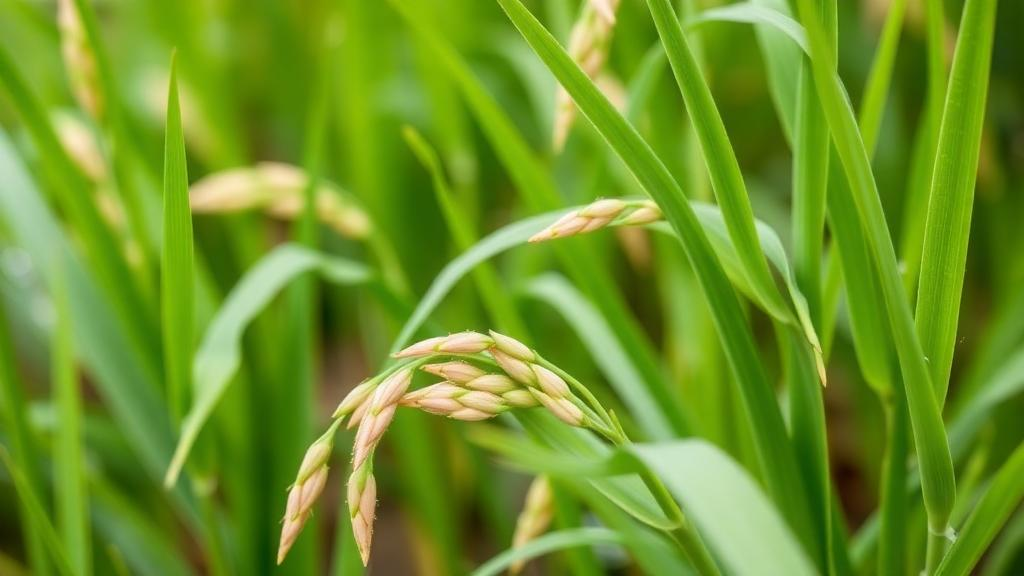
Rice feeds more than half of humanity, yet across vast swaths of Asia, Africa, and South America it grows in acidic soils that quietly poison it. When soil pH drops, aluminum, manganese, and cadmium shift from inert mineral forms into soluble ions that attack the plant’s roots, disrupt its redox balance, and, in the case of cadmium, contaminate the grain that ends up on dinner plates. A new study published in Plant Cell Reports has taken one of the most comprehensive looks yet at the genetics behind these overlapping threats, and its findings could reshape how breeders develop rice that thrives where conventional varieties falter.
The research team, led by Sandeep Jaiswal of the ICAR Research Complex for NEH Region in Umiam, India, faced a fundamental problem in crop genetics: individual studies hunting for the genomic regions behind metal stress tolerance have produced hundreds of results scattered across the rice genome, each with wide confidence intervals and each measured under different conditions. A quantitative trait locus, or QTL, identified for aluminum tolerance in one population might or might not correspond to a cadmium-related region found elsewhere. To cut through this noise, the team assembled 681 QTLs and marker-trait associations from 53 separate studies and projected 493 of them onto a single consensus genetic map of rice.
The technique they used, meta-quantitative trait locus analysis, is essentially a statistical funnel for genetic data. By clustering QTLs that land in the same chromosomal neighborhood across independent experiments, meta-analysis collapses them into consolidated intervals whose confidence intervals shrink dramatically. In this case, the analysis distilled the original set into 79 meta-QTLs, cutting the mean confidence interval from 6.90 centimorgans down to 1.85, a nearly fourfold increase in precision. That matters enormously for breeders: a locus defined within roughly two centimorgans is close enough to develop molecular markers and begin tracking the underlying gene through breeding programs, whereas a seven-centimorgan interval can contain hundreds of genes and decades of fine-mapping work.
What makes this study distinctive is that it did not assume aluminum, cadmium, and manganese tolerance share a single mechanism. Instead, the researchers asked whether the same genomic regions show up repeatedly across all three stress types. Ten of the 79 meta-QTL intervals contained loci from all three metal datasets, a pattern of positional recurrence that suggests these chromosomal neighborhoods harbor genes with genuinely broad roles in metal stress responses, likely tied to shared biology such as ion transport, oxidative stress management, and cell wall modification rather than metal-specific defenses.
To move from position to function, the team layered a second line of evidence on top of the map. They mined 14 publicly available RNA-sequencing datasets covering rice responses to aluminum, cadmium, and manganese, and cross-referenced the genes that switch on or off under metal stress with the 4,702 genes sitting inside the meta-QTL intervals. This triangulation of positional, transcriptomic, and functional annotation evidence narrowed the field to 98 candidate genes. The list spans four major biological modules: membrane transport proteins that move metal ions across cellular boundaries, glutathione-dependent detoxification pathways that chemically neutralize toxic ions, redox regulation systems that counteract the oxidative damage metals inflict, and hormone signaling networks that coordinate the plant’s overall stress response.
Two intervals stood out in the analysis. Meta-QTL 10.9 on chromosome 10 contains a striking cluster of glutathione S-transferase genes, enzymes that conjugate glutathione to toxic compounds and are well known players in heavy metal sequestration. Meta-QTL 9.5 on chromosome 9, by contrast, harbors candidates involved in transport and transcriptional regulation, hinting at a locus that acts more as a control hub than a biochemical workhorse. The contrast between these two regions illustrates a central finding of the study: recurrent intervals contain complementary, rather than identical, components of the metal stress response, meaning different loci contribute different pieces of the tolerance puzzle.
The team did not stop at computational analysis. They experimentally compared two rice genotypes with contrasting field reputations: Shahsarang, a variety from the acidic hill soils of Northeast India, and IR64, one of the most widely grown and extensively studied rice varieties in the world. Under several aluminum-containing treatments, Shahsarang maintained notably greater root system integrity than IR64, preserving the fine root architecture that aluminum toxicity typically destroys. Since roots are the plant’s first and most vulnerable point of contact with soil-borne metals, this difference in root resilience is a direct window into the physiological meaning of tolerance.
Yet the experimental results also delivered a dose of nuance. Metal accumulation and translocation, the movement of metals from roots to shoots and ultimately to grain, remained dependent on the specific genotype, the specific metal, and the specific treatment. There was no universal tolerance profile. Fourier transform infrared spectroscopy of the plants revealed genotype- and treatment-associated differences in cell wall spectral profiles, consistent with the idea that cell wall composition is a key battleground where metals are either immobilized or allowed to pass. Quantitative reverse-transcription PCR confirmed that expression of the candidate genes varied by genotype, tissue, and treatment, reinforcing the picture of a response system that is coordinated but highly context-dependent.
The implications for agriculture are substantial. Acidic soils cover an estimated large fraction of the world’s arable land, and cadmium contamination of rice grain is a serious food safety concern in several major rice-producing countries, prompting breeding programs specifically aimed at low-cadmium varieties. By consolidating decades of scattered QTL mapping into 79 high-confidence intervals and attaching a prioritized candidate gene list to each, the study hands breeders a focused set of targets for allele mining, the search for beneficial natural variants of these genes in diverse rice germplasm. Markers developed from these intervals could allow selection for multiple metal stress traits simultaneously, something that has been impractical when each trait required its own mapping population.
The authors are appropriately measured about what remains to be done. The intervals and candidate genes provide resources for functional validation and allele mining, but breeding utility has not yet been established experimentally, and each candidate gene will need direct functional confirmation before it can be deployed with confidence. Still, the study represents a template for how integrative genomics can tame the sprawl of quantitative genetics: rather than running yet another mapping experiment, it mined the accumulated literature, cross-checked it against transcriptomes, and validated the biology in living plants. For a crop that must survive increasingly stressed soils while feeding a growing population, that kind of systematic synthesis may prove as valuable as any single gene discovery.
Subject of Research: Meta-QTL and transcriptomic integration to identify rice genomic loci and candidate genes associated with aluminum, cadmium, and manganese stress responses in acidic soils
Article Title: Integrative genomics resolves rice loci associated with acidic soil-related aluminum, cadmium, and manganese stress responses
Article References: Jaiswal, S., Kumari, A., Singh, B. K., Kumar, K., Kumar, S., Kumar, S., Kaur, S., Prakash, N. R., Baiswar, P., Bharati, A., Talukdar, M., & Behera, S. (2026). Integrative genomics resolves rice loci associated with acidic soil-related aluminum, cadmium, and manganese stress responses. Plant Cell Reports, 45(10), Article 311. https://doi.org/10.1007/s00299-026-03989-1
Image Credits: AI Generated
DOI: 10.1007/s00299-026-03989-1
Keywords: rice, meta-QTL, aluminum toxicity, cadmium, manganese, acidic soils, candidate genes, glutathione S-transferase, metal homeostasis, transcriptomics, plant breeding, quantitative trait loci
Cite Scienmag News
Alan Morgan. (October 1, 2026). Rice Genome Study Pinpoints Shared DNA Hotspots for Toxic Metal Stress. Scienmag. https://scienmag.com/rice-genome-study-pinpoints-shared-dna-hotspots-for-toxic-metal-stress/
Alan Morgan. "Rice Genome Study Pinpoints Shared DNA Hotspots for Toxic Metal Stress." Scienmag, 1 October 2026, https://scienmag.com/rice-genome-study-pinpoints-shared-dna-hotspots-for-toxic-metal-stress/. Accessed 4 October 2026.
Alan Morgan. "Rice Genome Study Pinpoints Shared DNA Hotspots for Toxic Metal Stress." Scienmag. October 1, 2026. https://scienmag.com/rice-genome-study-pinpoints-shared-dna-hotspots-for-toxic-metal-stress/


