


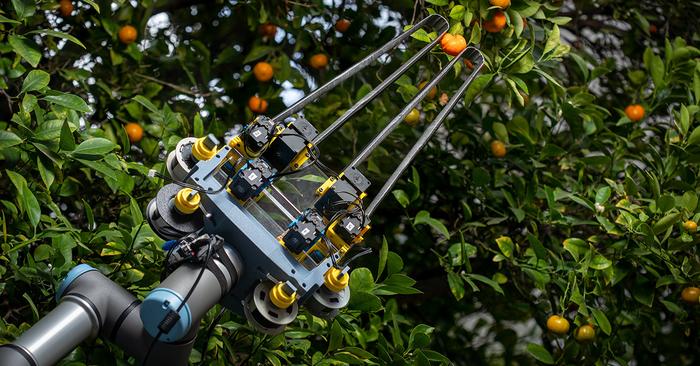
At the University of California San Diego, engineers have ingeniously turned a childhood game of unspooling measuring tape into a cutting-edge technological advancement in robotics. This whimsical yet pivotal thought sparked the creation of a novel robotic gripper built to revolutionize the agricultural sector. The device, aptly named GRIP-tape, capitalizes on the inherent properties of measuring tape, fundamentally changing the way fragile fruits and vegetables can be handled by machines. The project’s findings, published in the prestigious journal Science Advances, shed light on the innovative design that seamlessly merges functionality with simplicity.
The drive to innovate came from recognizing the limited effectiveness of current robotic grippers that cater to soft and delicate objects. Traditional grippers, often large and cumbersome, utilize complex mechanisms to expand their gripping surface. This is where the ingenious design of GRIP-tape presents its advantages. By cleverly leveraging the robustness and flexibility of measuring tape, researchers have devised a solution that is not only low-cost but also inherently safe around humans—a critical consideration in agricultural applications. Furthermore, these technologically advanced grippers stand to significantly reduce the risk of damaging the fruits and vegetables they handle, thereby maximizing yield and minimizing waste.
As outlined in the research published on April 9, 2025, the GRIP-tape operates on its unique premise: the accumulation of tape into a tightly coiled structure that can extend and retract as needed. This high-tech gripper comprises two “fingers,” each formed by two spools of measuring tape that are bonded together for stability and strength. When deployed, each finger unfurls diamond-shaped sections controlled independently by motors, allowing for an agile range of motion. This design not only enhances the gripping capabilities but also allows the gripper to reach further distances when required, effectively increasing its operational range.
Adopting a non-traditional approach, the team has showcased that the inherent properties of measuring tape lend themselves extraordinarily well to robotic mechanisms. The springy quality of the tape allows it to maintain its shape and strength while adapting to various object contours. Importantly, the material properties of steel, combined with the gripper’s design principles, mimic the soft-touch requirements of many agricultural tasks without compromising structural integrity. Thus, the inventive use of measuring tape introduces a dynamic approach to robotic gripping technology.
In terms of operational application, the GRIP-tape has shown exceptional promise in lifting not only singular pieces of produce, such as tomatoes and lemons, but also more complex structures like tomato vines. The versatility of the gripper lies in its capacity to adapt its gripping surface, relying on the entire length of the tape to grip various object shapes and stiffness. This multi-faceted advantage enables the gripper to operate effectively, making it an ideal candidate for both small-scale organic farms and large-scale agricultural operations.
Additional functionality is incorporated into the design, as the tape can also operate in a conveyor belt mode. This feature not only facilitates the movement of picked items but also allows for efficient organization of harvested produce. The ability for the gripping appendage to maneuver around obstacles further emphasizes its translatability to diverse environments, whether they be rugged fields or meticulously arranged greenhouses.
Building on their previous work regarding soft materials and robotics, the research team has highlighted the importance of continuous experimentation and iteration in achieving an effective design. The GRIP-tape project was partially funded by the National Science Foundation as part of a broader initiative to explore how engineering principles can be applied to create softer, more flexible robotic systems. This partnership exemplifies the ideal blend of funding and innovative research that has the potential to catalyze breakthroughs in the agriculturally focused robotics field.
While the current version of the GRIP-tape is a substantial achievement, there are plans for enhanced iterations that will incorporate advanced sensors and artificial intelligence capabilities. Such upgrades would allow the gripper to analyze its environment in real time, adapting its operations autonomously. This progress represents a crucial step toward achieving the next generation of robotic assistants that can autonomously navigate complex agricultural tasks, making them an incremental but vital aspect of the industry’s future.
In summary, the GRIP-tape represents a convergence of creativity and technical know-how, illustrating how inspiration drawn from simple concepts can lead to transformative technologies. This isn’t just about engineering an efficient gripping tool; it’s about rethinking how we integrate robotics into our everyday tasks and agricultural practices more responsibly and effectively. As human labor and agricultural practices evolve, innovations such as GRIP-tape offer not only practical solutions but also sustainable pathways for the future of food production—a compelling narrative about the marriage of science, engineering, and sustainable agriculture.
The advances being made at UC San Diego signal a promising horizon, one where robotics play a crucial role in everyday processes while ensuring that our bounty from the earth is harvested with care and precision. As the conversation around sustainable farming continues to gain momentum, the importance of effective tools like the GRIP-tape cannot be overstated. The blending of ingenuity with pragmatism in robotic design will likely pave the way for broader acceptance of similar technologies in various sectors, echoing a future where machines and humans collaborate more harmoniously than ever.
The implications of this research extend far beyond agriculture, inspiring future exploration into the application of soft robotics across various industries. As GRIP-tape clears the path for further developments, the potential for a safer, more effective integration of robotics into our daily lives seems not just attainable but within reach.
News Publication Date: April 9, 2025
Web References: Science Advances (example reference, please verify)
References: He, G., Sparks, C., & Gravish, N. (2025). Grasping and Rolling In-plane Manipulation Using Deployable Tape Spring Appendages. Science Advances. (specific citation needed).
Cite Scienmag News
Alan Morgan. (April 9, 2025). Revolutionary Robotic Gripper Made from Measuring Tape Aims to Transform Fruit and Vegetable Harvesting. Scienmag. https://scienmag.com/revolutionary-robotic-gripper-made-from-measuring-tape-aims-to-transform-fruit-and-vegetable-harvesting/
Alan Morgan. "Revolutionary Robotic Gripper Made from Measuring Tape Aims to Transform Fruit and Vegetable Harvesting." Scienmag, 9 April 2025, https://scienmag.com/revolutionary-robotic-gripper-made-from-measuring-tape-aims-to-transform-fruit-and-vegetable-harvesting/. Accessed 6 September 2026.
Alan Morgan. "Revolutionary Robotic Gripper Made from Measuring Tape Aims to Transform Fruit and Vegetable Harvesting." Scienmag. April 9, 2025. https://scienmag.com/revolutionary-robotic-gripper-made-from-measuring-tape-aims-to-transform-fruit-and-vegetable-harvesting/


