


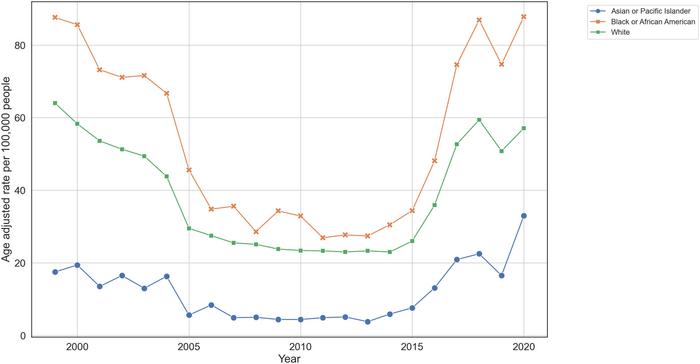
Over the past twenty years, the landscape of ischemic stroke mortality in the United States has undergone significant changes, raising pressing concerns about health equity and access to care. A groundbreaking study conducted by Jason Lim and colleagues from Georgetown University School of Medicine and published in the open-access journal PLOS One has unveiled alarming trends in ischemic stroke mortality rates, particularly among marginalized populations. This research offers a comprehensive analysis of mortality rates and the locations of death, spanning from 1999 to 2020. The findings not only underscore the growing incidence of ischemic strokes but also the shifting patterns concerning where these tragedies occur, which are critical for informing healthcare policy and practice.
Stroke stands as the fifth leading cause of death in the United States, a statistic that underscores the pressing need to understand both the clinical and sociological factors influencing mortality rates. The research analyzed cause-of-death records from the Centers for Disease Control and Prevention’s Wide-ranging Online Data for Epidemiologic Research (CDC WONDER) database, scrutinizing 237,617 recorded ischemic stroke deaths. This extensive dataset provided a robust foundation for identifying trends and disparities that have emerged over the last two decades, particularly around the demographic and geographic characteristics of those impacted.
A striking revelation from the study is the increase in age-adjusted ischemic stroke mortality rates, which had previously experienced a decline before reversing course in 2009. This resurgence is particularly pronounced among non-metropolitan areas, indicating a growing divide between urban and rural health outcomes. Notably, rural residents experience a rising burden of stroke-related mortality, which raises questions about access to timely and effective medical interventions. The study shows that, within the rural cohorts, socioeconomic factors and healthcare access issues intertwine to create an unfavorable landscape for stroke care.
Another alarming finding from the research is the shift in locations where people with ischemic strokes are dying. From 1999 to 2020, the proportion of deaths occurring at home escalated from 8.44% to an alarming 29.31%. This evolution in end-of-life settings raises questions about patients’ preferences and underscores the importance of understanding the reasons behind this trend. The increasing mortality at home often indicates a departure from hospital-based care, which could be attributed to several factors including patient choice, healthcare access, and systemic inadequacies within the healthcare system.
Among the racial demographics analyzed, Black and African American populations exhibited a marked increase in deaths occurring outside specialized hospital environments. This trend illuminates persistent gaps in access to healthcare services, which are exacerbated by socioeconomic realities. The findings suggest that these minorities may be disproportionately affected not only by the rising mortality rates but also by the inequitable distribution of resources that could potentially mitigate such outcomes. This raises critical questions for policymakers regarding the allocation of healthcare resources and the development of targeted interventions aimed at improving access and care for vulnerable populations.
The authors of the study express concern over whether dying at home reflects a personal preference for end-of-life care or the result of insufficient access to hospital-based services. The ambiguity surrounding this shift necessitates further investigation into the preferences of stroke patients and how these preferences correlate with the stratification of healthcare services across different demographic groups. It is imperative for healthcare providers and policymakers to engage with these communities to gain insights into their care preferences and to assess the adequacy of available resources.
As the study highlights these stark realities, it also calls for a reevaluation of healthcare policies that address disparities in stroke care. Rising mortality rates coupled with the increased reliance on home-based care underscore the need for comprehensive strategies to improve patient outcomes. This includes enhancing access to specialized care, promoting preventive measures, and ensuring effective communication between patients and healthcare providers. Stakeholders in the healthcare sector must come together to tackle the root causes of these disparities, utilizing the findings of this pivotal research as a guide for future efforts.
In summary, this comprehensive analysis sheds light on the evolving trends related to ischemic stroke mortality and locations of death in the United States. It emphasizes that the complexities surrounding stroke care are deeply intertwined with social determinants of health. The troubling trajectory evidenced by this study should serve as a clarion call for urgent action — both to improve care access and to address the disparities that fundamentally affect outcomes, particularly among minority and rural populations.
The implications of this research extend far beyond academic interest; they hold the potential to shape health policy and inform clinical practice in vital ways. By articulating the urgent need for systemic change, this study paves the way for initiatives aimed at improving health outcomes for all individuals affected by ischemic strokes, ensuring that all segments of the population can access the care they need and deserve at critical times in their lives.
In conclusion, as we move forward in addressing the public health implications of ischemic stroke mortality, it is critical to ensure that this dialogue encompasses the voices of those most affected. Their experiences and preferences must inform policy decisions and clinical guidelines to create a healthcare environment that is equitable, responsive, and ultimately lifesaving for all.
Cite Scienmag News
Cassandra Pierce. (April 9, 2025). Racial Disparities in Stroke Mortality Have Widened Over the Past Two Decades. Scienmag. https://scienmag.com/racial-disparities-in-stroke-mortality-have-widened-over-the-past-two-decades/
Cassandra Pierce. "Racial Disparities in Stroke Mortality Have Widened Over the Past Two Decades." Scienmag, 9 April 2025, https://scienmag.com/racial-disparities-in-stroke-mortality-have-widened-over-the-past-two-decades/. Accessed 4 September 2026.
Cassandra Pierce. "Racial Disparities in Stroke Mortality Have Widened Over the Past Two Decades." Scienmag. April 9, 2025. https://scienmag.com/racial-disparities-in-stroke-mortality-have-widened-over-the-past-two-decades/


