


A collaborative research study spearheaded by Beijing Forestry University and the University of British Columbia, Canada, has unveiled pioneering methodologies aimed at improving the genetic quality and productivity of Pinus tabuliformis, a critical tree species in northern China. Published in the esteemed journal Forest Ecosystems, this research explores two contemporary breeding strategies, illuminating a marked preference for direct selection of superior individual trees over the traditional approach of combined selection, which entails identifying top families and individuals for breeding.
The team meticulously analyzed a comprehensive dataset comprising 42 half-sib and 76 full-sib families, observing that direct selection, particularly within half-sib families, significantly outperformed its counterpart. The results highlighted a remarkable enhancement in growth metrics, showcasing a 7.72% increase in diameter, an extraordinary 18.56% rise in height, and a striking 31.01% surge in volume when utilizing the direct selection strategy. This escalated performance underscores the potential for selective breeding to enhance the overall productivity of forest resources.
Leading author Wei Li elucidates the rationale behind the study, stating, “Direct selection captures elite individuals that might otherwise be missed.” While this approach promises substantial growth enhancements, it simultaneously introduces heightened concerns surrounding inbreeding risks. Addressing these concerns, the research team has incorporated advanced design strategies that aim to reshape traditional seed orchard layouts.
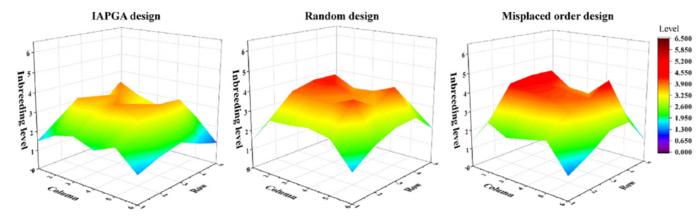
To combat the increased inbreeding that arises through direct selection, the researchers have innovatively developed the Improved Adaptive Genetic Programming Algorithm (IAPGA). This cutting-edge algorithm empowers researchers to optimize seed orchard arrangements, ensuring that genetically diverse clones are positioned strategically within orchards. This design not only minimizes the risk of inbreeding but also maximizes genetic gains within future generations of Pinus tabuliformis.
The IAPGA methodology demonstrated a considerable 14.36% reduction in the average inbreeding coefficient when benchmarked against traditional selection methods. This substantial decrease is pivotal as it promotes greater genetic variability, which is essential for the long-term sustainability and resilience of forest ecosystems.
The implications of this study extend far beyond the immediate benefits for Pinus tabuliformis. The adaptive strategies proposed here serve as a global blueprint for sustainable forest management. They present a vital opportunity to enhance seed orchard designs that yield increased ecological resilience and improved economic returns from forestry operations. This research directly supports China’s ambitious afforestation goals, aligning its forestry practices with contemporary ecological demands.
By integrating advanced seed orchard design methodologies with traditional breeding techniques, this groundbreaking work sets a new standard for forest genetic improvement, paving the way for healthier and more productive forests in China and beyond. Such innovations are crucial in the context of global climate challenges, as they contribute to the overall sustainability of forest ecosystems, which play a significant role in carbon sequestration and biodiversity conservation.
Furthermore, the research explores the importance of genetic diversity in forest populations, underscoring how enhanced seed orchard designs can foster not only increased productivity but also the adaptation of tree species to fluctuating environmental conditions. It presents a compelling case for forest managers and stakeholders to invest in advanced breeding technologies that prioritize genetic health and resilience.
In conclusion, the findings illustrated in this study herald a transformative era for forestry science, providing actionable insights and clear methodologies that forest managers can implement to elevate the genetic quality of forest populations. As researchers continue to push the boundaries of genetic science in forestry, the promise of enhanced growth rates and minimized inbreeding risk shines brightly on the horizon.
With this innovative research serving as a catalyst for change, the continued evolution of seed orchard design will undeniably contribute to the overarching goal of sustainability in global forestry practices. By harnessing the power of genetic programming in conjunction with targeted breeding selections, a new generation of forest management tools is emerging, ready to tackle the challenges of tomorrow’s forests.
Through these efforts, the research encapsulates a holistic approach to forest management that not only aims for increased economic output but also emphasizes the critical importance of ecological stewardship. The journey towards genetically robust and ecologically sound forests is set to continue, as researchers remain committed to exploring and refining strategies for sustainable forestry.
The future of Pinus tabuliformis, and indeed the broader landscape of global forestry, rests on the principles established through this significant study, marking a hopeful trajectory toward sustainable forest ecosystems that can thrive in the face of changing environmental circumstances.
Cite Scienmag News
Juliet Wilcox. (March 26, 2025). Revolutionary Approaches Enhance Productivity and Genetic Excellence in Essential Chinese Pine Species. Scienmag. https://scienmag.com/revolutionary-approaches-enhance-productivity-and-genetic-excellence-in-essential-chinese-pine-species/
Juliet Wilcox. "Revolutionary Approaches Enhance Productivity and Genetic Excellence in Essential Chinese Pine Species." Scienmag, 26 March 2025, https://scienmag.com/revolutionary-approaches-enhance-productivity-and-genetic-excellence-in-essential-chinese-pine-species/. Accessed 4 September 2026.
Juliet Wilcox. "Revolutionary Approaches Enhance Productivity and Genetic Excellence in Essential Chinese Pine Species." Scienmag. March 26, 2025. https://scienmag.com/revolutionary-approaches-enhance-productivity-and-genetic-excellence-in-essential-chinese-pine-species/


