


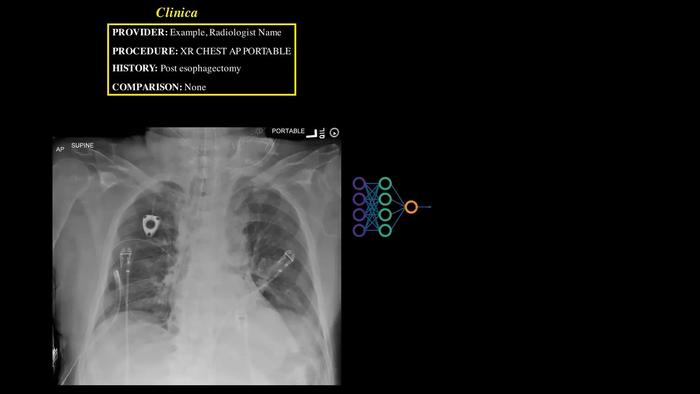
A groundbreaking advancement in radiology has emerged from Northwestern Medicine, which is unveiling a pioneering generative AI system. This revolutionary tool is not merely a theoretical construct; it has been meticulously developed in-house and is now proving its capabilities in real clinical settings. This unprecedented initiative promises to significantly enhance productivity in radiology, ensure rapid identification of life-threatening conditions, and offer a critical remedy to the burgeoning global shortage of radiologists. The revelation stems from a substantial study soon to be published in JAMA Network Open, marking a monumental moment in the intersection of medicine and technology.
The AI system has been tested across the extensive 12-hospital network of Northwestern Medicine. Over a span of five months in 2024, the system undertook the analysis of nearly 24,000 radiology reports, scrutinizing and improving the efficiency of report generation. The findings from this significant study indicate an impressive average increase of 15.5% in the efficiency of creating radiograph reports, with some radiologists obtaining gains nearing 40%. Remarkably, these improvements in productivity do not come at the expense of clinical accuracy, a point underscored by the creators of the technology.
Dr. Mozziyar Etemadi, a key figure in this innovation, emphasizes that this development represents a landmark achievement in healthcare technology. He highlighted its uniqueness in that it demonstrably enhances efficiency within the healthcare sector, noting that similar technologies in other industries have not come close to delivering such substantial productivity boosts. The implications of these findings could ripple through the medical field, optimizing workflow and reshaping patient care dynamics.
Unlike conventional narrow AI systems that are limited to identifying specific conditions, Northwestern’s system employs a comprehensive approach. By evaluating the entirety of the X-ray or CT scan, it can automatically generate a report that is approximately 95% complete. This personalized report assists radiologists, who can fine-tune the output to suit each patient’s unique situation. The ability of the AI to deliver tailored reports significantly lightens the workload for radiologists, allowing them to focus on critical interpretations and decisions.
The immediate clinical applications of this technology are potentially life-saving, particularly in emergency situations where timely diagnostics are crucial. The AI actively monitors reports for urgent conditions like pneumothorax, signaling the presence of dire needs before a radiologist has the opportunity to examine the images. This immediate flagging system serves not only to enhance the efficiency of the radiology department but also to ensure that patients receive the necessary care without unnecessary delays—a critical factor in life-and-death situations.
The overwhelming clinical benefits are echoed by Dr. Samir Abboud, a co-author of the study and chief of emergency radiology at Northwestern Medicine. He cites the AI technology as a powerful ally in increasing efficiency. This enhancement allows medical professionals to triage cases more effectively, identifying urgent cases that require swift action. The pressing need for such innovations grows alongside anticipated shortages in the radiology workforce, projected to reach up to 42,000 by 2033 due to rising imaging volumes and insufficient training positions.
In developing this generative AI product, the Northwestern team prioritized an in-house approach, utilizing clinical data specifically sourced from within the Northwestern Medicine network. This strategic decision allowed for the creation of a nimble AI model tailored to the nuances of radiology, distinguishing it from larger, generalized models such as ChatGPT, which lack specificity for medical applications. The team’s commitment to developing custom AI solutions promises to democratize access and foster a future where health systems are less dependent on tech giants.
This approach not only enhances functionality and accuracy but also reduces the computational resources required to implement such an AI tool. For medical institutions, the study suggests that reliance on external technologies is not necessary, advocating for the empowerment of local systems and the cultivation of their own AI capabilities. The findings illuminate a pathway for other healthcare systems to harness AI technologies efficiently and economically, paving the way for a broader adoption in the medical field.
As the radiology sector faces mounting pressure, the Northwestern AI system arrives as a beacon of potential solutions to the challenges ahead. By facilitating faster diagnostic processes and introducing innovative tools to assist collision detection, the technology allows healthcare professionals to manage broader patient care responsibilities. Moreover, it is crucial to emphasize that notwithstanding the advancements brought by AI, the expertise and judgement of trained radiologists remain irreplaceable in ensuring the perfection of patient diagnoses and treatment choices.
Indeed, while the AI system heralds a new era of technological intervention in the radiological world, it is not intended to displace human expertise but to augment it. The collaborative interplay between AI capabilities and human oversight promises to maintain a high standard of care even as technological landscapes evolve. The team is also investigating the potential of the AI model to identify instances of delayed or missed diagnoses, such as those associated with early-stage lung cancer, further sharpening the focus on safeguarding patient health.
The implications of this study, with two patents already granted and more pending, signal a series of exciting developments on the horizon as the tool inches closer to commercialization. As the healthcare industry eagerly anticipates these revelations, the enthusiasm surrounding the generative AI system exemplifies the collaborative potential of technology and medicine in redefining patient care.
With radiology positioned at the crossroads of technological innovation and patient treatment efficacy, the strides taken by Northwestern Medicine could indeed serve as a model for future healthcare advancements. As organizations worldwide grapple with similar issues, the adoption of tailored, effective AI systems could become the linchpin for modernizing medical imaging and diagnostics.
In conclusion, as hospitals and health systems seek innovative strategies to transform healthcare delivery, Northwestern’s generative AI tool stands as a testament to the power of targeted technological interventions. The merging of artificial intelligence with real-world clinical applications opens a new chapter in radiological practice—one that could ultimately save lives and reshape the future of medical diagnostics.
Cite Scienmag News
Ophelia Keating. (June 5, 2025). Revolutionary AI Enhances Radiology with Unprecedented Speed and Precision. Scienmag. https://scienmag.com/revolutionary-ai-enhances-radiology-with-unprecedented-speed-and-precision/
Ophelia Keating. "Revolutionary AI Enhances Radiology with Unprecedented Speed and Precision." Scienmag, 5 June 2025, https://scienmag.com/revolutionary-ai-enhances-radiology-with-unprecedented-speed-and-precision/. Accessed 4 September 2026.
Ophelia Keating. "Revolutionary AI Enhances Radiology with Unprecedented Speed and Precision." Scienmag. June 5, 2025. https://scienmag.com/revolutionary-ai-enhances-radiology-with-unprecedented-speed-and-precision/


