


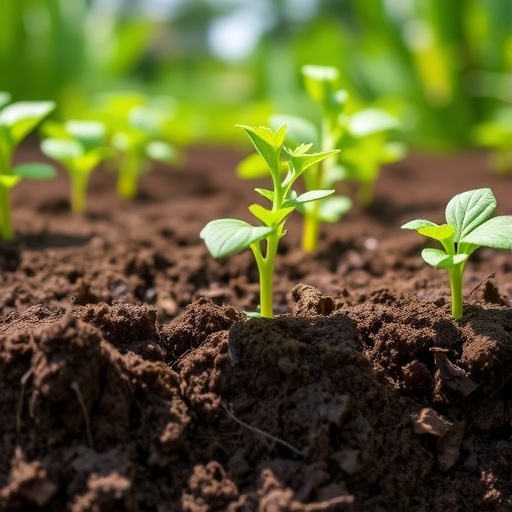
In recent years, the need to revive soil health, particularly in areas impacted by petroleum contamination, has gained significant attention from researchers and environmental scientists alike. The detrimental effects of petroleum products on soil ecosystems are profound, leading to a decline in soil fertility, biodiversity loss, and increased ecological risks. Understanding and addressing the urgency of this issue, a team of researchers led by N. Manickam, S. Arumugamurthi, and A. Gopal initiated an investigation into the effectiveness of three traditional soil amendments in restoring the health of contaminated soils. Their findings promise to pave the way for sustainable remediation practices that can benefit both agriculture and the environment.
Petroleum hydrocarbons, the primary pollutants in contaminated soils, inhibit microbial activity and alter the chemical properties of the soil. This results in a significant reduction of nutrient availability to plants, impairing their growth and yield. In agricultural regions where such contamination occurs, farmers face severe challenges in maintaining productive soil, affecting food security and local economies. The urgency to find viable solutions has prompted researchers to explore traditional amendments, which have been used for centuries by various cultures for enhancing soil fertility.
The study conducted by Manickam et al. focused on three prevalent traditional soil amendments: compost, biochar, and vermicompost. Each of these amendments is known for its unique properties that can enhance soil health and promote the degradation of petroleum hydrocarbons. Compost, created from the aerobic decomposition of organic matter, is rich in nutrients and beneficial microorganisms, fostering a conducive environment for soil rehabilitation. In contrast, biochar, a form of charcoal produced from the pyrolysis of biomass, improves soil structure and enhances its capacity to retain water and nutrients. Vermicompost, produced through the breakdown of organic matter by earthworms, is characterized by its high nutrient content and presence of beneficial microbes.
Throughout their research, the authors meticulously evaluated the effectiveness of each amendment in terms of improving soil properties and enhancing the degradation of petroleum hydrocarbons. They conducted a series of laboratory and field experiments to assess key indicators such as soil pH, electrical conductivity, organic matter content, and microbial diversity. The results demonstrated that the application of these amendments significantly improved soil structure and health, enabling a more conducive environment for the natural degradation processes of petroleum contaminants.
Interestingly, the study revealed differential effects among the three amendments. Compost showed the most significant improvement in nutrient availability and microbial activity, driving the degradation of hydrocarbons more efficiently than the other amendments. However, biochar exhibited remarkable benefits for hydric retention and long-term soil structure enhancement. Vermicompost, while showing moderate results in degradation rates, contributed positively to increasing microbial diversity, which is essential for sustaining soil health.
The implications of these findings extend beyond academic research. As environmental policies increasingly emphasize sustainable practices, the use of traditional soil amendments presents an economically viable alternative for farmers and landowners dealing with contamination issues. The study advocates for integrating these organic amendments into soil management practices, as they not only revive contaminated soils but also feed into the circular economy by recycling organic waste materials.
Moreover, by reinforcing the notion of ‘working with nature,’ this research highlights the importance of traditional ecological knowledge in contemporary environmental management strategies. Indigenous practices, often overlooked in modern scientific discourse, can offer valuable insights into harnessing natural processes for environmental restoration.
The role of microbial communities, enhanced by the amendments, cannot be understated, as they are vital agents in the bioremediation of hydrocarbon pollutants. By studying the microbial dynamics in treated soils, the authors could provide a clearer understanding of how these amendments facilitate the breakdown of complex petroleum compounds, leading to insights that can be utilized in future bioremediation efforts.
In light of the mounting pressures from industrialization and urbanization, the findings of Manickam et al. serve as a timely reminder of the need for innovative and sustainable solutions to soil contamination. Encouraging practices that restore rather than deplete soil health not only supports agricultural productivity but also promotes biodiversity and ecosystem resilience, essential elements in the face of a changing climate.
The researchers call for further studies to explore the long-term effects of these traditional amendments on soil health and resilience against other contaminants beyond petroleum. Such investigations would provide a comprehensive understanding of how best to leverage these natural resources for widespread environmental improvement strategies.
As the implications of this study reverberate through agricultural communities and environmental policymaking, it is clear that innovative solutions rooted in tradition can offer powerful pathways towards sustainable ecosystem management. The integration of these amendments into regular agricultural practices could ultimately transform the way we approach soil health challenges, emphasizing the coexistence of modern science and traditional knowledge in fostering a healthier planet.
The findings from their investigation herald a significant shift in how we understand and address soil contamination issues. By promoting the use of compost, biochar, and vermicompost, this research not only provides a scientific foundation for restoration strategies but also champions a holistic approach to soil health, integrating ecological balance with agricultural productivity.
As we look towards the future of sustainable agriculture and environmental conservation, the study highlights the crucial role played by soil health—an intricate web of life that sustains us all.
Manickam, N., Arumugamurthi, S., Gopal, A. et al. Investigation of three traditional soil amendments for reviving soil health in petroleum-contaminated soils.
Environ Sci Pollut Res (2025). https://doi.org/10.1007/s11356-025-37167-9
Cite Scienmag News
Alan Morgan. (November 18, 2025). Reviving Soil Health: Three Traditional Amendments Explored. Scienmag. https://scienmag.com/reviving-soil-health-three-traditional-amendments-explored/
Alan Morgan. "Reviving Soil Health: Three Traditional Amendments Explored." Scienmag, 18 November 2025, https://scienmag.com/reviving-soil-health-three-traditional-amendments-explored/. Accessed 4 September 2026.
Alan Morgan. "Reviving Soil Health: Three Traditional Amendments Explored." Scienmag. November 18, 2025. https://scienmag.com/reviving-soil-health-three-traditional-amendments-explored/


