


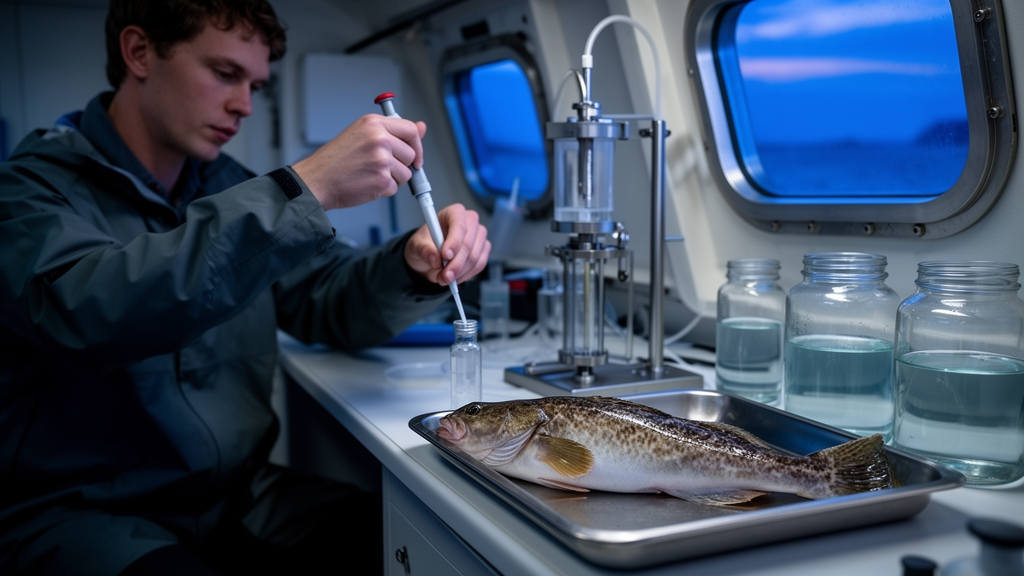
A review and perspective concludes that species identification with environmental DNA metabarcoding can be affected by methodological and interpretive choices throughout the workflow, including primer selection, laboratory handling, bioinformatics, taxonomic assignment and communication of results. The paper, summarized in its abstract, offers guidance for conservation and management applications rather than reporting a new experiment or performance benchmark.
The authors outline steps in the eDNA metabarcoding workflow that can influence taxonomic assignments and discuss the strengths and weaknesses associated with each stage. They also describe how protocols can be developed to support species identification and identify communication strategies for stakeholders and end users. The central emphasis is on aligning methodological decisions with the objectives of each project.
The review identifies several limitations that can compromise interpretation: incomplete reference databases, contamination risks, ambiguous sequences and detection biases. These constraints mean that assigning a species from metabarcoding sequences is not a wholly automatic process and may involve unresolved uncertainty. The supplied abstract does not quantify the prevalence or effect of these problems.
The authors argue that transparent reporting of methods and limitations, together with clear communication, is critical to the reliable use of eDNA and other metabarcoding or amplicon-sequencing results. They state that such transparency can support accuracy, reliability and usability in conservation and management decisions, while fostering trust among users. Because the available evidence is an abstract of a review and perspective, it does not establish a new consensus framework or demonstrate improved identification outcomes through a controlled evaluation.
Subject of Research: Review of species identification practices in environmental DNA metabarcoding
Article Title: Guidance and best practices for species identification using eDNA metabarcoding – When do you call a cod a cod?
Article References: Watts, A. W., Gold, Z., Patin, N. V., Adams, N. G., Baker, J. D., El Baidouri, F., Grey, E., Holmes, A. E., Jacobson, K., Jungbluth, S., Kajita, T., Kiledal, A., Lemay, M. A., Montes, E., Muller-Karger, F. E., Miller, J., Ogburn, M. B., Pitz, K. J., Silliman, K., … Thompson, L. R. (2026). Guidance and best practices for species identification using eDNA metabarcoding – When do you call a cod a cod?. Metabarcoding and Metagenomics, 10, Article e174450. https://doi.org/10.3897/mbmg.10.174450
Image Credits: AI Generated
Keywords: environmental DNA, eDNA, metabarcoding, species identification, taxonomic assignment, reference databases, contamination, detection bias, conservation, bioinformatics, Guidance, best
Cite Scienmag News
Margaret Porter. (October 20, 2026). Review maps eDNA metabarcoding pitfalls and limits in species identification. Scienmag. https://scienmag.com/review-maps-edna-metabarcoding-pitfalls-and-limits-in-species-identification/
Margaret Porter. "Review maps eDNA metabarcoding pitfalls and limits in species identification." Scienmag, 20 October 2026, https://scienmag.com/review-maps-edna-metabarcoding-pitfalls-and-limits-in-species-identification/. Accessed 20 October 2026.
Margaret Porter. "Review maps eDNA metabarcoding pitfalls and limits in species identification." Scienmag. October 20, 2026. https://scienmag.com/review-maps-edna-metabarcoding-pitfalls-and-limits-in-species-identification/


