

Thursday, October 22, 2026
Science
No Result
View All Result
  • Login
  • HOME
  • SCIENCE NEWS
  • CONTACT US
  • HOME
  • SCIENCE NEWS
  • CONTACT US
No Result
View All Result
Scienmag
No Result
View All Result
Home Science News Medicine

Review examines gut microbial metabolites in radiation enteritis

October 22, 2026
in Medicine
Morgan Morrow
By Morgan Morrow Scienmag Editorial Profile - Bacteriology
Reading Time: 2 mins read
0
Review examines gut microbial metabolites in radiation enteritis

Review examines gut microbial metabolites in radiation enteritis

65
SHARES
587
VIEWS
Share on FacebookShare on Twitter
ADVERTISEMENT

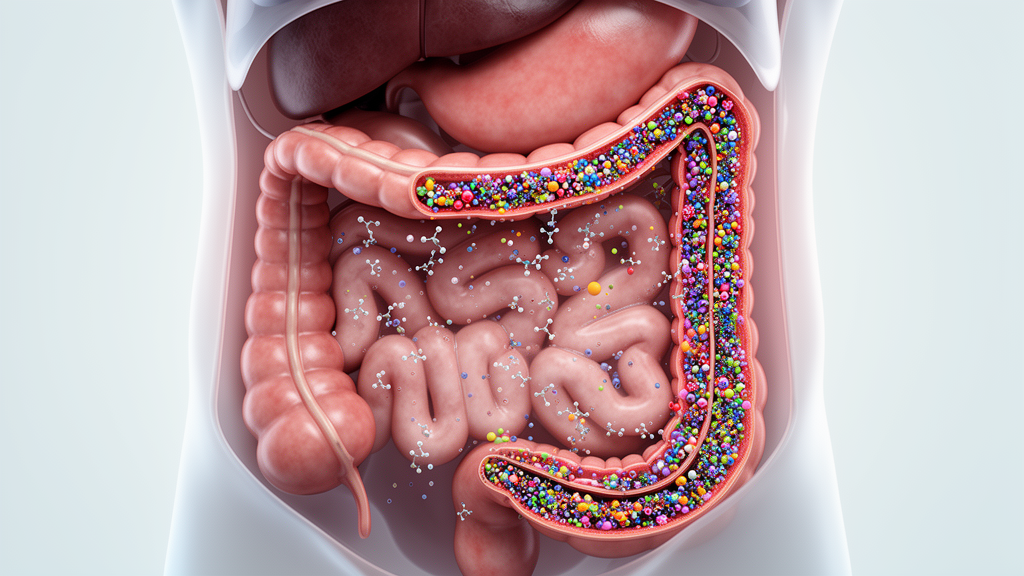
A review in the Journal of Translational Medicine identifies changes in gut microbiota and their metabolites as possible contributors to radiation enteritis, a frequent and potentially debilitating complication of radiotherapy for pelvic or abdominal malignancies. The authors summarize how ionizing radiation may alter microbial composition and metabolic output, while cautioning that the evidence does not yet establish a metabolite or microbiota-based treatment as a proven clinical solution. Evidence assessed by the review indicates that radiotherapy is associated with measurable shifts in the gut microbiota of cancer patients.

These changes commonly include depletion of potentially protective taxa such as Bifidobacterium and Clostridium , together with expansion of Enterobacteriaceae . Changes in Bacteroidetes differ between cohorts, showing that radiation-associated patterns are not uniform across patients. The biological rationale centers on the metabolic capacity of gut microbes, whose collective ability to process substrates exceeds that of human cells.

By converting dietary fibers, polyphenols and other substrates, these microorganisms produce bioactive compounds including short-chain fatty acids, urolithins and indole derivatives. The review says such metabolites may help maintain intestinal barrier integrity and modulate immuno-inflammatory responses. They may also exert systemic physiological effects through gut-organ axes, making them plausible mediators of host responses to radiation.

These are mechanistic possibilities rather than demonstrated clinical effects in people with radiation enteritis. Research interest has consequently extended to both microbiota modulation and the metabolites produced by microbial communities. The review evaluates recent advances in the radioprotective properties of these compounds and current therapeutic interventions that seek to alter the microbiota.

Translation remains difficult because metabolic responses vary substantially between individuals, some mechanisms remain disputed, and experimental work raises ethical considerations. The authors argue that integrated multi-omics studies could clarify the relevant pathways, but that well-controlled clinical trials are still needed to distinguish correlation from causation and to test whether targeted prevention or treatment strategies are effective. The scope of the evidence is that of a review rather than a new clinical trial.

Radiation enteritis can significantly impair quality of life and adherence to treatment in patients receiving radiotherapy for pelvic or abdominal cancers, but the review does not establish that a particular probiotic, supplement or dietary approach protects against intestinal injury. Instead, it provides a cautious framework for developing radioprotective agents and precision interventions based on gut microbial metabolism. Its central assessment is that the microbiota-metabolite connection is an active area of investigation, while individual variability, unresolved mechanisms and limited controlled human evidence prevent microbiota-directed care from being presented as established care.

Subject of Research: Gut microbial metabolites as potential mechanisms and therapeutic targets in radiation enteritis

Article Title: Gut microbiota metabolites: mechanistic insights and therapeutic strategies for radiation enteritis

Article References: Xie, L.-W., Liu, H.-Y., Shen, Y.-T., Zhu, Y.-Q., & Peng, Q.-L. (2026). Gut microbiota metabolites: mechanistic insights and therapeutic strategies for radiation enteritis. Journal of Translational Medicine. https://doi.org/10.1186/s12967-026-09088-9

Image Credits: AI Generated

DOI: 10.1186/s12967-026-09088-9

Keywords: radiation enteritis, gut microbiome, microbiota metabolites, radiotherapy, short-chain fatty acids, bile acids, tryptophan derivatives, intestinal barrier, multi-omics, radioprotection, microbiota, metabolites

Cite Scienmag News

Morgan Morrow. (October 22, 2026). Review examines gut microbial metabolites in radiation enteritis. Scienmag. https://scienmag.com/review-examines-gut-microbial-metabolites-in-radiation-enteritis/

Morgan Morrow. "Review examines gut microbial metabolites in radiation enteritis." Scienmag, 22 October 2026, https://scienmag.com/review-examines-gut-microbial-metabolites-in-radiation-enteritis/. Accessed 22 October 2026.

Morgan Morrow. "Review examines gut microbial metabolites in radiation enteritis." Scienmag. October 22, 2026. https://scienmag.com/review-examines-gut-microbial-metabolites-in-radiation-enteritis/


Tags: bile acidsbioactive compounds produced by gut microbesgut microbial metabolites in radiation enteritisGut microbiomegut microbiota and short-chain fatty acidsgut-organ axes in radiation therapyimpact of radiotherapy on gut bacteriaintestinal barriermetabolitesmicrobial metabolites and intestinal barrier functionmicrobiome and metabolite role in radiation enteritisMicrobiotamicrobiota metabolitesmicrobiota-based interventions for radiation enteritismulti-omicsprotective gut bacteria depletion after radiationradiation enteritisradiation-induced gut microbiota changesradioprotectionradiotherapyshort-chain fatty acidssystemic effects of microbial metabolitestryptophan derivativesvariability in microbiota response to pelvic radiotherapy
Share26Tweet16
Previous Post

Terrain and road proximity statistically associated with spring persistence in Nepal

Next Post

India’s Growth and Inflation Linked to Higher Long-Run CO₂ Emissions

Related Posts

Cross-sectional study links stress, detachment and identity among Chinese new nurses
Medicine

Cross-sectional study links stress, detachment and identity among Chinese new nurses

October 22, 2026
Accelerated FDA approval for dostarlimab in biomarker-defined locally advanced rectal cancer
Medicine

Accelerated FDA approval for dostarlimab in biomarker-defined locally advanced rectal cancer

October 22, 2026
Conceptual framework links generative-AI health safeguards to five decision functions
Medicine

Conceptual framework links generative-AI health safeguards to five decision functions

October 22, 2026
Minor stroke risk varies beyond NIHSS score, review finds
Medicine

Minor stroke risk varies beyond NIHSS score, review finds

October 22, 2026
Research report: Exposure to tobacco smoke, concurrent short-term symptoms of respiratory, allergic, cardiovascular morbidities and health-services use among young adults in Kuwait
Medicine

Research report: Exposure to tobacco smoke, concurrent short-term symptoms of respiratory, allergic, cardiovascular morbidities and health-services use among young adults in Kuwait

October 22, 2026
Designed proteins enable enantioselective artificial photocatalysts
Medicine

Designed proteins enable enantioselective artificial photocatalysts

October 22, 2026
Next Post
India’s Growth and Inflation Linked to Higher Long-Run CO₂ Emissions

India’s Growth and Inflation Linked to Higher Long-Run CO₂ Emissions

  • Mothers who receive childcare support from maternal grandparents show more optimized

    Mothers who receive childcare support from maternal grandparents show more parental warmth, finds NTU Singapore study

    27656 shares
    Share 11059 Tweet 6912
  • University of Seville Breaks 120-Year-Old Mystery, Revises a Key Einstein Concept

    1061 shares
    Share 424 Tweet 265
  • Bee body mass, pathogens and local climate influence heat tolerance

    682 shares
    Share 273 Tweet 171
  • Researchers record first-ever images and data of a shark experiencing a boat strike

    546 shares
    Share 218 Tweet 137
  • Groundbreaking Clinical Trial Reveals Lubiprostone Enhances Kidney Function

    531 shares
    Share 212 Tweet 133
Science

Embark on a thrilling journey of discovery with Scienmag.com—your ultimate source for cutting-edge breakthroughs. Immerse yourself in a world where curiosity knows no limits and tomorrow’s possibilities become today’s reality!

RECENT NEWS

  • Big Catch-up reached most targeted children in Nigerian case study
  • India’s Growth and Inflation Linked to Higher Long-Run CO₂ Emissions
  • Review examines gut microbial metabolites in radiation enteritis
  • Terrain and road proximity statistically associated with spring persistence in Nepal

Categories

  • Agriculture
  • Anthropology
  • Archaeology
  • Athmospheric
  • Biology
  • Biotechnology
  • Blog
  • Bussines
  • Cancer
  • Chemistry
  • Climate
  • Earth Science
  • Editorial Policy
  • Marine
  • Mathematics
  • Medicine
  • Pediatry
  • Policy
  • Psychology & Psychiatry
  • Science Education
  • Science News
  • Social Science
  • Space
  • Technology and Engineering

Subscribe to Blog via Email

Enter your email address to subscribe to this blog and receive notifications of new posts by email.

Join 5,151 other subscribers

© 2025 Scienmag - Science Magazine

Welcome Back!

Login to your account below

Forgotten Password?

Retrieve your password

Please enter your username or email address to reset your password.

Log In
No Result
View All Result
  • HOME
  • SCIENCE NEWS
  • CONTACT US

© 2025 Scienmag - Science Magazine

Discover more from Science

Subscribe now to keep reading and get access to the full archive.

Continue reading