

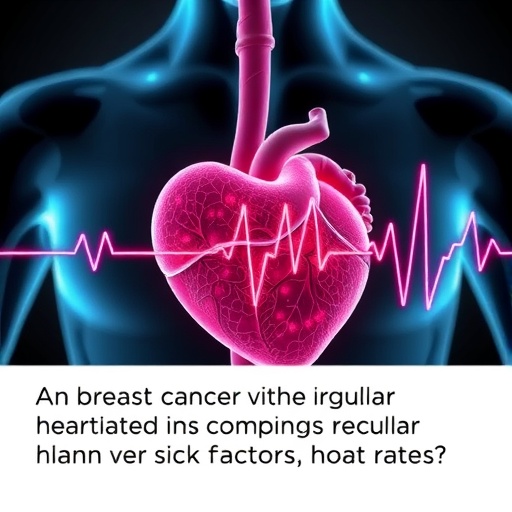
Research Highlights:
- A new, global analysis finds atrial fibrillation/flutter and breast cancer rates may follow similar risk factors and patterns across regions, particularly among women ages 55 and older.
- In about 40% of the 204 countries and regions evaluated, the rates of both breast cancer and atrial fibrillation/flutter were similar in older women, with the highest-risk zones in Western nations.
- Researchers identified modifiable risk factors, particularly alcohol use and smoking, which could substantially reduce the impact of both conditions.
Embargoed until 4 a.m. CT/5 a.m. ET Wed., July 8, 2026
DALLAS, July 8, 2026 — Alcohol use and smoking were linked to breast cancer and atrial fibrillation/flutter in women ages 55 years and older in multiple regions of the world, according to new, independent research published today in the Journal of the American Heart Association, an open access, peer-reviewed journal of the American Heart Association.
The number of breast cancer and atrial fibrillation, also called AFib or irregular heartbeat, cases represent a growing global health burden, according to study authors. Why these conditions have similar rates in specific parts of the world is not well understood.
“Identifying shared risk factors is important for developing interventions that support optimal health, such as smoking cessation and alcohol restriction, which could potentially reduce the global incidence of breast cancer and atrial fibrillation/flutter substantially,” said study co-author Shu Wang, M.D., Ph.D., director of the Breast Disease Center at Peking University People’s Hospital in Beijing.
In this analysis, researchers investigated the rates of breast cancer and atrial fibrillation/flutter in women ages 55 and older in 204 countries and regions worldwide. They evaluated women’s exposure to 58 shared and distinct health, behavioral and lifestyle risk factors, including smoking, alcohol use, body mass index and physical activity.
What are the results of the analysis?
- Researchers noted 80 countries or territories of 202 (39%) had similar rates of both breast cancer and atrial fibrillation/flutter. About 65 countries (32%) were noted to be breast cancer-dominant, and 57 countries (28%) were atrial fibrillation/flutter-dominant.
- After accounting for multiple variables, smoking and alcohol use were linked to higher rates of both breast cancer and atrial fibrillation/flutter.
- An additional analysis found that reducing alcohol intake and smoking could potentially reduce the risk of breast cancer by about 15% and the risk of atrial fibrillation/flutter by about 12% worldwide.
- Alcohol use was found to be a significant contributor to breast cancer (9.27% of cases) and atrial fibrillation/flutter (7.57% of cases).
- High-income and developed nations, such as the U.S., Canada, Australia, New Zealand and much of Europe, exhibited elevated rates of both breast cancer and AFib, aligning with previous research linking Western diets and sedentary lifestyles to increased risks of cardiovascular and metabolic conditions and cancer.
“One of the most surprising aspects of our findings was how common both breast cancer and atrial fibrillation/flutter diagnoses were among women ages 55 and older in high-income regions, which highlights the influence of lifestyle,” Wang said. “This is the first study combining global data with machine learning to show the relationship between the conditions, their location across the world and the shared risk factors of these two conditions.”
The study results revealed high-risk zones were mostly in Western countries where there was greater exposure to smoking and alcohol use compared to Eastern regions, which can be attributed to differences in lifestyle, as well as social and community differences. Additionally, Western nations were more likely to have exposure to more types of risk factors, such as higher body mass index and more sedentary lifestyles, due to industrialization and transitions to more Western diets.
“Nowadays, more and more people are paying attention to the link between cancer and cardiovascular health,” said study co-authors Zeye Liu, M.D., Ph.D., a surgeon in the department of cardiac surgery of Peking University People’s Hospital, and Yi Shi, M.D., Ph.D., the director of the department of cardiac surgery at Peking University People’s Hospital in Beijing. “Breast cancer and atrial fibrillation/flutter rise together across many regions of the world and share the same modifiable risk factors. From a cardiovascular perspective, this means that reducing smoking and alcohol use could help lower the risk of both conditions at the same time.”
“Many of the same modifiable factors, including smoking, alcohol use, poor diet, physical inactivity and obesity, contribute to both breast cancer and cardiovascular disease including atrial fibrillation/flutter, as confirmed by this study’s findings,” said Laxmi Mehta, M.D., FAHA, chair of the American Heart Association’s Council on Clinical Cardiology. “This overlap underscores the importance of integrated lifestyle strategies to reduce risk of cardiovascular disease and cancer. The American Heart Association’s Life’s Essential 8 highlights key behaviors and health factors essential for prevention and reducing risk.” Mehta, who was not involved in the study, is also the director of preventative cardiology & women’s cardiovascular health, the Sarah Ross Soter Endowed Chair in Women’s Cardiovascular Health Research and professor of internal medicine at The Ohio State University Wexner Medical Center in Columbus, Ohio.
The American Heart Association has previously identified that breast cancer and cardiovascular disease share some common risk factors that may be prevented through modifications like a healthy diet, physical activity, abstinence from tobacco and low alcohol intake, according to a 2018 Scientific Statement.
The newly developed spatial risk maps as part of this study can help guide region-specific prevention strategies and provide precise targets for future research. According to the researchers, the next step will be to incorporate long-term research, genetic and metabolic data into the analysis. Additionally, expanding the study to include socioeconomic factors will help develop individualized and region-specific prevention strategies.
What are the details, background, design and limitations of the study?
- Researchers evaluated data from the Global Burden of Disease 2021 database to understand the incidence of breast cancer and atrial fibrillation/flutter, identifying the shared and distinct risk factors of both conditions.
- The analysis focused on women 55 years of age and older in 204 countries and territories worldwide.
- This is the first study to utilize machine learning to investigate the patterns across the globe, the relationship to breast cancer and atrial fibrillation/flutter co-occurring and the underlying region-specific risk drivers. Researchers created worldwide maps for healthcare professionals and policymakers to address prevention strategies customized to each region.
- The analysis examined exposure to 58 risk factors that were both shared between conditions and distinct, that spanned environmental, lifestyle and metabolic factors, with 2 key risk factors primarily contributing to both conditions.
- Study limitations include that it reviewed a large global database with broad healthcare information by country, which lacks data at the individual level, and the findings cannot prove any direct cause and effect. In addition, the country-level data may be limited based on the country’s resources to collect information, potential differences in screening and possibly inconsistent parameters for the conditions.
Co-authors, disclosures and funding sources are listed in the manuscript.
Studies published in the American Heart Association’s scientific journals are peer-reviewed. The statements and conclusions in each manuscript are solely those of the study authors and do not necessarily reflect the Association’s policy or position. The Association makes no representation or guarantee as to their accuracy or reliability. The Association receives more than 85% of its revenue from sources other than corporations. These sources include contributions from individuals, foundations and estates, as well as investment earnings and revenue from the sale of our educational materials. Corporations (including pharmaceutical, device manufacturers and other companies) also make donations to the Association. The Association has strict policies to prevent any donations from influencing its science content and policy positions. Overall financial information is available here.
Additional Resources:
- Multimedia is available on the right column of release link.
- After July 8, 2026, view the manuscript online.
- American Heart Association news release: 6 in 10 U.S. women projected to have at least one type of cardiovascular disease by 2050 (Feb. 2026)
- American Heart Association Scientific Statement: Alcohol Use and Cardiovascular Disease (July 2025)
- American Heart Association health information: What is Atrial Fibrillation?
- American Heart Association health initiative: Go Red for Women
- Follow American Heart Association/American Stroke Association news on X @HeartNews
- Follow news from the Journal of the American Heart Association on X @JAHA_AHA
###
About the American Heart Association
The American Heart Association is a relentless force for a world of longer, healthier lives. Dedicated to ensuring equitable health in all communities, the organization has been a leading source of health information for more than one hundred years. Supported by more than 35 million volunteers globally, we fund groundbreaking research, advocate for the public’s health, and provide critical resources to save and improve lives affected by cardiovascular disease and stroke. By driving breakthroughs and implementing proven solutions in science, policy, and care, we work tirelessly to advance health and transform lives every day. Connect with us on heart.org, Facebook, X or by calling 1-800-AHA-USA1.
Journal
Journal of the American Heart Association
Article Title
Global Geospatial Trends in Breast Cancer and Atrial Fibrillation/Flutter Among Older Women: Uncovering Shared Epidemiological Patterns and Etiological Links
Karen Astle
American Heart Association
karen.astle@heart.org
Office: 214-706-1392
Journal
Journal of the American Heart Association
Article Title
Global Geospatial Trends in Breast Cancer and Atrial Fibrillation/Flutter Among Older Women: Uncovering Shared Epidemiological Patterns and Etiological Links
Tags
bu içeriği 600 ile 800 kelime arasında olacak şekilde ve alt başlıklar ve madde içermiyecek şekilde ünlü bir science magazine için İngilizce olarak yeniden yaz. Teknik açıklamalar içersin ve Viral science news olacak şekilde İngilizce yaz. Haber dışında başka bir şey içermesin. Haber içerisinde 8 ile 10 paragraf olsun ve toplam uzunluk 600 ile 800 kelime arasında kalsın. Cevapta sadece haber olsun. Ayrıca haberi yazdıktan sonra içerikten yararlanarak aşağıdaki başlıkların bilgisi var ise haberin altında doldur. Eğer yoksa bilgisi ilgili kısmı yazma.:
Subject of Research:
Article Title:
News Publication Date:
Web References:
References:
Image Credits:
Keywords


