

Monday, July 27, 2026
Science
No Result
View All Result
  • Login
  • HOME
  • SCIENCE NEWS
  • CONTACT US
  • HOME
  • SCIENCE NEWS
  • CONTACT US
No Result
View All Result
Scienmag
No Result
View All Result
Home Science News Medicine

Resting-State EEG Reveals Spectral Power and Connectivity Changes in MSA

July 26, 2026
in Medicine
Reading Time: 2 mins read
0
Resting-State EEG Reveals Spectral Power and Connectivity Changes in MSA

Resting-State EEG Reveals Spectral Power and Connectivity Changes in MSA

65
SHARES
587
VIEWS
Share on FacebookShare on Twitter
ADVERTISEMENT

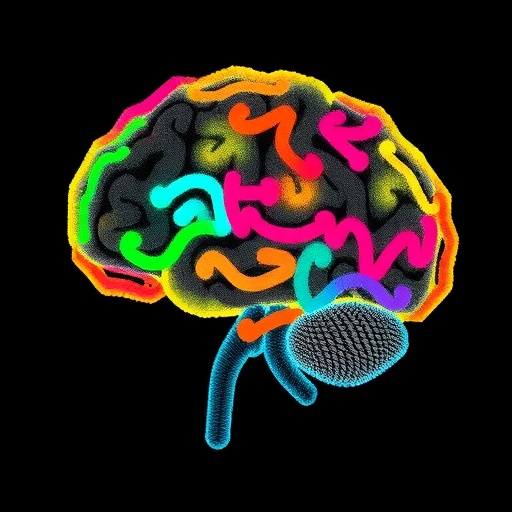
Neurodegenerative disorders can quietly reorganize how the brain communicates, long before symptoms fully declare themselves. In a new study, researchers report that multiple system atrophy (MSA)—a progressive condition affecting movement and autonomic function—shows distinct patterns in resting-state brain activity when measured with electroencephalography (EEG). The findings focus on two complementary signals: spectral power and functional connectivity, offering a more integrated view of brain dysfunction than either metric alone.

Using resting-state EEG, the team quantified how power is distributed across frequency bands and how synchrony links distant brain regions. Spectral power changes can reflect shifts in local neural dynamics, while functional connectivity captures the statistical coupling between cortical areas. Together, these measures provide a systems-level fingerprint of disease-related brain alterations.

Across participants with MSA, the authors observed abnormal spectral signatures, particularly in frequency ranges commonly associated with attention, sensorimotor processing, and large-scale network regulation. While the study emphasizes group-level differences, the approach also supports individual variability analysis by treating EEG rhythms as measurable phenotypes rather than qualitative impressions.

Functional connectivity analysis further revealed reorganization of network coupling in MSA. By examining how oscillatory activity becomes coordinated—or decoupled—between brain regions, the researchers highlight disruptions consistent with impaired communication across functional networks. Such connectivity shifts can indicate altered information transfer, potentially contributing to the clinical deterioration seen in MSA.

The study leverages the advantage of EEG: high temporal resolution that can detect changes in ongoing neural rhythms. Unlike methods that require task performance, resting-state recording enables comparisons under controlled, low-cognitive-demand conditions. This strengthens the translational promise of EEG biomarkers for screening and longitudinal monitoring.

Importantly, the work frames spectral and connectivity results as related dimensions of the same underlying neural disturbance. Altered power can modulate synchronization, while connectivity changes can reshape how rhythmic activity propagates across networks. The study’s combined analysis therefore improves interpretability of what “goes wrong” in MSA physiology.

By grounding their conclusions in measurable EEG-derived features, the authors suggest pathways for future biomarker development. With refinement—such as larger cohorts, standardized preprocessing, and validation across sites—resting-state EEG may support earlier detection and better stratification of MSA subgroups.

The broader impact is clear: as viral science coverage increasingly highlights biomarkers, this work positions EEG as a feasible, noninvasive tool for capturing disease-linked brain network remodeling. For families facing MSA, the research adds momentum to the quest for earlier diagnosis and more targeted interventions.

Subject of Research: Multiple system atrophy (MSA) and EEG-based biomarkers

Article Title: Spectral power and functional connectivity alterations in multiple system atrophy revealed by resting-state EEG.

Article References: Wang, C., Zhu, X., Zhang, Y. et al. Spectral power and functional connectivity alterations in multiple system atrophy revealed by resting-state EEG. npj Parkinsons Dis. (2026). https://doi.org/10.1038/s41531-026-01482-w

Image Credits: AI Generated

Tags: brain communication disruptions in MSAbrain network reorganization in MSAEEG biomarkers for neurodegenerationEEG functional connectivity in neurodegenerative disordersEEG-based phenotyping of neurodegenerative diseasesMSA brain activityneural oscillations and attention networksoscillatory activity and large-scale network regulationresting-state EEG spectral powersensorimotor processing EEG patternsspectral signatures in multiple system atrophysystems-level analysis of brain dysfunction
Share26Tweet16
Previous Post

Skin-Adhesive Bimodal Patch Measures Occlusal Function for Dental Assessment

Next Post

Five Changes to Rethink Urban Heat Assessment and Action Planning

Related Posts

TRDN-AS directs m6A-dependent transcription termination for proper triadin isoform switching
Medicine

TRDN-AS directs m6A-dependent transcription termination for proper triadin isoform switching

July 27, 2026
Neural stem cell exosomes activate HMGB1/TLR2 signaling, boosting astrocyte repair after radiation
Medicine

Neural stem cell exosomes activate HMGB1/TLR2 signaling, boosting astrocyte repair after radiation

July 26, 2026
Intervention Reduces Dressing Changes and Complications from PICC Lines in Preterm Infants
Medicine

Intervention Reduces Dressing Changes and Complications from PICC Lines in Preterm Infants

July 26, 2026
PFAS levels in pregnant women across Suriname: higher concentrations in remote areas
Medicine

PFAS levels in pregnant women across Suriname: higher concentrations in remote areas

July 26, 2026
Plant-Forward Planetary Diet Cuts Heart Disease Risk, Study Finds
Medicine

Plant-Forward Planetary Diet Cuts Heart Disease Risk, Study Finds

July 26, 2026
Planetary-Mass Exosatellite Detected Orbiting Substellar Companion
Medicine

Planetary-Mass Exosatellite Detected Orbiting Substellar Companion

July 26, 2026
Next Post
Five Changes to Rethink Urban Heat Assessment and Action Planning

Five Changes to Rethink Urban Heat Assessment and Action Planning

  • Mothers who receive childcare support from maternal grandparents show more

    Mothers who receive childcare support from maternal grandparents show more parental warmth, finds NTU Singapore study

    27656 shares
    Share 11059 Tweet 6912
  • University of Seville Breaks 120-Year-Old Mystery, Revises a Key Einstein Concept

    1061 shares
    Share 424 Tweet 265
  • Bee body mass, pathogens and local climate influence heat tolerance

    682 shares
    Share 273 Tweet 171
  • Researchers record first-ever images and data of a shark experiencing a boat strike

    546 shares
    Share 218 Tweet 137
  • Groundbreaking Clinical Trial Reveals Lubiprostone Enhances Kidney Function

    531 shares
    Share 212 Tweet 133
Science

Embark on a thrilling journey of discovery with Scienmag.com—your ultimate source for cutting-edge breakthroughs. Immerse yourself in a world where curiosity knows no limits and tomorrow’s possibilities become today’s reality!

RECENT NEWS

  • TRDN-AS directs m6A-dependent transcription termination for proper triadin isoform switching
  • Redlined U.S. neighborhoods face disproportionate exposure to extreme flood risks
  • Paid Family Leave Policies Aim to Boost Breastfeeding, Study Finds
  • Neural stem cell exosomes activate HMGB1/TLR2 signaling, boosting astrocyte repair after radiation

Categories

  • Agriculture
  • Anthropology
  • Archaeology
  • Athmospheric
  • Biology
  • Biotechnology
  • Blog
  • Bussines
  • Cancer
  • Chemistry
  • Climate
  • Earth Science
  • Editorial Policy
  • Marine
  • Mathematics
  • Medicine
  • Pediatry
  • Policy
  • Psychology & Psychiatry
  • Science Education
  • Social Science
  • Space
  • Technology and Engineering

Subscribe to Blog via Email

Success! An email was just sent to confirm your subscription. Please find the email now and click 'Confirm Follow' to start subscribing.

Join 5,146 other subscribers

© 2025 Scienmag - Science Magazine

Welcome Back!

Login to your account below

Forgotten Password?

Retrieve your password

Please enter your username or email address to reset your password.

Log In
No Result
View All Result
  • HOME
  • SCIENCE NEWS
  • CONTACT US

© 2025 Scienmag - Science Magazine
