


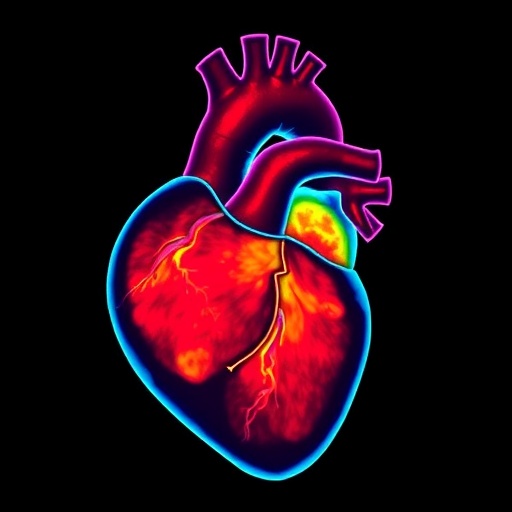
Recent advances in medical imaging technology have led to breakthroughs in how researchers analyze and interpret the functional dynamics of the heart. A critical area of this development is the semi-automated quantitative analysis of heart images using radiopharmaceuticals, specifically Tc-99m pyrophosphate (PYP). The release of a new study in the Journal of Medical Biology Engineering delineates the reproducibility of semi-automated methods applied to myocardial perfusion planar and SPECT (Single Photon Emission Computed Tomography) images. This study not only aligns with growing efforts to enhance diagnostic accuracy in cardiology but also aims to streamline quantitative assessments in nuclear medicine.
The research conducted by Goyal et al. scrutinizes the procedural nuances of Tc-99m PYP uptake in myocardial tissues. This radiotracer has become essential in detecting and evaluating cardiac amyloidosis, a condition often overlooked in conventional imaging. Through meticulous analysis, the researchers highlight how semi-automated algorithms can improve the precision of the uptake measurements, thereby facilitating more consistent diagnoses among patients suspected of having heart conditions linked to amyloid deposits. The study outlines the anatomy of the methodologies and the significance behind each step leading to a comprehensive, reproducible outcome.
It is important to understand the role of SPECT imaging in cardiology. SPECT functions by providing three-dimensional images of the heart, revealing functional information rather than structural details. The use of Tc-99m PYP in this context is groundbreaking, as it emits gamma rays that are captured by the imaging system, allowing clinicians to visualize areas of abnormal amyloid accumulation. These insights are vital as early detection of cardiac amyloidosis can significantly affect treatment pathways and overall patient prognosis.
One of the core aspects of Goyal et al.’s study focuses on the robustness of semi-automated analyses versus traditional manual methods. Traditional techniques often suffer from variability tied to the individual interpreting the images. This study demonstrates how implementing semi-automated systems can substantially reduce inter-observer variability, leading to standardized results that are reproducible across different operators and facilities. The insights gathered aim to bolster the reliability of diagnostic practices in clinical settings, thereby elevating the caregivers’ confidence in the detected pathology.
The researchers employed a diverse cohort of patients for their analysis, ensuring that their findings would be both comprehensive and applicable across various demographics. This approach provides a clearer picture of Tc-99m PYP’s efficacy in diverse patient populations, incorporating individuals with different stages of cardiac amyloidosis. Such stratification enables the formulation of tailored diagnostic paradigms, fostering personalized medicine principles that aim to treat each patient according to their unique clinical presentation and history.
Additionally, the study’s design allowed investigators to delve into the quantitative aspects of Tc-99m PYP uptake, emphasizing critical parameters such as sensitivity and specificity in their analysis. Sensitivity pertains to the ability to correctly identify those with the disease, while specificity relates to the accuracy in ruling out those without the condition. Through semi-automated analysis, the study showed promising results that surpass many prior methods—indicating a potential shift in how nuclear medicine is integrated within cardiology.
Importantly, Goyal et al. also addressed limitations and future directions of the innovations they explored. They suggested that while semi-automation significantly enhances reproducibility, the need for continual advancements in technology remains critical. Potential pitfalls in imaging artifacts and algorithmic misinterpretations necessitate ongoing research and iterative refinements to ensure optimal performance of these instruments in clinical practice. The evolving landscape of artificial intelligence and machine learning in medical imaging may further enhance these semi-automated methods, promising even greater accuracy and efficiency.
The clinical implications of this research cannot be overstated. The pursuit of improved imaging techniques is a vital part of the larger picture when it comes to managing heart diseases. By validating and promoting the use of reproducible quantitative analysis, Goyal et al.’s work encourages broader adoption within the nuclear medicine community. This could ultimately lead to improved diagnostic pathways, more precise therapeutic interventions, and overall better patient outcomes on a global scale.
Moreover, the study illustrates a collective movement toward standardizing cardiac assessment methodologies that depend less on subjective interpretations. As the medical community continuously strives for improved healthcare delivery, studies like these are pivotal in paving the way for thoroughly researched and clinically validated strategies. The idea of replacing unreliable manual methodologies with robust, semi-automated systems championed by clinical evidence is a promising development in modern medicine.
In summary, the discovery of reproducible semi-automated analyses of Tc-99m PYP uptake is a game-changer for the field. The synergy between advanced imaging and quantitative techniques presents a compelling narrative—one where cardiologists can trust their diagnostic tools and confidently address conditions that were previously difficult to discern. Goyal et al. have not only shed light on innovative methodologies but have set a benchmark for future exploration in cardiology and nuclear medicine that prioritizes accuracy and reliability.
As the applications of advanced imaging techniques expand, it is crucial to continue exploring the benefits of semi-automated methods in clinical settings. There is an urgent need to develop comprehensive training programs for healthcare professionals that emphasize the use of these new tools, ensuring they can seamlessly adapt to evolving standards of care in diagnostics. In conclusion, Goyal et al.’s research lays a profound groundwork for future studies, embracing a transformative approach to cardiac imaging that could redefine patient management practices within the next few years.
Goyal, D., Sandoval, V., Weyman, C. et al. Reproducibility of Semi-automated Quantitative Analyses of Tc-99m Pyrophosphate Uptake from Myocardial Perfusion Planar and SPECT Images.
J. Med. Biol. Eng. 45, 84–91 (2025). https://doi.org/10.1007/s40846-024-00924-1
Cite Scienmag News
Ophelia Keating. (August 29, 2025). Reliable Quantitative Analysis of Tc-99m in Myocardial Imaging. Scienmag. https://scienmag.com/reliable-quantitative-analysis-of-tc-99m-in-myocardial-imaging/
Ophelia Keating. "Reliable Quantitative Analysis of Tc-99m in Myocardial Imaging." Scienmag, 29 August 2025, https://scienmag.com/reliable-quantitative-analysis-of-tc-99m-in-myocardial-imaging/. Accessed 4 September 2026.
Ophelia Keating. "Reliable Quantitative Analysis of Tc-99m in Myocardial Imaging." Scienmag. August 29, 2025. https://scienmag.com/reliable-quantitative-analysis-of-tc-99m-in-myocardial-imaging/


