


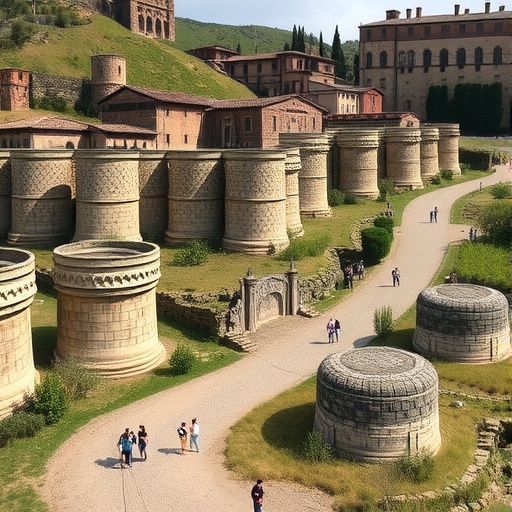
In an astounding investigation that reconnects the dots of ancient materials, a recent paper revisits the significance of Pliny the Elder’s description of Creta umbrica, delving into its material legacy and production processes. The study, led by Gliozzo et al., sheds light on how ancient Romans utilized what is often considered a mundane clay, unlocking a treasure trove of knowledge about their craftsmanship and trade. This comprehensive examination not only emphasizes the intricate connections between ancient sources and modern archaeological findings but also provides insights that traverse both time and geography.
Pliny, in his encyclopedic work, mentions Creta umbrica as a valued material derived from regions rich in natural resources, hinting at its strategic importance in ancient Roman practices. This rich umber clay was not merely an aesthetic choice; it held significant functional value. Through diverse applications, it helped shape everyday life in Roman society. The current research meticulously maps these ancient landscapes, positioning Creta umbrica alongside other notable clay sources, like those from Terra di Nocera and various Umbrian necropoleis.
The meticulous process of examining the chemical composition and physical properties of Creta umbrica offers archaeologists a clearer lens through which to view ancient Roman ceramic technology. Analyzing the chemical signatures of the clay helps to trace its origin and even the technological advances of the time. This thorough chemical analysis reveals how the ancients sourced their materials, thereby providing a glimpse into the mining capabilities and trade routes of the Roman Empire.
Effective craftsmanship was crucial in shaping the final products made from Creta umbrica. The meticulous molding and firing techniques employed by Roman artisans showcased a profound understanding of materials science, demonstrating their capability to create durable and aesthetically pleasing items. Such artistry influenced not only local markets but also far-reaching trade networks, showing how Roman goods were extraordinarily valued across different cultures.
Moreover, by examining clay loaves unearthed from Umbrian necropoleis, researchers discovered fascinating evidence of ancient production techniques. These loaves, often used in trade, signal more than just a means of sustenance; they highlight a complex economic system where artisanal products communicated status and wealth. The correlation between these loaves and Creta umbrica signifies an underlying economic strategy where specific clays were chosen based not just on their physical attributes but also on their symbolic meanings.
Interestingly, the current investigation also touches upon the interfaces of myth and practicality. Pliny’s writings, steeped in historical context, invite us to reconsider how ancient narratives shape our understanding of materials. The overlap between Pliny’s encyclopedic texts and contemporary archaeological findings allows for a more holistic understanding of these cultural artifacts. Contextualizing Creta umbrica in both a practical and mythical sense amplifies its significance in Roman life.
The fabric of trade networks during the Roman era is further illuminated by these findings. The nuanced relationships between suppliers, artisans, and consumers are unveiled as researchers trace the paths these clay materials would have taken from extraction sites to workshops, and ultimately to marketplaces. By reconstructing these links, scholars can glean insights into the socio-economic fabric of ancient Roman life.
Exploring the connections to Terra di Nocera adds depth to this investigation. This site, known for its diverse geological formations, serves as a treasure chest of material diversity that informed countless aspects of Roman craftsmanship. The overlaps between the findings at Terra di Nocera and those linked to Creta umbrica establish a dialogue between different sources, enabling a richer narrative about ancient artisanship.
The implications of this research go beyond mere material culture. The awareness of how ancient civilizations interrelated with their environment informs contemporary discussions about sustainability and resource management. Understanding the long-standing practices of extracting and utilizing natural clay can inspire current and future approaches to crafting ceramics, especially within the contemporary movement towards utilizing local materials responsibly.
This investigation finally gestures towards a broader discourse about cultural identity and heritage. The revival of ancient methods and materials demonstrates a reclamation of cultural narratives, revealing how intertwined human history truly is with the materials we extract from the earth. As researchers and artists alike continue to explore these ancestral practices, they uphold the legacies of artisans who navigated their relationship with nature in intelligent and sustainable ways.
In essence, Gliozzo and colleagues’ exploration into Creta umbrica is not solely about clay; it is a window into the minds, lives, and environmental interactions of ancient Romans. By recognizing the complexity and multifaceted nature of this material, we foster a deeper appreciation for the past and its relevance in today’s world. The echoes of these ancient preferences resonate in modern ceramic practices, linking us to a rich historical narrative that shapes our current understanding of art and commerce.
As we continue to delve into these impactful studies, it becomes apparent that our understanding of history is not static. Each investigation, each new finding, sheds light on how ancient peoples viewed their world and made decisions that are still relevant today. The reevaluation of materials that have survived for centuries reflects an evolving comprehension of craftsmanship and economic strategies across cultures and epochs.
In conclusion, Creta umbrica serves as an emblem of an ancient Roman heritage that contains layered stories of resourcefulness, innovation, and interconnectedness. As this research graces the pages of Archaeol Anthropol Sci, it beckons us to appreciate the intricate dance of history, archaeology, and material culture. The paths we trace from ancient times to the present day teach us invaluable lessons about resilience and the enduring power of creativity.
Cite Scienmag News
Courtney Benton. (December 16, 2025). Reevaluating Pliny: Umbrian Clay and Terra di Nocera. Scienmag. https://scienmag.com/reevaluating-pliny-umbrian-clay-and-terra-di-nocera/
Courtney Benton. "Reevaluating Pliny: Umbrian Clay and Terra di Nocera." Scienmag, 16 December 2025, https://scienmag.com/reevaluating-pliny-umbrian-clay-and-terra-di-nocera/. Accessed 3 September 2026.
Courtney Benton. "Reevaluating Pliny: Umbrian Clay and Terra di Nocera." Scienmag. December 16, 2025. https://scienmag.com/reevaluating-pliny-umbrian-clay-and-terra-di-nocera/


