


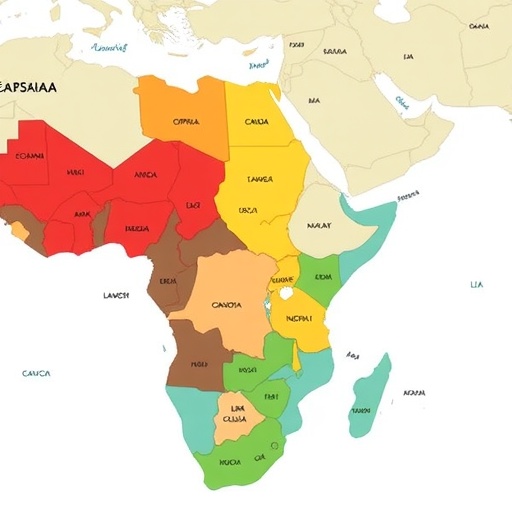
In an illuminating study published in the African Archaeological Review, researcher N. Perrault delves into the complexities surrounding the Capsian and Iberomaurusian cultural entities of Northwest Africa, which are pivotal to understanding the Later Stone Age. These entities are not merely archaeological labels but represent nuanced cultural and technological adaptations over millennia. Perrault’s thorough examination of the data raises intriguing questions about the validity of these classifications, shedding light on how our understanding of prehistoric human behavior continues to evolve.
Central to Perrault’s argument is the idea that the labels associated with the Capsian and Iberomaurusian cultures might not reflect a unified or homogeneous identity. Instead, these designations may oversimplify a more complex reality characterized by regional variations and interactions among diverse human groups. By critically analyzing existing archaeological evidence, the study encourages a reevaluation of how we categorize ancient societies and their artifacts. This perspective is crucial in the context of the Later Stone Age, where the interplay of environment, technology, and social structure played a significant role in shaping human evolution.
The study articulates a need for a more nuanced approach towards the interpretation of archaeological findings. For instance, the distinctions between the Capsian and Iberomaurusian cultures have traditionally been based on observable differences in lithic technologies and subsistence strategies. However, Perrault’s research highlights that such technological traits could result from adaptation to varying ecological contexts rather than clear-cut cultural divisions. This observation opens the door to a more integrative understanding of human adaptability, suggesting that ancient peoples may have shared technological innovations while also developing unique practices suitable to their environments.
One of the compelling aspects of Perrault’s work is the emphasis on examining the geographical landscape of Northwest Africa, which is rich in resources and diverse habitats. The dynamic ecological zones in this region likely influenced the way prehistoric communities functioned and interacted. Rather than adhering strictly to the Capsian or Iberomaurusian labels, an acknowledgment of the fluidity in cultural practices allows for a broader exploration into how these societies might have engaged with their surroundings, each other, and their technological advancements.
In discussing lithic artifacts, Perrault stresses the importance of context in archaeological analysis. The placement of tools within specific stratigraphic layers provides insights into the chronological relationships between different groups. This evidence often reveals overlapping patterns of use and occupation that challenge rigid temporal frameworks. As a result, the research proposes an innovative framework where the chronological and cultural identities of these people are seen as interwoven narratives rather than isolated chapters in a historical account.
A significant contribution of the paper lies in its multi-disciplinary approach. By integrating insights from anthropology, paleoclimatology, and archaeology, Perrault succeeds in creating a holistic view of the Capsian and Iberomaurusian entities. This interdisciplinary strategy not only enhances the robustness of the arguments presented but also encourages future researchers to adopt similar methodologies, thereby enriching the dialogue within the field of archaeology.
Additionally, the research underscores the importance of community involvement in archaeological practices. Engaging local populations in the study of their heritage can offer invaluable perspectives that might otherwise be overlooked in the academic literature. This collaborative approach not only fosters a deeper respect for cultural histories but also empowers communities to reclaim their narratives, which can inform contemporary identity and social cohesion.
One cannot overlook the implications of this research for current debates surrounding cultural heritage and identity politics. As the understanding of past cultures evolves, so too do the narratives that modern societies construct about their ancestry and shared histories. The reassessment of the Capsian and Iberomaurusian cultures will likely resonate with ongoing discussions about how archaeology influences identity formation and heritage management in the present day.
The exploration of technological adaptations, as posited by Perrault, further emphasizes the innovative spirit of ancient peoples. The capacity to adapt and invent in response to environmental challenges illustrates the resilience human beings have demonstrated throughout their history. This narrative of adaptability aligns well with anthropological theories that suggest innovation is a critical driver of human evolution, a perspective that continues to shape discussions about future human development in the face of climate change and resource scarcity.
Ultimately, Perrault’s study is a timely reminder of the importance of questioning established archaeological paradigms. As new findings emerge and methodologies develop, the need for a critical examination of past interpretations becomes ever more pressing. This research encourages scholars to remain open-minded and adaptable, reflective of the very qualities that ancient peoples exhibited in their own lives.
The ongoing study of the Capsian and Iberomaurusian entities highlights the intricate tapestry of human history, emphasizing that cultural identities are multifaceted and cannot be easily defined by labels alone. Perrault’s work sets a precedent for future inquiries into prehistoric cultures, motivating a reevaluation of existing paradigms and spurring new avenues of research. The implications of such studies extend beyond academia, shaping our understanding of human history and our place within it.
As discussions surrounding the validity of cultural classifications continue, it is evident that the past is full of rich narratives waiting to be uncovered. The endeavor to articulate these stories is vital not only for academic pursuits but also for the broader community, ultimately inviting us to appreciate the complexities of human existence and the myriad paths our ancestors navigated through the ages.
In conclusion, N. Perrault’s investigation into the validity of the Capsian and Iberomaurusian entities invites a newfound dialogue within the archaeological sphere, one that challenges the status quo and paves the way for richer, more nuanced discourses about human history. The acknowledgment of complexity in cultural classification serves as a vital step toward a deeper understanding of our shared ancestral heritage.
Cite Scienmag News
Courtney Benton. (January 19, 2026). Reevaluating Capsian and Iberomaurusian Cultures in Africa. Scienmag. https://scienmag.com/reevaluating-capsian-and-iberomaurusian-cultures-in-africa/
Courtney Benton. "Reevaluating Capsian and Iberomaurusian Cultures in Africa." Scienmag, 19 January 2026, https://scienmag.com/reevaluating-capsian-and-iberomaurusian-cultures-in-africa/. Accessed 4 September 2026.
Courtney Benton. "Reevaluating Capsian and Iberomaurusian Cultures in Africa." Scienmag. January 19, 2026. https://scienmag.com/reevaluating-capsian-and-iberomaurusian-cultures-in-africa/


