


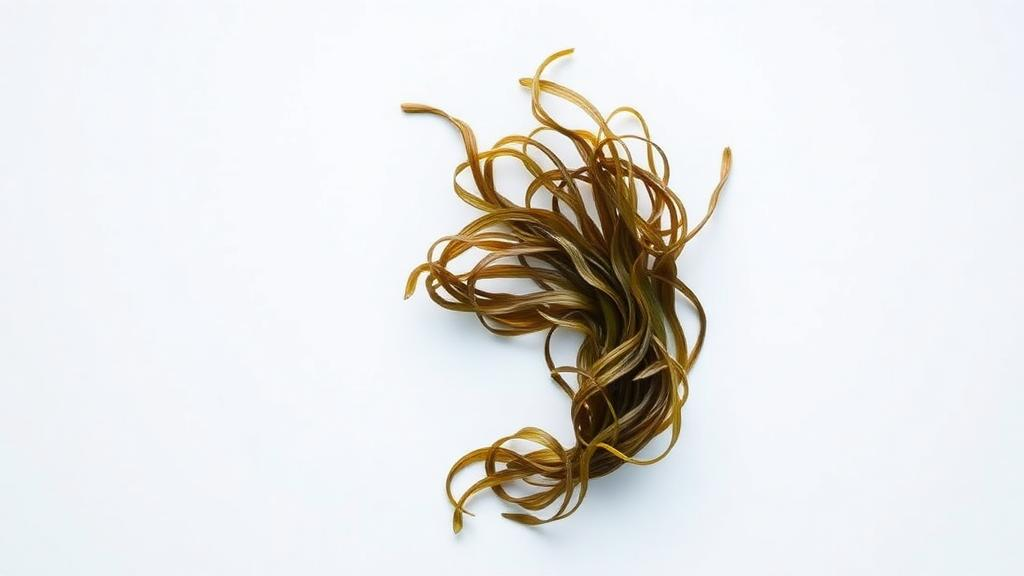
The green transition has a hidden price tag, and it is being paid in the ocean. Rare earth elements, the seventeen chemically similar metals that power electric vehicle motors, wind turbines, smartphones, and fiber optics, are increasingly being detected in coastal waters, sediments, and marine organisms around the world. A comprehensive review published in Discover Oceans synthesizes roughly 130 studies and argues that these elements, long dismissed as low-toxicity curiosities, should now be treated as genuine emerging contaminants capable of stressing the very animals that hold coastal ecosystems together. The review, led by Saereh Mohammadpour of the University of Aveiro, also points to an unexpected ally in the fight against this contamination: brown seaweed, whose cell walls turn out to be remarkably efficient natural sponges for rare earth metals.
The scale of the problem tracks the scale of the industry. Global production of rare earth elements roughly tripled between 2000 and 2020, with China historically supplying more than 80 percent of the world total, and in some years over 90 percent of mined and processed material. Extraction and refining generate tailings and effluents rich in dissolved light rare earths such as lanthanum, cerium, and neodymium, and heavy rare earths such as dysprosium and erbium. Mining hotspots in southern China and Myanmar have released these elements into river systems that ultimately discharge into coastal seas. Beyond mining, electronic waste dismantling, wastewater treatment plant effluents, medical imaging residues from gadolinium-based MRI contrast agents, and even rare earth enriched fertilizers used in Chinese and Southeast Asian agriculture all funnel additional metal into rivers, estuaries, and ultimately the ocean.
For decades, regulators essentially ignored these elements. Unlike mercury, cadmium, or lead, rare earths were considered environmentally immobile and biologically benign, so they were rarely included in chemical safety assessments and almost never monitored in aquatic systems. That assumption began to collapse in the late 2000s, when advances in inductively coupled plasma mass spectrometry made it possible to detect rare earths at environmentally relevant concentrations in surface waters, sediments, and biota. The measurements revealed a global footprint: elevated concentrations near industrialized coastlines, in estuaries receiving industrial runoff, and in sediments influenced by atmospheric deposition. Yet despite this growing evidence base, rare earths still lack internationally harmonized water quality guidelines, chronic exposure criteria, or priority pollutant status under frameworks such as the EU Water Framework Directive, the U.S. Clean Water Act, MARPOL, or the OSPAR Convention. Only Canada and China have begun to incorporate preliminary reference values, and those efforts remain limited.
The chemistry of rare earths in seawater is distinctive and helps explain their biological behavior. They occur predominantly in the trivalent state and bind strongly to carbonate ligands and organic colloids, producing speciation patterns quite different from those of transition metals. Light rare earths tend to be more abundant and more bioavailable near anthropogenic sources, while heavy rare earths form more stable complexes with organic matter. Environmental factors such as pH, salinity, redox conditions, and competing ions profoundly modulate which chemical forms are present and therefore how much metal organisms actually take up. Sediments act as a major reservoir, with reported concentrations ranging from under one microgram per gram in some Red Sea coastal sediments to more than 73 micrograms per gram in Chinese sediments, and biogeochemical processes can remobilize this pool back into porewater where benthic animals encounter it.
Marine invertebrates sit squarely in the exposure pathway. Their permeable epithelial surfaces, filter feeding and particle ingestion strategies, and reliance on ion regulated physiology make them unusually sensitive to metal contamination, and bioaccumulation has now been documented in bivalves, crustaceans, echinoderms, polychaetes, and corals. The blue mussel Mytilus edulis, with its prodigious filtration capacity, shows a total rare earth and yttrium concentration of about 2 micrograms per gram, while the Mediterranean mussel accumulates light rare earths such as lanthanum and cerium at levels far exceeding heavy rare earths like ytterbium and lutetium. Corals incorporate dissolved rare earths directly into their aragonitic skeletons, with skeletal patterns closely mirroring surrounding seawater, which makes them useful geochemical archives of contamination.
The toxicological evidence is striking in its specificity. Mussels exposed to lanthanum at concentrations of 100 micrograms per liter or more developed marked oxidative stress, reduced metabolic activity, and necrosis of digestive gland tubules. Gadolinium exposure beginning at just 30 micrograms per liter disrupted redox homeostasis, increased lipid peroxidation, and depleted the ratio of reduced to oxidized glutathione, a classic signature of overwhelmed antioxidant defenses. Oyster larvae proved even more vulnerable, with concentration dependent malformations appearing at EC50 values as low as 6.7 micrograms per liter for lanthanum. In sea urchins, the review highlights pronounced inter element variability: in Sphaerechinus granularis, the EC50 for abnormal development ranged from 8 micrograms per liter for lanthanum to 874 micrograms per liter for gadolinium, while the related species Arbacia lixula showed a completely different sensitivity ranking, underscoring that toxicity cannot be generalized across elements or species. Copepods exposed to nine different rare earths suffered concentration dependent mortality, immobilization, and suppressed naupliar molting.
The mechanistic story ties these observations together. Rare earth ions chemically mimic calcium, competing with Ca2+ for binding sites on membrane proteins, channels, and pumps, thereby disrupting signal transduction, neurotransmission, ciliary movement, and, critically, the biomineralization pathways that build shells and skeletons. Because early embryos have highly permeable membranes and depend heavily on calcium mediated signaling, they are especially susceptible, which explains the skeletal malformations and delayed gastrulation seen in echinoderm larvae. Independently, rare earths destabilize cellular redox balance, generating reactive oxygen species that damage lipids, proteins, and DNA, while also modulating key enzymes including Na+/K+-ATPase, superoxide dismutase, catalase, and glutathione peroxidase. Although rare earths do not biomagnify as strongly as classic heavy metals, they are transferred through food webs from algae to grazers and from sediments to benthic consumers, and repeated dietary exposure can compound physiological stress over time.
Against this backdrop, the review’s most hopeful finding concerns brown macroalgae. The cell walls of species such as Sargassum, Turbinaria, Fucus, and Undaria are dominated by alginate and fucoidan, polysaccharides studded with carboxyl and sulfate groups that chelate trivalent rare earth cations with exceptional affinity. The dominant binding mechanisms include ion exchange, complexation with carboxyl groups, electrostatic interaction with sulfated moieties, and surface adsorption followed by diffusion into the cell wall matrix. Dried, non living biomass is particularly attractive for remediation because it requires no nutrients, tolerates metal loads that would kill living tissue, and can be packed into engineered systems. Reported maximum sorption capacities reach approximately 150,000 micrograms per gram in the best performing species, substantially exceeding activated carbon and many synthetic ion exchange resins, and Sargassum filipendula maintains its performance under the high salinity conditions that cripple conventional adsorbents.
The practical vision is a tiered, nature based defense of coastal waters. Non living algal biomass could be deployed in packed bed filters, cartridge systems, shoreline interception modules, or estuarine polishing units to strip dissolved rare earths from mining runoff, industrial discharges, and sediment porewaters before the metal disperses to vulnerable communities. Because biosorption is partially reversible, accumulated rare earths could even be desorbed and recovered, turning a pollution problem into a circular economy opportunity. Living macroalgae, meanwhile, show bioconcentration factors approaching 944 in Fucus vesiculosus under multi element exposure, making them valuable early warning biomonitors even though their own oxidative stress responses limit their use as direct remediation agents. The review proposes integrating these biosorption systems with sentinel species monitoring, risk assessment frameworks, and coastal management, from marine protected areas to estuarine buffer zones.
Substantial gaps remain before any of this becomes routine practice. Chronic toxicity thresholds for marine organisms are essentially undefined, the interactions between rare earths and co-occurring stressors such as warming, acidification, and hypoxia are unexplored, and the scalability of macroalgal biosorption under realistic field conditions has never been tested at pilot scale. Speciation, the master variable governing uptake, remains poorly characterized in natural seawater, and standardized toxicity testing protocols do not yet exist. But the direction of travel is unmistakable: as demand for rare earths accelerates with the electrification of the global economy, so too will their release into the sea. The review’s authors argue that timely, integrative research combining ecotoxicology, marine chemistry, and environmental engineering is now essential to safeguard marine biodiversity, and that seaweed, one of the ocean’s most humble inhabitants, may prove to be one of its most effective protectors.
Subject of Research: Rare earth element contamination of marine ecosystems and brown macroalgal biosorption as a mitigation strategy
Article Title: A review of rare earth elements as emerging marine pollutants and their impacts on invertebrates and macroalgae mediated biosorption
Article References: Mohammadpour, S., & Mohammadpour, H. (2026). A review of rare earth elements as emerging marine pollutants and their impacts on invertebrates and macroalgae mediated biosorption. Discover Oceans, 3(1), Article 32. https://doi.org/10.1007/s44289-026-00146-0
Image Credits: AI Generated
DOI: 10.1007/s44289-026-00146-0
Keywords: rare earth elements, marine pollution, emerging contaminants, marine invertebrates, ecotoxicology, biosorption, brown macroalgae, oxidative stress, calcification, coastal ecosystems, bioremediation, heavy metals
Cite Scienmag News
Violet Maxwell. (October 1, 2026). Rare Earth Metals Are Quietly Poisoning Ocean Life, and Seaweed May Be the Fix. Scienmag. https://scienmag.com/rare-earth-metals-are-quietly-poisoning-ocean-life-and-seaweed-may-be-the-fix/
Violet Maxwell. "Rare Earth Metals Are Quietly Poisoning Ocean Life, and Seaweed May Be the Fix." Scienmag, 1 October 2026, https://scienmag.com/rare-earth-metals-are-quietly-poisoning-ocean-life-and-seaweed-may-be-the-fix/. Accessed 4 October 2026.
Violet Maxwell. "Rare Earth Metals Are Quietly Poisoning Ocean Life, and Seaweed May Be the Fix." Scienmag. October 1, 2026. https://scienmag.com/rare-earth-metals-are-quietly-poisoning-ocean-life-and-seaweed-may-be-the-fix/


