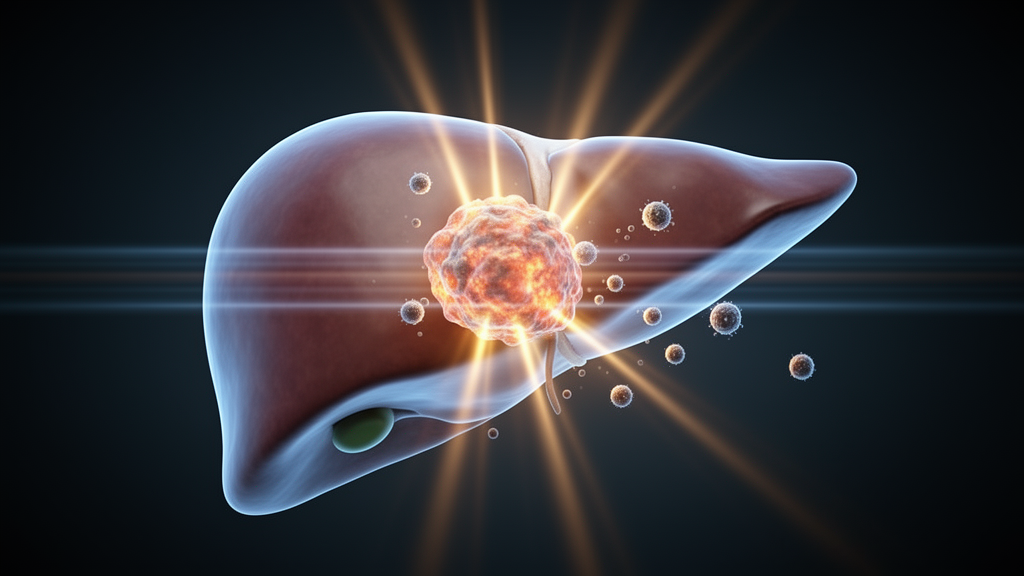
Liver transplantation remains the single most effective curative option for a carefully selected group of patients with hepatocellular carcinoma, the most common form of primary liver cancer. The operation solves two problems at once: it removes the tumor burden and it replaces the diseased organ that gave rise to the cancer in the first place. But a transplant is only as successful as the waiting period that precedes it. Patients can spend months or years on the waitlist, and during that time tumors can grow, spread, or drift outside the boundaries that make transplantation possible. To prevent that, clinicians rely on bridging therapies—locoregional treatments designed to hold the disease in check while the patient waits for a new liver. A new real-world analysis from the University of British Columbia, published in Transplant International, offers one of the most detailed looks yet at how two radiation-based bridging strategies perform when they are deployed in the messy, unfiltered environment of everyday clinical practice rather than in the pristine conditions of a clinical trial.
The study, led by a multidisciplinary team spanning surgery, radiology, and radiation oncology at Vancouver General Hospital, examined every adult patient who underwent liver transplantation for hepatocellular carcinoma between 2015 and 2023 and who had received either yttrium-90 transarterial radioembolization (TARE) or stereotactic body radiation therapy (SBRT) as their final radiation treatment before surgery. Fifty-six patients met the criteria: twenty-three had been treated with TARE and thirty-three with SBRT. Unlike many prospective trials that enroll only treatment-naïve patients with tightly controlled tumor characteristics, this cohort reflected the reality of modern transplant medicine, where patients often arrive having already been through multiple rounds of ablation, chemoembolization, or other locoregional therapies before radiation is even considered.
The choice between the two modalities was not random. A multidisciplinary Liver Tumor Board assigned each patient to a treatment based on tumor burden, anatomy, liver function, and prior treatment history. TARE, which delivers microscopic radioactive yttrium-90 spheres directly into the arterial supply of the tumor, was preferentially selected for patients with higher baseline tumor burden, larger maximum tumor diameter (3.8 versus 3.2 centimeters), and greater total tumor volume (29.6 versus 17.9 cubic centimeters). SBRT, which delivers precisely targeted high-dose radiation beams from outside the body in just a few fractions, was more frequently deployed as a salvage option after prior multimodal therapy—used in 79 percent of the SBRT group versus 35 percent of the TARE group—and was favored for lesions in anatomically challenging positions where other approaches were considered unsuitable.
The technical execution of SBRT in this study reflects the sophistication of modern radiation delivery. The gross tumor volume was defined as arterial-enhancing lesions with delayed washout on co-registered diagnostic imaging, with a 5-millimeter clinical target volume margin confined to the liver parenchyma. Motion management—critical in an organ that moves with every breath—was achieved through dynamic tumor tracking, respiratory gating, or internal target volume strategies tailored to each patient. Daily cone-beam CT guidance was used for cases that could not be gated or tracked. Planning strictly prioritized organ-at-risk constraints over target volume coverage, reflecting the delicate balance between eradicating cancer and preserving enough functional liver tissue to keep the patient transplantable. The median prescribed dose was 45 Gy in three to five fractions, corresponding to a median biologically effective dose of 112.5 Gy.
On post-treatment imaging, non-viable disease was reported in 52.2 percent of TARE-treated lesions and 57.6 percent of SBRT-treated lesions, while viable disease persisted in 30.4 percent and 15.2 percent respectively—a difference that did not reach statistical significance. Both approaches were well tolerated. Median MELD scores, a measure of liver disease severity used to prioritize transplant allocation, were 8 in both groups before treatment and changed by only one point afterward, indicating that neither modality imposed meaningful additional liver damage. There was one suspected case of radiation-induced liver disease following SBRT, presenting as hepatic decompensation. The median interval from final radiation to transplantation was comparable between groups—337 days for SBRT and 360 days for TARE—and post-transplant outcomes, including surgical complications and length of hospital stay, were similarly unremarkable across both pathways.
But the most striking findings emerged when the researchers compared what the imaging said before transplant with what the pathologist found when the explanted liver was examined under the microscope. Pathologic complete response—the gold standard for confirming that every cancer cell has been eradicated—was observed in 36.4 percent of SBRT-treated lesions and 21.7 percent of TARE-treated lesions. While the SBRT figure was numerically higher, the authors caution that this likely reflects a cumulative treatment effect from prior therapies and a lower baseline tumor burden in that group rather than true superiority of one modality over the other. More concerning was the degree of radiographic-pathologic discordance: nearly identical between the two groups at roughly 40 percent. Among lesions that imaging had classified as non-viable, only 58 percent actually demonstrated complete necrosis on explant pathology.
This discordance has profound implications. Cross-sectional imaging in the post-radiation setting is fundamentally limited by treatment-induced fibrosis and inflammatory changes that can mask residual viable tumor. The LI-RADS Treatment Response algorithm, the standard framework for assessing post-treatment imaging in liver cancer, showed an overall predictive odds ratio of 4.22 for identifying complete necrosis, but neither the SBRT nor the TARE subgroup individually demonstrated a statistically significant association between radiographic classification and pathologic viability. Similarly, there was no meaningful correlation between radiographic and pathologic total tumor volume across the cohort, although the SBRT group did show a stronger Pearson correlation (r = 0.76) than the TARE group (r = −0.07), likely a reflection of the lower overall tumor burden in that cohort rather than a true difference in imaging accuracy.
Alpha-fetoprotein, the most widely used serum biomarker for hepatocellular carcinoma, fared no better as a predictor of pathologic complete response. In multivariable analysis adjusting for baseline AFP, tumor burden, and Milan status, the AFP log-ratio was not associated with pathologic complete response (odds ratio 1.13, p = 0.81). This reinforces growing concerns that AFP kinetics may be an imperfect surrogate for tumor eradication in the post-radiation setting, where the biology of residual disease may not track with conventional biomarker behavior. The authors suggest that emerging tools such as circulating tumor DNA and radiomics—the extraction of quantitative features from medical images—might eventually provide more granular data to improve prediction of tumor burden and recurrence before and after transplantation.
Despite the limitations of pre-transplant assessment, post-transplant outcomes were favorable across both groups over a comparable median follow-up of approximately three years. Recurrence-free survival at one and three years was 91.3 percent and 77.1 percent for TARE and 93.9 percent and 76.7 percent for SBRT respectively. In an adjusted Cox model, treatment modality was not associated with post-transplant recurrence (hazard ratio 1.49, p = 0.56). Overall survival at one and three years was similarly high with no significant differences between groups. These figures suggest that, regardless of which radiation modality is chosen as the final bridging treatment, patients who make it to transplantation can expect excellent long-term outcomes.
The study’s real-world per-lesion pathologic complete response rates sit below the figures reported in prospective trial data—for SBRT, the 36.4 percent rate is lower than the 58.3 percent reported in trials that exclusively evaluated treatment-naïve candidates, and for TARE, the 21.7 percent rate aligns with national registry data reporting an overall rate of 33.6 percent with center-level variation ranging from 0 to 50 percent. These differences likely reflect variations in patient selection, baseline tumor burden, prior treatment exposure, and definitions of pathologic response. The authors acknowledge the limitations of their retrospective design, modest sample size, and inherent treatment selection bias, as well as the absence of waitlist dropout data that would allow an intention-to-treat analysis. Nevertheless, the central message is clear: both TARE and SBRT are safe and feasible bridging strategies within contemporary transplant pathways for hepatocellular carcinoma, but clinicians must resist the temptation to overinterpret post-radiation imaging, because what the scan shows and what the pathologist finds are often two very different things.
Subject of Research: Bridging radiation therapies for hepatocellular carcinoma before liver transplantation
Article Title: Stereotactic body radiation therapy and radioembolization as bridging strategies to liver transplantation: a retrospective real-world analysis
Article References: Colucci, N., Webb, M. A., Khalid, M. U., Giannou, A. D., Yang, Y., Yan, T. D., Ma, L. I. J., Dhatt, R., Chartier-Plante, S., Kim, P. T. W., Oldani, G., Segedi, M., Ma, R. M. K., Ho, S. G. F., Dunne, E. M., & Bleszynski, M. S. (2026). Stereotactic body radiation therapy and radioembolization as bridging strategies to liver transplantation: a retrospective real-world analysis. Transplant International, 39, Article 17047. https://doi.org/10.3389/ti.2026.17047
Image Credits: AI Generated
Keywords: hepatocellular carcinoma, liver transplantation, SBRT, radioembolization, yttrium-90, bridging therapy, radiographic-pathologic discordance, LI-RADS, MELD score, alpha-fetoprotein, locoregional therapy, radiation oncology
Cite Scienmag News
Nathaniel Bowman. (October 15, 2026). Radiation Before Transplant: Two Bridging Therapies Prove Safe but Imaging Falls Short in Liver Cancer. Scienmag. https://scienmag.com/radiation-before-transplant-two-bridging-therapies-prove-safe-but-imaging-falls-short-in-liver-cancer/
Nathaniel Bowman. "Radiation Before Transplant: Two Bridging Therapies Prove Safe but Imaging Falls Short in Liver Cancer." Scienmag, 15 October 2026, https://scienmag.com/radiation-before-transplant-two-bridging-therapies-prove-safe-but-imaging-falls-short-in-liver-cancer/. Accessed 15 October 2026.
Nathaniel Bowman. "Radiation Before Transplant: Two Bridging Therapies Prove Safe but Imaging Falls Short in Liver Cancer." Scienmag. October 15, 2026. https://scienmag.com/radiation-before-transplant-two-bridging-therapies-prove-safe-but-imaging-falls-short-in-liver-cancer/