

Thursday, July 16, 2026
Science
No Result
View All Result
  • Login
  • HOME
  • SCIENCE NEWS
  • CONTACT US
  • HOME
  • SCIENCE NEWS
  • CONTACT US
No Result
View All Result
Scienmag
No Result
View All Result
Home Science News Medicine

Queen Odor Mediates Reproductive Suppression in Eusocial Mammals

July 16, 2026
in Medicine, Technology and Engineering
Reading Time: 2 mins read
0
Queen Odor Mediates Reproductive Suppression in Eusocial Mammals

Queen Odor Mediates Reproductive Suppression in Eusocial Mammals

65
SHARES
587
VIEWS
Share on FacebookShare on Twitter
ADVERTISEMENT

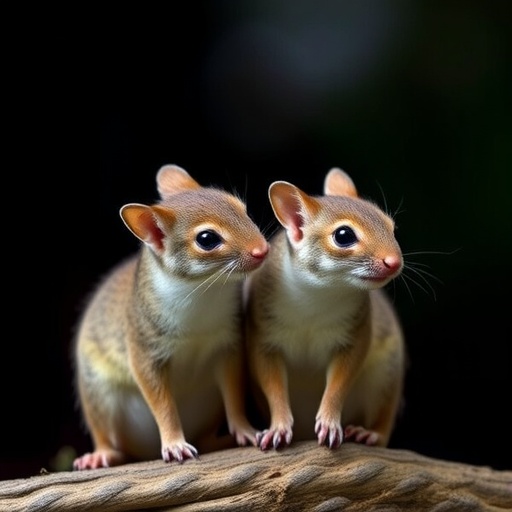
Naked mole-rats have long puzzled biologists with their striking eusocial structure, where most adults remain reproductively suppressed while a queen controls the colony’s future. Now, a new study identifies a chemical “queen odour” that links social status to endocrine control, revealing a mammalian analogue to insect queen pheromones.

The molecule, termed IPM, is enriched by the queen and acts as the key mediator of reproductive suppression in non-breeding females. When IPM is present, circulating prolactin rises while progesterone is suppressed, locking the colony into a stable reproductive hierarchy characterized by reduced conflict and maintained group cohesion.

Crucially, the team connects this behavioural outcome to the brain. Using multiple approaches—including non-invasive functional ultrasound imaging (fUSI)—they show that IPM provokes strong activation of olfactory neurons and central neural circuits. This provides a neural substrate for how a chemical cue can trigger colony-wide physiological change, rather than relying on social learning or passive association.

The experiments also clarify sensory routing. Ablating olfaction abolishes aggression initiation and lowers prolactin levels, directly tying IPM detection to reproductive suppression. While the findings are consistent with sensing through the main olfactory epithelium, the authors note that the vomeronasal system may still contribute.

Queen removal normally destabilizes colonies, leading to aggression, reproductive competition, prolactin decline, and, in extreme cases, mortality. Yet when IPM is added to queenless bedding, the colony remains stable for months. During this period, fecal progesterone metabolite levels stay low, indicating sustained ovarian quiescence alongside elevated prolactin.

The study also addresses a longstanding paradox: transferring soiled bedding and urine from parent colonies fails to maintain suppression in isolated individuals. The authors propose that IPM’s chemistry helps explain this discrepancy. As a long-chain fatty acid ester with low volatility, IPM may persist within the colony environment but fail to travel effectively over distance or survive transfer pathways that preferentially carry other chemicals.

Comparative work extends beyond naked mole-rats. IPM is detected in breeding females of four additional Fukomys species. Although reproductive suppression mechanisms may differ across species, the presence of a similar queen-linked odorant suggests convergent chemical strategies for managing reproductive skew in eusocial mammals.

Overall, the research reframes reproduction control as a chemosensory-to-endocrine pathway: IPM activates olfactory–hypothalamic signalling, elevating prolactin and inhibiting GnRH release. This “social hormone” model offers a new principle for social evolution—chemical cues can synchronize behaviour and physiology at the scale of an entire mammal colony.

Subject of Research: Reproductive suppression and social hierarchy in eusocial mammals (naked mole-rats and related Fukomys species)

Article Title: A queen odour mediates reproductive suppression in a eusocial mammal

Article References:

Khallaf, M.A., Hart, D.W., Luo, W. et al. A queen odour mediates reproductive suppression in a eusocial mammal.
Nature (2026). https://doi.org/10.1038/s41586-026-10772-5

Image Credits: AI Generated

DOI: https://doi.org/10.1038/s41586-026-10772-5

Keywords: IPM; queen odour; reproductive suppression; prolactin; GnRH; olfaction; eusociality; functional ultrasound imaging; Fukomys

Tags: Chemical Pheromones in MammalsColony Stability and AggressionEndocrine Control of ReproductionEusocial MammalsFunctional Ultrasound ImagingNaked Mole-RatsOlfactory Neural CircuitsQueen OdorReproductive Hierarchy MechanismsReproductive SuppressionSocial Hierarchy RegulationVomeronasal System Role
Share26Tweet16
Previous Post

Cretaceous Bangong–Nujiang closure sustained Tibetan mountain growth through shortening

Next Post

Great Barrier Reef Acropora deaths tied to climate swings and human pressures

Related Posts

Microglia Shape Developing Cortical Blood Vessels via PD-1 Signaling
Medicine

Microglia Shape Developing Cortical Blood Vessels via PD-1 Signaling

July 16, 2026
Brown fat microRNAs mapping shows secreted signaling network between organs
Medicine

Brown fat microRNAs mapping shows secreted signaling network between organs

July 16, 2026
Hasanuddin University Study Shows Bacterial Cellulose for High-Performance Energy Storage
Technology and Engineering

Hasanuddin University Study Shows Bacterial Cellulose for High-Performance Energy Storage

July 16, 2026
Social Networks Shape Intergenerational Support Among Rural Left-Behind Seniors in China
Medicine

Social Networks Shape Intergenerational Support Among Rural Left-Behind Seniors in China

July 16, 2026
RModBlock antisense oligonucleotides enable universal, efficient inhibition of RNA modifications
Medicine

RModBlock antisense oligonucleotides enable universal, efficient inhibition of RNA modifications

July 16, 2026
Alzheimer’s Disease Cell Signatures Found Shared Across Diverse Population Groups
Medicine

Alzheimer’s Disease Cell Signatures Found Shared Across Diverse Population Groups

July 16, 2026
Next Post
Great Barrier Reef Acropora deaths tied to climate swings and human pressures

Great Barrier Reef Acropora deaths tied to climate swings and human pressures

  • Mothers who receive childcare support from maternal grandparents show more

    Mothers who receive childcare support from maternal grandparents show more parental warmth, finds NTU Singapore study

    27656 shares
    Share 11059 Tweet 6912
  • University of Seville Breaks 120-Year-Old Mystery, Revises a Key Einstein Concept

    1061 shares
    Share 424 Tweet 265
  • Bee body mass, pathogens and local climate influence heat tolerance

    682 shares
    Share 273 Tweet 171
  • Researchers record first-ever images and data of a shark experiencing a boat strike

    546 shares
    Share 218 Tweet 137
  • Groundbreaking Clinical Trial Reveals Lubiprostone Enhances Kidney Function

    531 shares
    Share 212 Tweet 133
Science

Embark on a thrilling journey of discovery with Scienmag.com—your ultimate source for cutting-edge breakthroughs. Immerse yourself in a world where curiosity knows no limits and tomorrow’s possibilities become today’s reality!

RECENT NEWS

  • Microglia Shape Developing Cortical Blood Vessels via PD-1 Signaling
  • Brown fat microRNAs mapping shows secreted signaling network between organs
  • Wet Harzburgite and Dry Basalt Slabs Maintain Ongoing Seismic Stagnation
  • Great Barrier Reef Acropora deaths tied to climate swings and human pressures

Categories

  • Agriculture
  • Anthropology
  • Archaeology
  • Athmospheric
  • Biology
  • Biotechnology
  • Blog
  • Bussines
  • Cancer
  • Chemistry
  • Climate
  • Earth Science
  • Editorial Policy
  • Marine
  • Mathematics
  • Medicine
  • Pediatry
  • Policy
  • Psychology & Psychiatry
  • Science Education
  • Social Science
  • Space
  • Technology and Engineering

Subscribe to Blog via Email

Enter your email address to subscribe to this blog and receive notifications of new posts by email.

Join 5,146 other subscribers

© 2025 Scienmag - Science Magazine

Welcome Back!

Login to your account below

Forgotten Password?

Retrieve your password

Please enter your username or email address to reset your password.

Log In
No Result
View All Result
  • HOME
  • SCIENCE NEWS
  • CONTACT US

© 2025 Scienmag - Science Magazine

Discover more from Science

Subscribe now to keep reading and get access to the full archive.

Continue reading
