


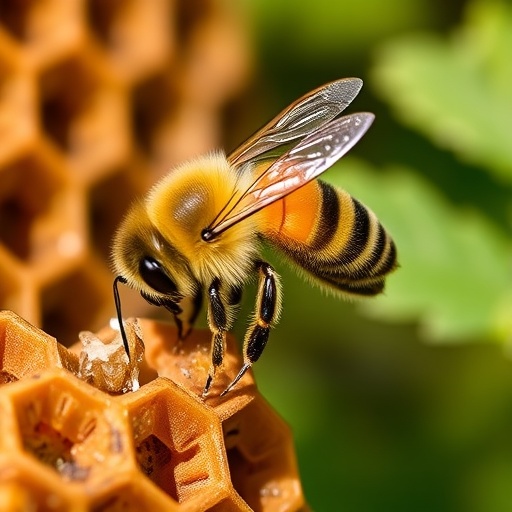
Honey bee colonies are increasingly pressured by temperature extremes that disrupt normal physiology and threaten survival. A new study suggests that targeted nutritional strategies—specifically probiotics and prebiotics—may help honey bees better withstand thermal stress by stabilizing oxidative stress responses.
Researchers investigated how dietary additives influence bee resilience when exposed to damaging temperature conditions. The work focuses on whether these supplements can buffer declines in survival and maintain key aspects of cellular defense during heat-related challenges.
Thermal stress in insects often triggers an imbalance between reactive oxygen species and antioxidant defenses. When this balance tilts, oxidative damage accumulates, impairing vital processes and reducing survival. By examining antioxidant enzyme activity, the study links dietary intervention to measurable biochemical protection.
Probiotics and prebiotics are known to shape gut-associated microbial communities and metabolic outputs. In honey bees, this can translate into changes in how the host handles stress, potentially influencing gut health, nutrient availability, and systemic stress signaling.
The findings indicate that bees receiving prebiotics and probiotics showed improved survival under temperature-related stress compared with untreated groups. In parallel, antioxidant enzyme activity remained more favorable, consistent with reduced oxidative harm during exposure.
The research therefore supports a mechanistic hypothesis: nutritional microbiome modulation can improve the antioxidant capacity of the bees, making them less vulnerable to the physiological cascade triggered by thermal extremes.
Beyond survival, the study underscores the potential of low-cost dietary supplementation as an intervention strategy for beekeepers facing climate-driven heat waves. Such approaches could help maintain colony stability during periods when natural forage is insufficient or conditions are harsh.
The results also highlight the importance of integrating biological stress physiology with applied husbandry. If dietary supplements can reliably strengthen antioxidant defenses, they may offer a practical tool to reduce colony losses linked to environmental temperature stress.
The article is published in PLOS ONE and is assigned the DOI 10.1371/journal.pone.0352149, with publication dated 15-Jul-2026.
Cite Scienmag News
Drew Townsend. (July 15, 2026). Prebiotics and Probiotics Help Honeybees Survive Temperature Stress Better. Scienmag. https://scienmag.com/prebiotics-and-probiotics-help-honeybees-survive-temperature-stress-better/
Drew Townsend. "Prebiotics and Probiotics Help Honeybees Survive Temperature Stress Better." Scienmag, 15 July 2026, https://scienmag.com/prebiotics-and-probiotics-help-honeybees-survive-temperature-stress-better/. Accessed 4 September 2026.
Drew Townsend. "Prebiotics and Probiotics Help Honeybees Survive Temperature Stress Better." Scienmag. July 15, 2026. https://scienmag.com/prebiotics-and-probiotics-help-honeybees-survive-temperature-stress-better/


