


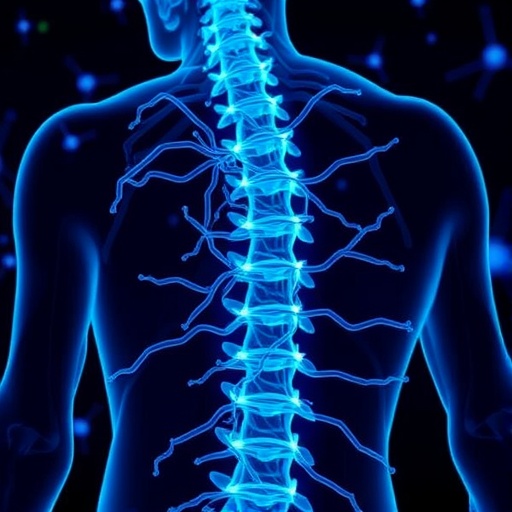
Spinal cord injuries affect an estimated 15–20 million people worldwide, frequently causing permanent loss of movement, sensation, and independence. Damage in the cervical region of the spinal cord can be particularly severe because it interrupts neural pathways that coordinate the diaphragm, the primary muscle of breathing. Although emergency medicine and rehabilitation have improved survival and quality of life, no approved treatment can yet rebuild the neurons and synaptic connections destroyed by trauma. A new study from Gladstone Institutes suggests that human stem cell–derived spinal interneurons may one day help restore injured neural circuits.
Published in Science Translational Medicine, the research demonstrates that transplanted human V2a interneurons survived in the injured spinal cords of adult rats, integrated with the animals’ existing neural networks, and improved their ability to respond to respiratory stress. Interneurons are specialized cells that communicate between other neurons, helping coordinate complex functions such as movement and breathing. The findings provide a proof of principle that a defined population of human neurons can be manufactured, transplanted, and functionally incorporated into a damaged spinal circuit.
The research team focused on V2a interneurons, a class of spinal relay cells involved in motor control. These neurons participate in the communication pathways that connect the brainstem with the spinal networks responsible for coordinated muscle activity. Earlier studies had implicated V2a interneurons in recovery after traumatic spinal cord injury, including the neural circuits that regulate breathing and walking. The Gladstone researchers therefore reasoned that replacing some of these cells could strengthen damaged pathways rather than merely compensating for their loss through rehabilitation.
To produce the cells, the scientists developed a differentiation process that converts human induced pluripotent stem cells into transplantable spinal interneurons. Induced pluripotent stem cells can be generated by reprogramming mature adult cells into a flexible, stem-like state capable of producing many specialized cell types. The team refined molecular signals that guide these cells toward a V2a identity, then characterized the resulting neurons to confirm their developmental and functional properties. The cells were also prepared for cryopreservation, allowing them to be frozen, stored, thawed, and potentially standardized for future clinical manufacturing.
The work builds on nearly a decade of collaboration involving Lana Zholudeva, Michael Lane, Shelly Sakiyama-Elbert, Todd McDevitt, and other researchers. Early experiments used mouse embryonic stem cells to generate defined spinal neuron populations, while later efforts moved toward human induced pluripotent stem cell–derived therapies. According to the researchers, establishing a reliable recipe for producing the desired neurons required extensive trial and error. Creating a reproducible population that can be stored and administered later is considered essential for translating a cell-based treatment into a human clinical trial.
The researchers transplanted the human V2a interneurons into adult rats one week after cervical spinal cord injury. This region was selected because injuries to the neck can disrupt the respiratory circuitry that links the brainstem to the diaphragm. Two months after transplantation, the cells had survived within the hostile environment of the injured spinal cord and formed connections with neighboring host neurons. When the transplant region was experimentally activated, the animals showed increased diaphragm activity. Conversely, stimulation of the rats’ own brainstem neurons activated the transplanted human cells, indicating that the new neurons were receiving signals from the brain-to-spinal cord pathway.
Under ordinary conditions, the transplanted animals displayed only subtle differences in breathing compared with untreated injured rats. The distinction became much clearer when the animals were exposed to low oxygen or elevated carbon dioxide, challenges that force the respiratory system to increase its workload. Most untreated rats developed signs of respiratory failure under these conditions. In contrast, approximately three-quarters of the rats that received the V2a interneurons successfully tolerated the challenges. The result suggests that the transplanted cells may not restore normal breathing completely, but could provide additional functional reserve when the respiratory system is under stress.
The investigators also examined why some transplants appeared to perform better than others. Their analysis identified a subset of transplanted V2a interneurons that seemed especially likely to connect with the host breathing circuitry. These cells may possess molecular or anatomical features that make them more effective at forming synapses with surviving neurons. Understanding this variation could allow future therapies to be enriched for the most therapeutically useful cells, improving consistency and reducing the number of cells required for transplantation.
The study does not yet establish that the approach is safe or effective in people. Before human testing, the researchers must evaluate the therapy in larger animal models, examine long-term survival and circuit integration, and determine whether transplantation can help when treatment is delayed by months or years. They also need to investigate potential risks, including abnormal electrical activity, inappropriate connections, immune responses, and unintended cell behavior. The team is now exploring whether related spinal interneuron populations can be used to repair circuits controlling the arm and hand, functions that many people with cervical spinal cord injury consider their highest priority.
The findings mark a significant step in the effort to move spinal interneuron therapies from experimental stem cell models toward clinical translation. Rather than attempting to regenerate every damaged structure in the spinal cord, the strategy targets a specific circuit and supplies cells designed to restore missing communication links. If the results can be reproduced and made reliable across different injury patterns, engineered human neurons could eventually become part of a broader regenerative toolkit for spinal cord injury. For now, however, the work remains an early-stage demonstration in rats that carefully selected human cells can survive, form synaptic connections, and improve the physiological resilience of a damaged respiratory network.
News Publication Date: 5-Aug-2026
Web References: Gladstone Institutes: https://gladstone.org/ ; Lana Zholudeva, PhD: https://gladstone.org/people/lana-zholudeva
References: Science Translational Medicine, DOI: https://doi.org/10.1126/scitranslmed.aea7461
Cite Scienmag News
Cassandra Pierce. (August 6, 2026). Engineered Human Neurons Restore Damaged Spinal Cord Circuits. Scienmag. https://scienmag.com/engineered-human-neurons-restore-damaged-spinal-cord-circuits/
Cassandra Pierce. "Engineered Human Neurons Restore Damaged Spinal Cord Circuits." Scienmag, 6 August 2026, https://scienmag.com/engineered-human-neurons-restore-damaged-spinal-cord-circuits/. Accessed 3 September 2026.
Cassandra Pierce. "Engineered Human Neurons Restore Damaged Spinal Cord Circuits." Scienmag. August 6, 2026. https://scienmag.com/engineered-human-neurons-restore-damaged-spinal-cord-circuits/


