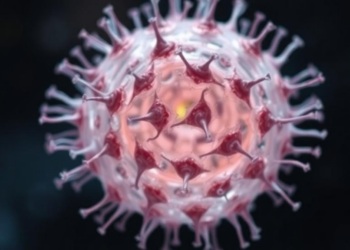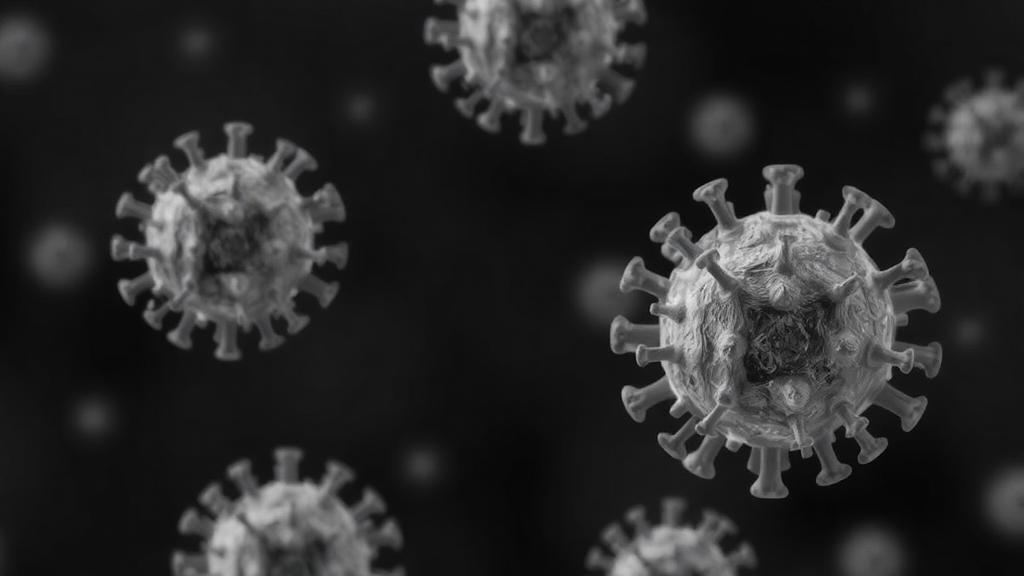
Portland State University’s eXtreme Virus Lab has secured a three-year, $1 million grant from the National Science Foundation to pursue one of the strangest stories in virology: cruciviruses, a group of viruses whose genomes appear to have been stitched together from both RNA and DNA virus ancestors.
DNA viruses, such as monkeypox, were long thought to evolve completely separately from RNA viruses, such as influenza. That assumption began to unravel in 2012, when the lab led by biology professor Ken Stedman became the first to publish findings on cruciviruses, a newly recognized group that appears to have arisen through an unprecedented recombination between RNA and DNA viruses. Since then, hundreds of cruciviruses have been identified in environmental samples ranging from Antarctic lake water to soil collected on Portland State’s own campus.
“The more we looked into it, the more complicated it got,” Stedman said. “We all thought RNA and DNA viruses had completely different origins, but with cruciviruses, we have evidence that they’re interacting with each other. We want to try and figure out how frequently this bouncing back-and-forth between different viruses happens and can we catch it in the act.”
The new grant centers on assessing patterns of horizontal gene transfer among cruciviruses, their RNA virus relatives, and their hosts. Stedman’s team hopes the work will illuminate not only the origin of cruciviruses and the organisms they infect, but also broader patterns of virus emergence and evolution. Because cruciviruses demonstrate that RNA and DNA virus lineages can exchange genetic material, the researchers argue that understanding these interactions in a non-medical context could inform thinking about whether similar hybridization events could ever matter for human health.
“If we could understand how RNA and DNA viruses are interacting with each other, this might also help us think about potential new pandemics,” Stedman said. “Having a combination between the two would be really scary, so we want to know something about how it happens in a non-medical context so that we could then think about whether it’s likely that something like this could happen.”
Ignacio “Nacho” de la Higuera, a research associate who joined the lab in 2016 as a postdoctoral researcher, said one of the biggest limitations of the field is that scientists possess only the viruses’ genetic sequences, not physical viral particles. “We have many sequences, but they are so different from each other that there’s still a lot that we don’t know,” he said. “How close can we get to know what’s happening at the environmental level? We want to study the population of DNA viruses, cruciviruses and the related RNA viruses within the same sample and see if we can find some recent transfer event.”
Equally fundamental is the question of what cruciviruses infect, which remains unknown. The group is developing new techniques to travel to environments where cruciviruses are known to occur and hunt for host cells, which they suspect are eukaryotic microbes, single-celled organisms whose cells contain a nucleus. “Having a host means you can then look at the virus and what the virus is doing inside the host, and actually start to learn a lot more about how it’s working,” Stedman said.
Methodologically, the team will build evolutionary trees from viral sequences and apply novel machine learning algorithms to model the evolutionary history of cruciviruses. A former high school intern in the lab developed an artificial intelligence algorithm that distinguishes between the types of capsids, the outer protein shells that enclose and protect viral genetic material, found in RNA viruses compared with those found in cruciviruses. De la Higuera noted that cruciviruses present the only known example of a capsid protein capable of enclosing both RNA and DNA viral genomes.
Those capsid findings may reach beyond basic virology. “One of the things that we have learned from these machine learning experiments is that there are different ways that nature has shaped these capsids to either package DNA or RNA,” de la Higuera said. “Capsids are used in biomedicine to deliver gene therapy and vaccines to cells in our body, so this research could potentially help us design better tools to efficiently package DNA or RNA.”
Beyond the laboratory, the grant will engage high school, undergraduate and graduate researchers, and the lab plans to expand its outreach on virus evolution to rural communities through virtual programs developed in collaboration with the Oregon Museum of Science and Industry. De la Higuera is also developing a course-based undergraduate research experience designed to bring this line of research into more classrooms, extending the hunt for cruciviruses and their hosts to a new generation of scientists.
Subject of Research: Evolutionary origins and host discovery of cruciviruses, hybrid RNA-DNA viruses
Article Title: Catching virus evolution in the act: PSU's Extreme Virus Lab secures $1M NSF grant
Article References: Catching virus evolution in the act: PSU's Extreme Virus Lab secures $1M NSF grant. Original publication (Bibliographic details unavailable.)
Image Credits: AI Generated
DOI: Not provided
Keywords: cruciviruses, virus evolution, horizontal gene transfer, RNA viruses, DNA viruses, capsids, Portland State University, National Science Foundation, virus hosts, machine learning, gene therapy, virus emergence
Cite Scienmag News
Gavin Prescott. (October 28, 2026). Portland State virologists win $1 million NSF grant to trace crucivirus evolution. Scienmag. https://scienmag.com/portland-state-virologists-win-1-million-nsf-grant-to-trace-crucivirus-evolution/
Gavin Prescott. "Portland State virologists win $1 million NSF grant to trace crucivirus evolution." Scienmag, 28 October 2026, https://scienmag.com/portland-state-virologists-win-1-million-nsf-grant-to-trace-crucivirus-evolution/. Accessed 28 October 2026.
Gavin Prescott. "Portland State virologists win $1 million NSF grant to trace crucivirus evolution." Scienmag. October 28, 2026. https://scienmag.com/portland-state-virologists-win-1-million-nsf-grant-to-trace-crucivirus-evolution/