

Friday, July 31, 2026
Science
No Result
View All Result
  • Login
  • HOME
  • SCIENCE NEWS
  • CONTACT US
  • HOME
  • SCIENCE NEWS
  • CONTACT US
No Result
View All Result
Scienmag
No Result
View All Result
Home Science News Medicine

Polyvinyl chloride boosts liver cancer radioresistance by blocking CD8⁺ T cells

July 10, 2026
in Medicine
Reading Time: 2 mins read
0
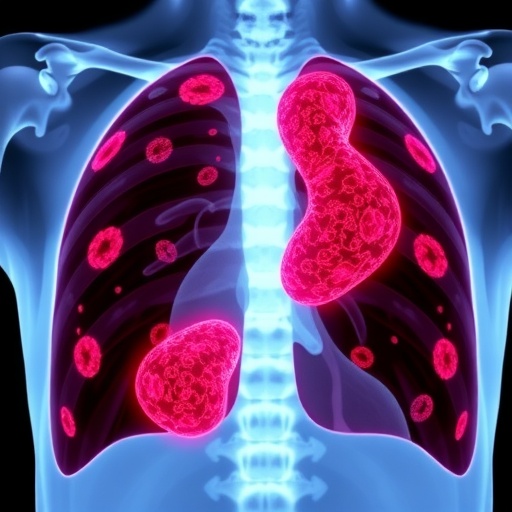
Polyvinyl chloride boosts liver cancer radioresistance by blocking CD8⁺ T cells

Polyvinyl chloride boosts liver cancer radioresistance by blocking CD8⁺ T cells

65
SHARES
587
VIEWS
Share on FacebookShare on Twitter
ADVERTISEMENT

In a groundbreaking study that could have significant implications for cancer treatment, researchers have uncovered a surprising link between polyvinyl chloride (PVC) exposure and increased radioresistance in hepatocellular carcinoma (HCC), a primary form of liver cancer. The investigation, led by Zhang, H., Lu, Y., Xiong, H., and colleagues, sheds new light on how environmental factors might interfere with the immune system’s ability to respond effectively to radiation therapy.

Radiotherapy is a cornerstone treatment for many cancer types, including HCC, relying heavily on the immune system’s activation—particularly that of CD8⁺ T cells, which play a vital role in targeting and killing tumor cells post-irradiation. However, the new study reveals that PVC, a ubiquitous synthetic plastic polymer, can markedly inhibit the differentiation of these critical immune cells during radiotherapy.

The researchers conducted extensive in vitro and in vivo experiments to simulate the tumor microenvironment and assess the impact of PVC on immune cell behavior. Their data showed that PVC exposure leads to a significant reduction in the proportion of CD8⁺ T cells capable of differentiating into their cytotoxic forms, which are essential for mounting an effective anti-tumor response. This inhibition contributes directly to enhanced radioresistance in HCC cells, effectively enabling tumors to survive and grow despite irradiation.

Mechanistically, the study identifies alterations in key signaling pathways responsible for T cell differentiation, including interferon-gamma (IFN-γ) and T-bet transcription factor activities. PVC appears to interfere with these signals, dampening the immune system’s ability to modulate its response to radiation-induced stress in the tumor environment. This immunosuppressive effect represents a novel mechanism by which a common environmental pollutant can impair cancer treatment outcomes.

Notably, the implications extend beyond the laboratory; the findings raise important public health considerations regarding chronic PVC exposure and its potential to undermine the efficacy of cancer therapies. Given the widespread use of PVC in medical supplies, building materials, and consumer products, these insights highlight a hidden challenge in oncology, where the intersection of environmental toxicology and immunotherapy is increasingly relevant.

The study also opens new avenues for therapeutic intervention. If the inhibitory effects of PVC on CD8⁺ T cell differentiation can be counteracted, patients undergoing radiotherapy for HCC might experience improved treatment response rates. Potential strategies could include the development of adjuvant therapies aimed at restoring immune cell functionality or reducing environmental PVC exposure during cancer management.

Overall, this research marks a significant advance in our understanding of the complex interactions between environmental pollutants and cancer treatment. By elucidating the role of PVC in promoting tumor radioresistance through immune suppression, Zhang and colleagues provide a critical foundation for future studies aimed at optimizing radiotherapy efficacy in the face of environmental challenges. As cancer care moves toward increasingly personalized and multifaceted approaches, recognizing and mitigating such external factors could prove vital in improving patient outcomes.


Subject of Research: Polyvinyl chloride’s impact on radiotherapy and immune response in hepatocellular carcinoma

Article Title: Polyvinyl chloride promotes radioresistance in hepatocellular carcinoma by inhibiting radiotherapy-induced CD8⁺ T cell differentiation

Article References:

Zhang, H., Lu, Y., Xiong, H. et al. Polyvinyl chloride promotes radioresistance in hepatocellular carcinoma by inhibiting radiotherapy-induced CD8⁺ T cell differentiation. Nat Commun (2026). https://doi.org/10.1038/s41467-026-75415-9

Image Credits: AI Generated

Tags: cancer immunotherapyCD8+ T cell immune responseenvironmental toxins and cancer progressionhepatocellular carcinomaimmune cell differentiation inhibitionimmune suppression in cancerliver cancer treatmentplastic exposure and tumor immune evasionplastic polymer impact on immunityPVC environmental exposureradiotherapy resistance mechanismstumor microenvironment
Share26Tweet16
Previous Post

Disrupted Brain Signal Balance Tied to Symptoms and Cognition in Schizophrenia

Next Post

Bacteriophages Enable Next-Gen Smart Pathogen Detection Sensors

Related Posts

Representations of the intrinsic value of information in mouse orbitofrontal cortex
Medicine

Representations of the intrinsic value of information in mouse orbitofrontal cortex

July 30, 2026
Ferroptotic propagation: from single-cell execution to tissue-scale death programs
Medicine

Ferroptotic propagation: from single-cell execution to tissue-scale death programs

July 30, 2026
Residential proximity to major roadways and prevalent diabetes in older adults: a cross-sectional study based on CLHLS
Medicine

Residential proximity to major roadways and prevalent diabetes in older adults: a cross-sectional study based on CLHLS

July 30, 2026
Overestimations in the cyclization efficiency of small, restriction enzyme-digested DNA fragments
Medicine

Overestimations in the cyclization efficiency of small, restriction enzyme-digested DNA fragments

July 30, 2026
Sulfated polysaccharides target RANK Lys97 to inhibit osteoclast differentiation and reverse osteoporosis
Medicine

Sulfated polysaccharides target RANK Lys97 to inhibit osteoclast differentiation and reverse osteoporosis

July 30, 2026
Regulation of RNA transcript elongation in metazoans and its relevance to disease
Medicine

Regulation of RNA transcript elongation in metazoans and its relevance to disease

July 30, 2026
Next Post
Bacteriophages Enable Next-Gen Smart Pathogen Detection Sensors

Bacteriophages Enable Next-Gen Smart Pathogen Detection Sensors

  • Mothers who receive childcare support from maternal grandparents show more

    Mothers who receive childcare support from maternal grandparents show more parental warmth, finds NTU Singapore study

    27656 shares
    Share 11059 Tweet 6912
  • University of Seville Breaks 120-Year-Old Mystery, Revises a Key Einstein Concept

    1061 shares
    Share 424 Tweet 265
  • Bee body mass, pathogens and local climate influence heat tolerance

    682 shares
    Share 273 Tweet 171
  • Researchers record first-ever images and data of a shark experiencing a boat strike

    546 shares
    Share 218 Tweet 137
  • Groundbreaking Clinical Trial Reveals Lubiprostone Enhances Kidney Function

    531 shares
    Share 212 Tweet 133
Science

Embark on a thrilling journey of discovery with Scienmag.com—your ultimate source for cutting-edge breakthroughs. Immerse yourself in a world where curiosity knows no limits and tomorrow’s possibilities become today’s reality!

RECENT NEWS

  • Ancient DNA reveals Ice Age humans preferred female mammoths
  • Public research and development money unlocks private investment and lasting economic growth
  • Satellite mapping reveals global inequities in lake water quality: over one-third of lakes fail to meet good water quality standards
  • One million euros allocated to six EUniWell study programmes on the way towards the Joint European Degree Label

Categories

  • Agriculture
  • Anthropology
  • Archaeology
  • Athmospheric
  • Biology
  • Biotechnology
  • Blog
  • Bussines
  • Cancer
  • Chemistry
  • Climate
  • Earth Science
  • Editorial Policy
  • Marine
  • Mathematics
  • Medicine
  • Pediatry
  • Policy
  • Psychology & Psychiatry
  • Science Education
  • Social Science
  • Space
  • Technology and Engineering

Subscribe to Blog via Email

Success! An email was just sent to confirm your subscription. Please find the email now and click 'Confirm Follow' to start subscribing.

Join 5,147 other subscribers

© 2025 Scienmag - Science Magazine

Welcome Back!

Login to your account below

Forgotten Password?

Retrieve your password

Please enter your username or email address to reset your password.

Log In
No Result
View All Result
  • HOME
  • SCIENCE NEWS
  • CONTACT US

© 2025 Scienmag - Science Magazine
