


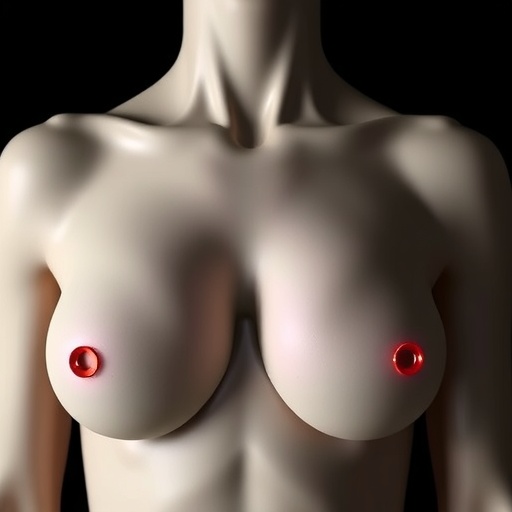
In a groundbreaking development presented at the 15th European Breast Cancer Conference (EBCC15) in Barcelona, new evidence has emerged that may transform the approach to breast reconstruction in breast cancer survivors who undergo radiation therapy. Breast cancer patients who require mastectomy frequently opt for reconstructive surgery involving breast implants. However, a well-known and debilitating complication of this procedure is capsular contracture—an aggressive fibrosis process where the body forms dense scar tissue around the implant. This is particularly problematic in patients subjected to radiotherapy, increasing the incidence of painful, hardened breasts that distort their appearance and frequently necessitate additional corrective surgeries.
The newly published observational study sheds light on the potential benefits of polyurethane-coated breast implants as compared to standard silicone implants without such coating. Polyurethane, a polymer with a spongy texture, forms a unique outer shell around these specialized implants. This structural modification appears to substantially mitigate the scarring response that leads to capsular contracture, offering improved long-term surgical outcomes for women receiving adjuvant radiotherapy.
Conducted jointly by experts from leading European medical institutions including the Medical University of Vienna and the University Hospital Basel, the study retrospectively analyzed data from 1,455 women diagnosed with breast cancer between 2016 and 2024. All participants underwent mastectomy followed by immediate breast implant reconstruction and subsequent radiotherapy. Within the cohort, 475 women received polyurethane-coated implants, while 980 were implanted with traditional silicone devices lacking this specialized coating.
Over an extended postoperative follow-up period ranging from two and a half to three years, the incidence of capsular contracture and related complications were meticulously tracked. Results demonstrated a remarkable reduction in scar tissue formation among recipients of polyurethane-coated implants. Specifically, only 32.8% of women in this group developed signs of capsular contracture, in stark contrast to the 47.5% incidence observed in the non-coated implant group. Moreover, the need for secondary surgical interventions to excise or correct scar tissue was nearly threefold lower in the polyurethane cohort (9.3% vs. 25.7%).
Beyond scar formation, rates of major post-surgical infections and urgent implant removals were also notably diminished in the polyurethane-implant patients. These findings suggest that the physical and chemical properties of the polyurethane coating may favorably influence the host’s biological response, attenuating the excessive fibrotic scar formation that is exacerbated by radiation. The surface texture and molecular interactions likely contribute to reduced fibroblast activation and altered immune cell recruitment, although detailed mechanistic studies remain to be conducted.
Dr. Kerstin Wimmer, the lead presenter and surgeon affiliated with both the Medical University of Vienna and the Karolinska Institutet, underscored the clinical significance of these results. She articulated that while the benefits of polyurethane-coated implants have been hinted at in previous smaller trials, this large, real-world study provides robust evidence supporting their use particularly in patients anticipated to receive radiotherapy—a patient population historically burdened with high complication rates.
Despite the encouraging findings, the study’s retrospective design introduces inherent limitations such as selection biases and confounding variables. Treatments were not randomly assigned, and implant choice was influenced by surgeon preference, implant availability, and patient-specific considerations. Nonetheless, the consistency of the observed benefits across multiple international centers, spanning 26 clinical sites across 15 countries, lends credence to the reproducibility of the outcomes.
The current research has earned prestigious acclaim, receiving the EBCC15 Multidisciplinary Team Award for its comprehensive contribution to breast cancer care optimization. Importantly, these findings were generated within the Oncoplastic Breast Consortium, a global research network uniting breast surgeons and oncologists to innovate surgical techniques and improve long-term patient outcomes.
Experts unaffiliated with the study, such as Professor Isabel Rubio of the Clínica Universidad de Navarra, emphasized the potential paradigm shift these data represent. Capsular contracture remains a vexing obstacle in reconstructive breast surgery, severely impacting quality of life due to discomfort, visual deformity, and additional surgeries. If validated by future prospective, randomized clinical trials, the routine adoption of polyurethane-coated implants may meaningfully enhance both aesthetic results and patient comfort while reducing healthcare costs associated with revision surgeries.
With the steady advancement of personalized medicine in breast oncology, integrating implant type considerations into individualized treatment planning could be transformative. Decisions regarding implant selection are multifactorial, encompassing surgeon expertise, regulatory environments, implant accessibility, patient anatomy, and economic factors. Polyurethane-coated implants have a longstanding safety profile and, coupled with improved outcomes demonstrated here, strongly advocate for broader clinical acceptance.
Recognizing that every medical device carries some risk of complications, vigilant postoperative monitoring remains paramount. This includes long-term surveillance for rare adverse effects and ensuring any issues are promptly addressed. The incorporation of these novel implant technologies aligns with ongoing efforts to optimize survivorship care in breast cancer patients, ultimately extending benefits beyond cancer eradication to encompass functional restoration and patient well-being.
In summary, this landmark observational analysis presents compelling clinical evidence that polyurethane-coated breast implants significantly reduce the incidence of capsular contracture and subsequent corrective surgeries in breast cancer patients undergoing radiotherapy after mastectomy. These findings not only enhance our understanding of implant-host interactions in irradiated tissue but also offer new hope for improving reconstructive outcomes, shifting the standard of care toward more durable and patient-centered solutions.
News Publication Date: June 2024
Web References:
References:
- Wimmer K, Weber W, Fitzal F, Kiblawi R, et al. Observational study of capsular contracture risk following radiotherapy in breast reconstruction with polyurethane-coated versus standard implants. Presented at EBCC15, Barcelona, 2024.
Cite Scienmag News
Nathaniel Bowman. (March 25, 2026). Polyurethane-Coated Implants in Breast Reconstruction Minimize Scarring and Lower Revision Surgery Rates. Scienmag. https://scienmag.com/polyurethane-coated-implants-in-breast-reconstruction-minimize-scarring-and-lower-revision-surgery-rates/
Nathaniel Bowman. "Polyurethane-Coated Implants in Breast Reconstruction Minimize Scarring and Lower Revision Surgery Rates." Scienmag, 25 March 2026, https://scienmag.com/polyurethane-coated-implants-in-breast-reconstruction-minimize-scarring-and-lower-revision-surgery-rates/. Accessed 3 September 2026.
Nathaniel Bowman. "Polyurethane-Coated Implants in Breast Reconstruction Minimize Scarring and Lower Revision Surgery Rates." Scienmag. March 25, 2026. https://scienmag.com/polyurethane-coated-implants-in-breast-reconstruction-minimize-scarring-and-lower-revision-surgery-rates/


